Written By | Agencies
Now, scientists believe they have found the traitor in the ranks
Imagine training an army of elite soldiers to defeat cancer — only to watch them arrive at the battle and fall asleep. For years, that has been the maddening reality of CAR T-cell therapy, one of the most revolutionary treatments in modern oncology. It works brilliantly against certain blood cancers. But against solid tumors — the kind that kill most people — those supercharged immune cells inexplicably give up.
Now, scientists believe they have found the traitor in the ranks.
A protein called NFIL3 appears to be the hidden switch that shuts down CAR T cells when they're needed most. Researchers from Columbia University and University Hospital Tübingen have discovered how to flip that switch off permanently — using the gene-editing technology CRISPR.
The research, published May 12, 2026 in Cancer Discovery, has electrified the oncology community. If the results translate to human patients, this could unlock CAR T-cell therapy for pancreatic cancer, glioblastoma, breast cancer, lung cancer, and dozens of other solid tumor types — diseases that account for the overwhelming majority of cancer deaths worldwide.
What is Car T-Cell Therapy — and Why Has It Fallen Short?
CAR T-cell therapy begins with the patient's own immune cells. ectors extract T cells, genetically engineer them to recognize cancer, multiply them by the billions, and infuse them back into the patient. When it works, it's miraculous.
The FDA approved the first CAR T treatment in 2017. Since then, six therapies have been approved — all for blood cancers like leukemias and lymphomas. Complete remission rates have been astonishing.
But solid tumors — which account for roughly 90% of all cancer deaths — have proven stubbornly resistant. CAR T cells injected against solid tumors rapidly reach a state of "exhaustion," losing their potency and stopping their attack. The new NFIL3 research directly addresses this exhaustion.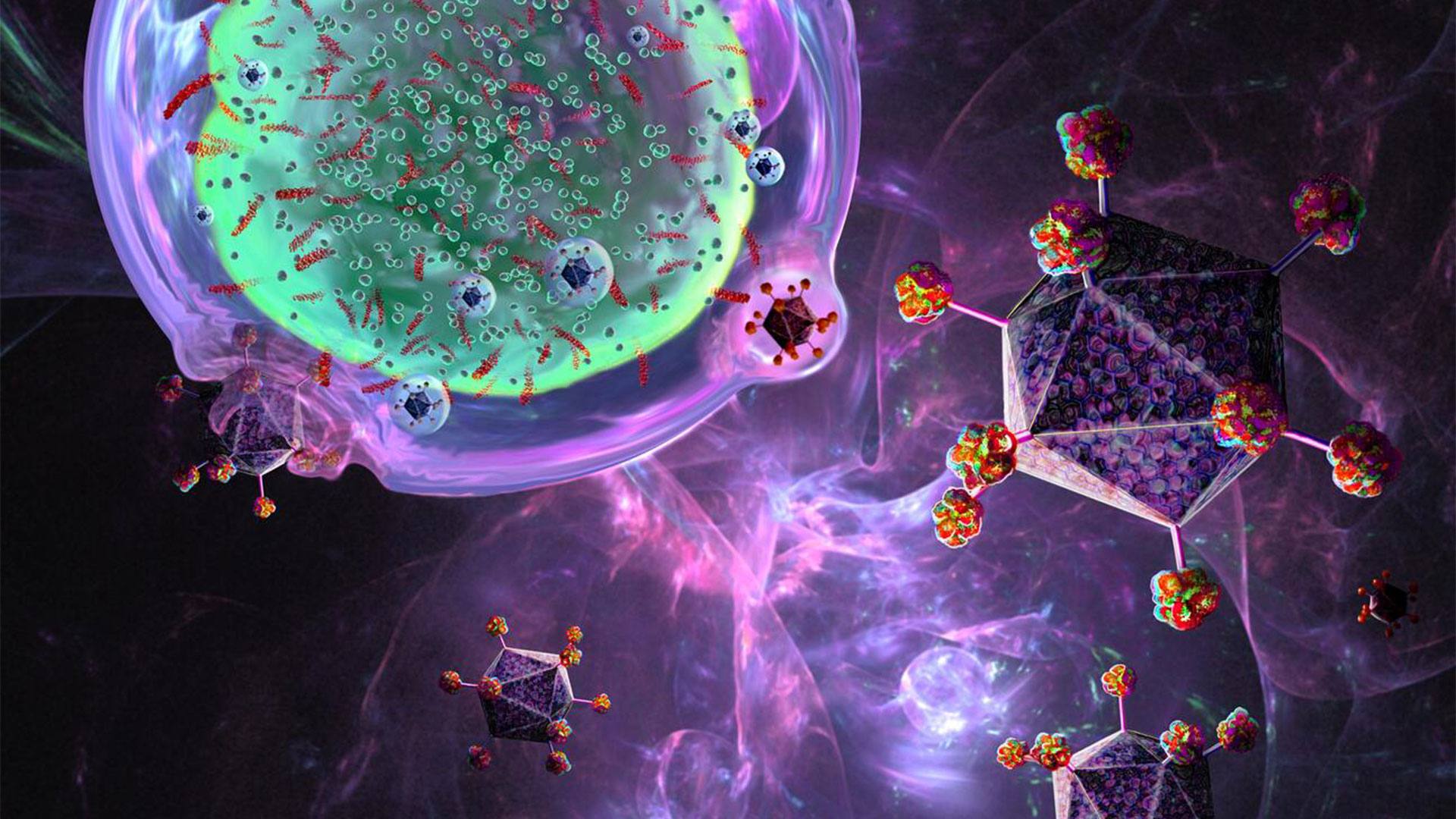
Car T Cell immunotherapy
The Discovery: A Protein That Pulls The Plug
The breakthrough team was led by Professor Michel Sadelain, MD, PhD, a pioneer in CAR T research at Columbia University, working with Professor Judith Feucht, MD, at University Hospital Tübingen.
Their investigation pointed to NFIL3 (Nuclear Factor, Interleukin-3 Regulated) as a major culprit. NFIL3 is a transcription factor — a protein that controls whether other genes are switched on or off. It had been studied for its roles in circadian rhythms, but its role in CAR T-cell exhaustion had not been identified until now.
The researchers found that as CAR T cells encounter tumors, NFIL3 levels rise — and as they rise, the cells enter exhaustion. NFIL3 acts as a brake pedal.
"NFIL3 emerges as a driver of CAR T-cell exhaustion," the researchers wrote.
The Fix: Crispr Flips The Off Switch
Identifying the problem was only half the battle. The team asked a bold question: what happens if NFIL3 is simply removed?
They turned to CRISPR/Cas9 — the revolutionary gene-editing tool — to inactivate the NFIL3 gene in CAR T cells before infusing them into mouse models with solid tumors. The results were striking. CAR T cells lacking NFIL3 stayed active far longer, proliferated more effectively, and maintained their tumor-killing potency. Tumor control improved. Survival increased.
"When we removed NFIL3, the cells simply didn't give up," one researcher explained. "They kept fighting."
The CRISPR editing step could potentially be incorporated into the existing CAR T manufacturing process — adding NFIL3 inactivation as an additional engineering step.
The Bigger Picture: Solid Tumors
Globally, cancer kills approximately 10 million people every year. The vast majority of those deaths are from solid tumors — lung, colon, pancreas, breast, prostate, and brain.
While immunotherapy drugs like Keytruda have revolutionized treatment for some cancers, they work for only a subset of patients. CAR T therapy has long been eyed as potentially transformative for solid tumors if exhaustion could be overcome.
There are currently dozens of clinical trials investigating CAR T in solid cancers. Most have shown modest results. The NFIL3 finding suggests that enhancing T-cell persistence through gene editing could be the missing piece.
Prof. Carl June, a pioneer of CAR T therapy at the University of Pennsylvania who was not involved in the study, called the research "an important mechanistic advance."
What Comes Next: The Road to Clinical Trials
Animal models are not human beings. The history of cancer research is littered with breakthroughs in mice that failed to replicate in people. Experts urge cautious optimism.
NFIL3-knockout CAR T cells have not yet been administered to humans. CRISPR-edited cells carry theoretical risks, including off-target edits. Regulators will require extensive data.
That said, CRISPR-edited CAR T cells have already entered clinical trials for other modifications, providing a safety framework. Given the research groups involved, a Phase I trial could plausibly begin within two to three years, pending regulatory approvals.
What This Means For Patients
For patients currently battling solid tumors, the NFIL3 breakthrough does not translate into an immediate treatment option. The path from mouse model to FDA-approved therapy is long and uncertain — typically a decade or more. However, for patients who have failed standard treatments, clinical trials of novel CAR T approaches — including at Columbia, UPenn, MD Anderson, and major European centers — may be worth exploring. Patients should discuss eligibility with their oncologist and consult ClinicalTrials.gov.
For families devastated by cancers like glioblastoma or pancreatic cancer — diseases with five-year survival rates below 10% — advances like this represent something more than a scientific paper. They represent hope.
A Turning Point in the Cancer Fight?
The identification of NFIL3 as a master regulator of CAR T-cell exhaustion — and the demonstration that removing it enhances T-cell durability — may be one of those rare discoveries that changes the direction of an entire field.
It does not solve every problem standing between CAR T therapy and solid tumor cures. But it addresses, in an elegantly direct way, one of the most fundamental obstacles: the cells stop fighting too soon.
Professor Sadelain put it simply: the goal has always been to give the immune system what it needs to finish the fight. With NFIL3 now identified and a method to neutralize it in hand, that goal moved meaningfully closer in May 2026.
For the millions of people worldwide living with solid tumors — and for the researchers who refuse to accept the current odds — that is enormous news.



