By Our Reporter
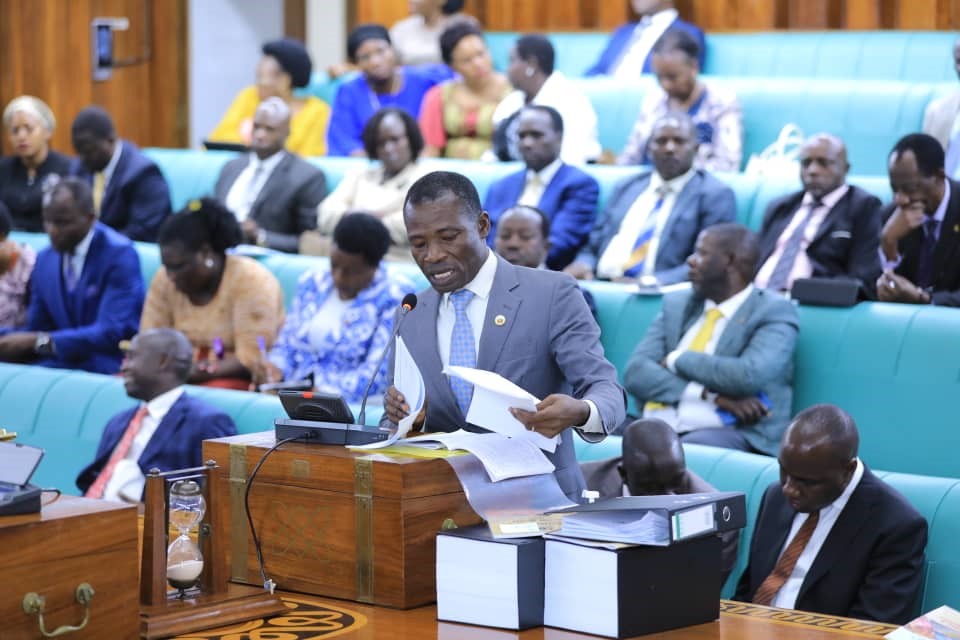
PARLIAMENT - Parliament today commenced discussions on the National Teachers Bill, with Members of Parliament (MPs) on the Education and Sports Committee recommending that the degree requirement for pre-primary (nursery) teachers be removed.
In a report presented to Parliament by committee chairperson James Kubeketerya, the MPs proposed amending Clause 28 to provide eligibility for the registration of teachers holding a degree in education or a relevant degree along with a postgraduate diploma in education for pre-primary, primary, and secondary school teachers.
Kubeketerya informed the House, chaired by Speaker Anita Among, that the Bill aims to regulate and standardize the teaching profession, noting that the requirement of a bachelor's degree for teachers would contribute significantly to achieving this objective.
“The committee, however, observes that individuals who have completed or are pursuing a bachelor’s degree with a teaching component and later opt to teach are not covered under the Bill. These individuals typically complete a postgraduate diploma in education to join the teaching profession. The Bill should, therefore, accommodate this category of persons,” said Kubeketerya.
The committee also recommended amending Clause 29 to remove the government’s proposal requiring teacher trainees to undergo a one-year internship program. Instead, the MPs suggested retaining teaching practice alone. The legislators argued that it is unfair for teachers to undertake both an internship and teaching practice. Kubeketerya explained that the committee rejected the proposal after the Ministry of Education and Sports failed to demonstrate how teaching practice has been ineffective in preparing teachers.
According to the MPs, spending an additional year in internship after completing a degree, which already includes teaching practice, is excessive. “The committee observes that the Government is already struggling to manage intern doctors in the medical profession. It is, therefore, questionable whether the Government can effectively implement compulsory internships for teachers, given the resource constraints that continue to affect internship programs in the medical field,” the MPs' report stated.
Regarding the proposal to introduce a competence test for teachers applying for registration, the committee recommended that the requirement should only apply to teachers from foreign jurisdictions intending to teach in Uganda. Kubeketerya noted that stakeholders argued competence tests are unnecessary, as candidates seeking registration are already qualified. Moreover, the appointing authority would have assessed their competence during the recruitment process.
On the proposal to establish the National Teachers Council (NTC) as a corporate body, the committee supported the idea but recommended revising its membership to include representatives from diverse categories within the teaching profession. “The committee observes that the council comprises more individuals who are not actively engaged in teaching compared to those who are. Only three of the seven members are actively teaching,” Kubeketerya said.
The committee also proposed that the Bill include provisions for collaboration between the NTC and the National Curriculum Development Centre (NCDC) to facilitate the training of trainers and the accreditation of continuous professional development programs for teachers.
Minority report and government comments
However, committee member Joseph Ssewungu (Kalungu West) presented a minority report, urging the government to introduce programs for the gradual upgrading of teachers to degree qualifications, with government sponsorship. “Teachers should not be mandated by law to hold a degree to teach,” Ssewungu argued.
He added that where the government requires a degree, it should provide salaries commensurate with degree qualifications and improve the working environment in schools. He highlighted issues such as dilapidated school infrastructure, insufficient teaching materials, and a high student-to-teacher ratio.
Ssewungu also opposed the establishment of the NTC, claiming it contradicts the government’s policy on rationalization. “Instead of creating a council of seven members, the Government should allocate those funds to district inspection departments to supervise teacher performance in schools,” he said.
State Minister for Higher Education Dr. Chrysostom Muyingo defended the Bill, stating that it seeks to address teacher absenteeism, ineffective teaching, low qualifications, the lack of teacher regulation, and the absence of standards in the teaching profession.
“The Bill embeds the government’s new policy to professionalize the teaching profession, thereby improving the development and management of teachers,” Muyingo said.
Torch Media Africa
Published By | Dickens Tiharihondijo