Written By | Evan Sande Ndahura
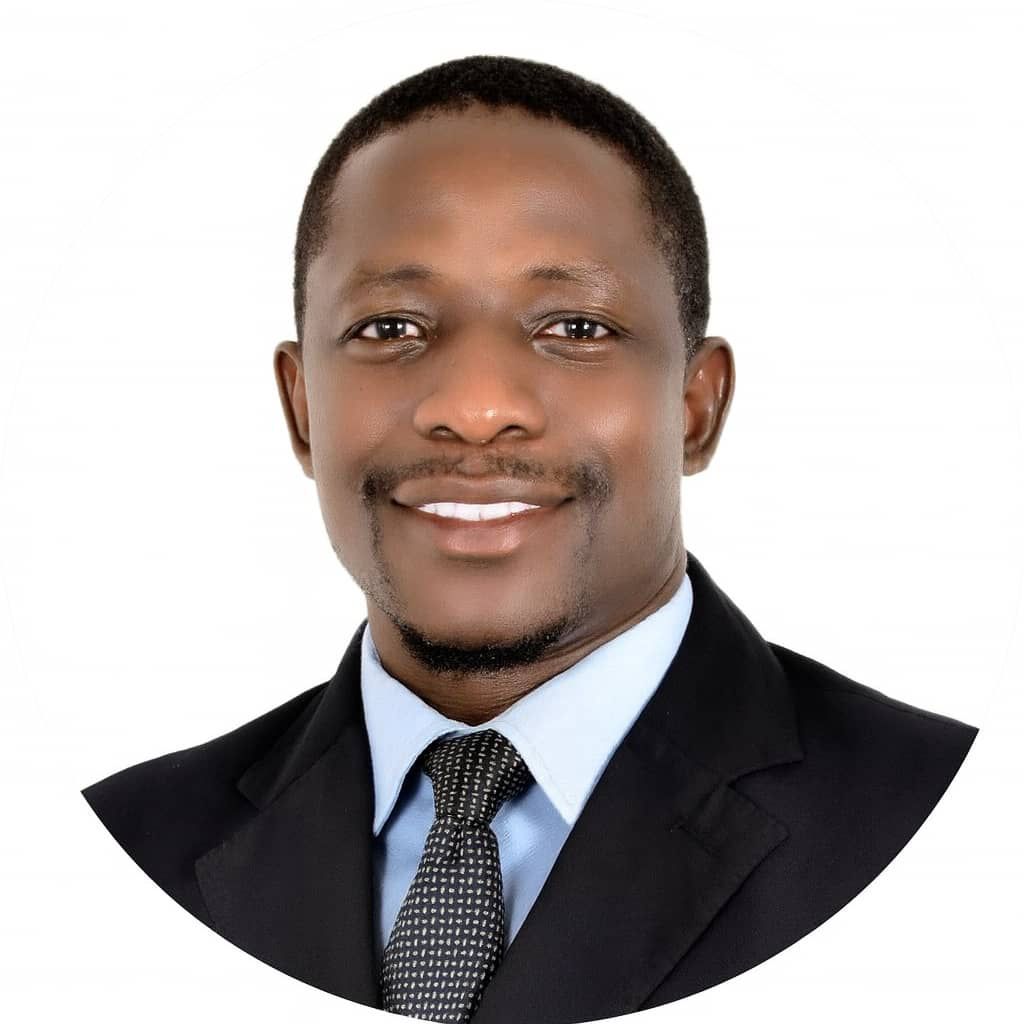
Evan Sande Ndahura is a Ugandan writer, poet and geopolitical commentator whose work examines sovereignty, power and global justice from a Pan-African perspective
If the reports are true, and credible global media insist they are, then Saturday’s U.S. military action inside Venezuela marks not merely an invasion of a country, but an invasion of the very idea of international law.
The alleged operation, which reportedly left scores dead and resulted in the capture of a sitting head of state, has shattered a principle the world has pretended to uphold since 1945: that no nation, however powerful, may use force at will against another sovereign state. This is not a Venezuelan problem. It is a global one.
What the United States Says It Is Enforcing
Washington has long justified its posture toward Venezuela through a catalogue of accusations against President Nicolás Maduro, including:
The United States argues that these claims render Maduro illegitimate and dangerous, warranting extraordinary action, but international law does not operate on unilateral declarations of guilt. Accusations, however grave, do not authorise invasion. National indictments do not override sovereignty, and Moral outrage does not replace lawful process.
The Law Is Not Ambiguous—Only the Power Is
The United Nations Charter is clear. Article 2(4) prohibits the use of force against the territorial integrity or political independence of any state.
Article 51 permits self-defence only in response to an armed attack. Venezuela did not attack the United States. There was no UN Security Council authorisation. No multilateral mandate. No arrest warrant issued by an international tribunal. What is alleged, therefore, is not the enforcement of law, but the substitution of law with force.
If This Is Justice, Why Not the ICC?
If President Nicolás Maduro is accused of crimes under international law, the lawful route is well established: investigation, indictment, and trial through international institutions.
The International Criminal Court exists precisely for such cases. Yet the United States, while invoking the language of justice, has consistently positioned itself outside the ICC’s jurisdiction, choosing instead to act as accuser, enforcer, and judge. This contradiction reinforces a long-held belief across the Global South:
International law is binding on the weak and optional for the powerful.
What Venezuela Should Have Done, and Still Must Do
Sovereignty is not preserved by defiance alone.
Faced with international accusations, Venezuela should have:
Going forward, Venezuela’s survival as a sovereign state depends not on isolation, but on legal engagement and multilateral legitimacy.
Does This Leave the United States With Moral Authority on Ukraine?
Here lies the most damaging consequence.
The United States has been the loudest global critic of Russia’s invasion of Ukraine, framing it correctly as a violation of sovereignty and international law. But if Washington itself bypasses the UN Charter and employs unilateral force against another sovereign state, its moral authority is gravely weakened.
The argument against Moscow collapses into an accusation without consistency.
The language of law becomes selective. Condemnation begins to sound like convenience.
In international relations, double standards do not persuade; they provoke.
A Dangerous Precedent, and a Crisis of Trust
For small and middle powers, this moment is deeply unsettling. If international rules can be ignored by those who wrote them, then why trust international organisations at all? The promise of the UN, ICC, and other global bodies rests on one assumption: that power submits to rules. When that assumption fails, faith in institutions erodes, not just in Caracas, but in Kampala, Nairobi, Accra, and beyond.
History’s Warning: This Is How Global Systems Collapse
This pattern is not new. The League of Nations collapsed because powerful states violated its principles without consequence: Japan in Manchuria, Italy in Ethiopia, and Germany in Europe. Smaller states lost faith, withdrew cooperation, and prepared for self-help. The result was not peace, but World War II. After 1945, the United Nations was built to prevent a repeat. But when great powers treat it as optional, history begins to rhyme. Nations do not abandon international systems because they hate law; they abandon them when law no longer protects them.
Where Are the International Organisations Now?
The silence or paralysis of global institutions raises an uncomfortable question:
When “the international community” speaks, does it mean all nations, or merely the most powerful among them? If institutions cannot restrain superpowers, they risk becoming ceremonial structures offering legitimacy to force rather than protection from it. This moment demands a choice: reassert independence and principle, or accept irrelevance.
This Is How Order Dies
No global order collapses in a single day. It dies when violations are excused.
When power is normalised. When silence replaces principle. If unilateral invasions become acceptable again, then the post–World War II legal order is not weakened; it is functionally obsolete.
The Question History Will Ask
History will not judge this moment by personalities. It will ask whether the world defended the law when it was inconvenient. Because when power places itself above law, no nation is safe, only temporarily spared.
About the Writer
Evan Sande Ndahura is a Ugandan writer, poet, and geopolitical commentator whose work examines sovereignty, power, and global justice from a Pan-African perspective. He writes across opinion, investigative analysis, and political poetry, focusing on how international decisions affect developing nations.
Torch Media Africa



