Written By | Entertainment Desk
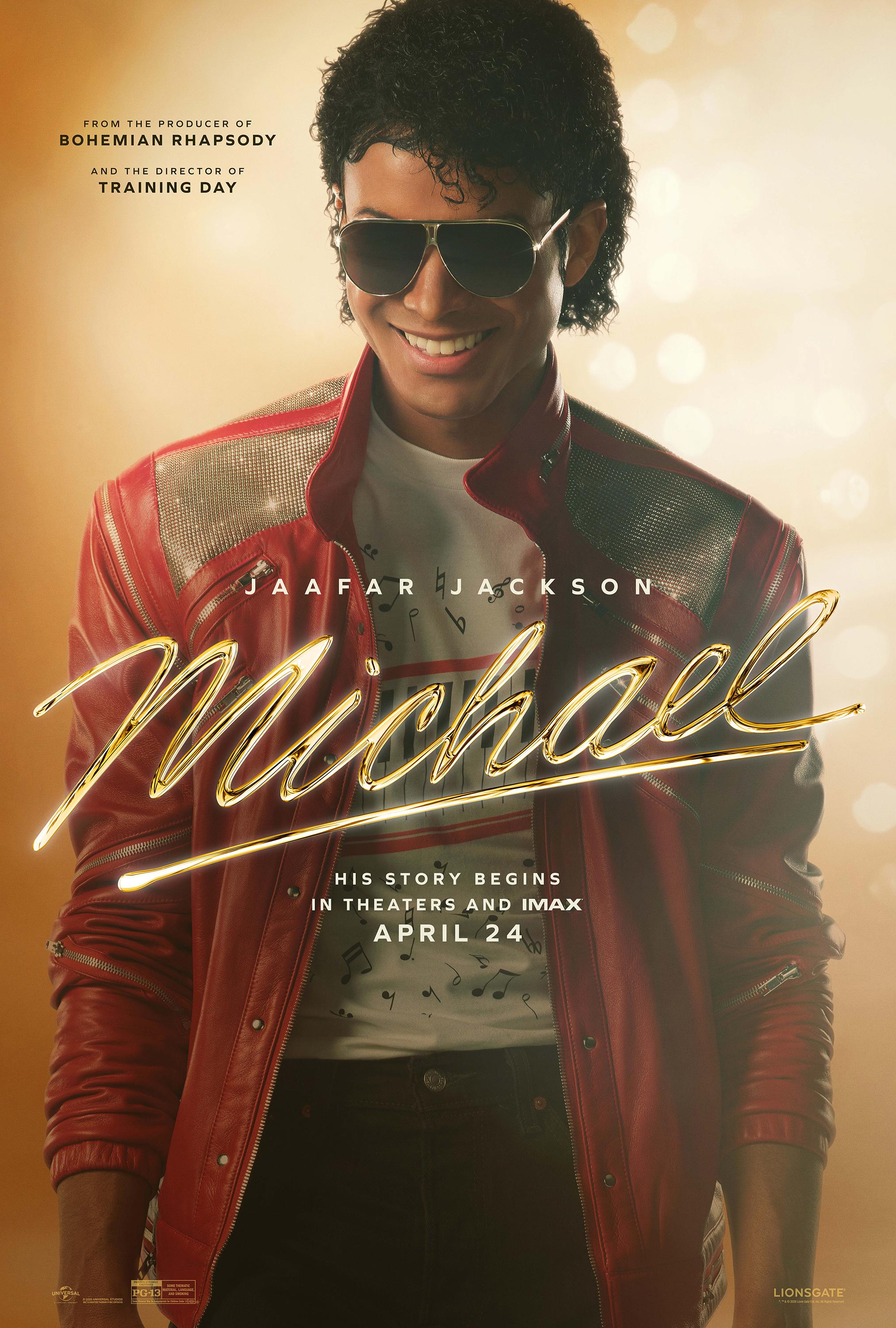
Antoine Fuqua's Michael Jackson film gives Lionsgate its first billion-dollar release and rewrites the box-office ceiling for music biographies.
LOS ANGELES
Twelve weekends after its release, "Michael" has done something no biographical film has ever done: crossed $1 billion at the worldwide box office. The Antoine Fuqua-directed chronicle of Michael Jackson's rise from the Jackson 5 to global solo stardom has now taken in roughly $371.8 million in the United States and Canada and another $629.3 million internationally, for a global total just north of $1.001 billion. It is the first biopic in cinema history to reach that milestone, surpassing the previous genre benchmark set by "Bohemian Rhapsody," and it has become the second film this year to break the billion-dollar barrier, following Universal, Illumination, and Nintendo's "Super Mario Galaxy."
A Landmark for Lionsgate
The achievement carries particular weight for Lionsgate, the studio that distributes the film domestically and, through a partnership with Kino Films, in Japan; Universal Pictures International handles distribution across most other international markets. "Michael" marks the first time in Lionsgate's history that one of its films has crossed $1 billion, a milestone the historically mid-sized studio has chased for years through franchises like "The Hunger Games" and "John Wick" without quite reaching it. For a studio that has spent the past decade competing against much larger conglomerates, the record-setting run of "Michael" is being treated internally and across the industry as a validation of its bet on a music biopic at a moment when the genre had started to feel commercially played out.
The film's box-office trajectory has been notable for its staying power rather than a single explosive opening weekend — the kind of long, word-of-mouth-driven run that studios rarely see anymore in an era dominated by franchise tentpoles that front-load their grosses and fade quickly. Twelve weekends in theaters without a steep drop-off is itself a statement about audience appetite for the story, and about the film's ability to keep pulling in new viewers well past its debut.
Telling an Enormous Story
"Michael" traces Jackson's career from his childhood beginnings performing alongside his brothers in the Jackson 5 through the launch of his first solo tour, deliberately narrowing its scope rather than attempting to cover the entirety of a life that stretched across five decades in the public eye. The approach lets Fuqua build a more conventional coming-of-age arc around a subject whose later life has been the subject of exhaustive, and often contentious, public scrutiny.
The cast surrounding the production includes Colman Domingo, Nia Long, Miles Teller, KeiLyn Durrel Jones, Laura Harrier, Jessica Sula, and Mike Myers, giving the film an ensemble depth that critics have credited with grounding the more mythic elements of Jackson's early rise. The production has been years in the making, having weathered shifting release dates, script revisions, and the kind of scrutiny that inevitably attaches itself to any authorized account of Jackson's life, given the complicated and still-debated legacy he left behind.
Much of the film's marketing has leaned on the casting of a Jackson family member in the lead role, a decision studio executives credited early on with lending the production an authenticity that a more conventional casting search couldn't have replicated. That family involvement extended behind the camera as well, with the Jackson estate participating in the production in ways that shaped everything from music rights clearance to the framing of more sensitive chapters of the story — a level of access that outside biographers have rarely been granted.
Why the Milestone Matters
Industry analysts have pointed to "Michael" as evidence that music biopics, when built around genuinely transformative cultural figures and backed with awards-level production value, still have outsized commercial potential — even in a marketplace where original, non-franchise films have struggled to draw theatrical audiences. The film outgrossing "Bohemian Rhapsody," which itself surprised the industry by becoming a billion-dollar-adjacent hit in 2018, suggests the audience for these stories hasn't just persisted but grown. International markets in particular have overperformed expectations, with territories across Europe, Latin America, and Asia posting some of the strongest per-theater averages of any release this year, underscoring how thoroughly Jackson's music crossed borders during his lifetime and continues to travel now.
That has real implications for how studios greenlight future music biographies. Since "Bohemian Rhapsody" and "Rocketman," Hollywood has churned out a steady stream of musician biopics with mixed commercial results; "Michael" resetting the genre's ceiling gives studios fresh justification to keep investing in stories built around musical icons whose back catalogs double as built-in marketing.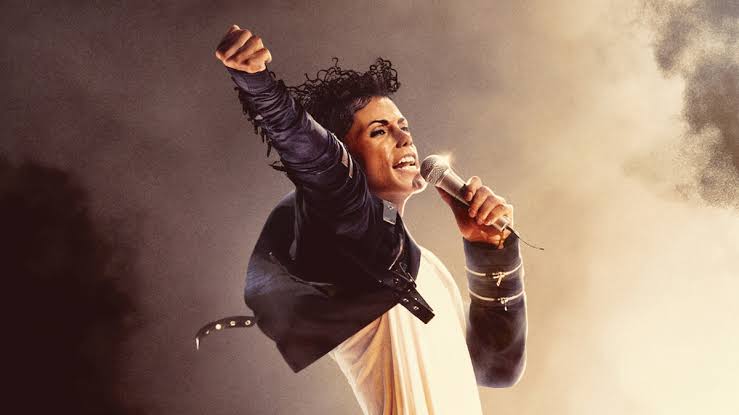
What This Means for Moviegoers
For audiences, the record run means "Michael" is likely to stay in theaters longer than the typical modern release, giving latecomers extended opportunity to see it on the big screen before a streaming or home-video release materializes. It also all but guarantees the film will be a major presence during the upcoming awards season, with its box-office performance likely to factor into studio campaign strategy alongside the acting and directing work already generating awards buzz.
More broadly, the milestone offers a reminder that even in a theatrical landscape increasingly dominated by superhero sequels and video-game adaptations, a well-executed story about a singular cultural figure can still pull audiences into theaters in numbers that rival any blockbuster. Whatever complicated feelings persist around Jackson's legacy, "Michael" has proven that his story, told at feature length, remains one of the most bankable in music history.
The film's success is also expected to influence how quickly a rumored sequel, said to be in early development and focused on the back half of Jackson's career, moves through the greenlighting process at Lionsgate. Studio executives have been notably cautious about confirming those plans publicly, but the box-office numbers behind "Michael" make the commercial case for a follow-up difficult to ignore, even as any continuation would have to navigate the far more contested chapters of Jackson's later life and legal history with considerably more care than the origin story told in the first film.



