Written By | Business Experts
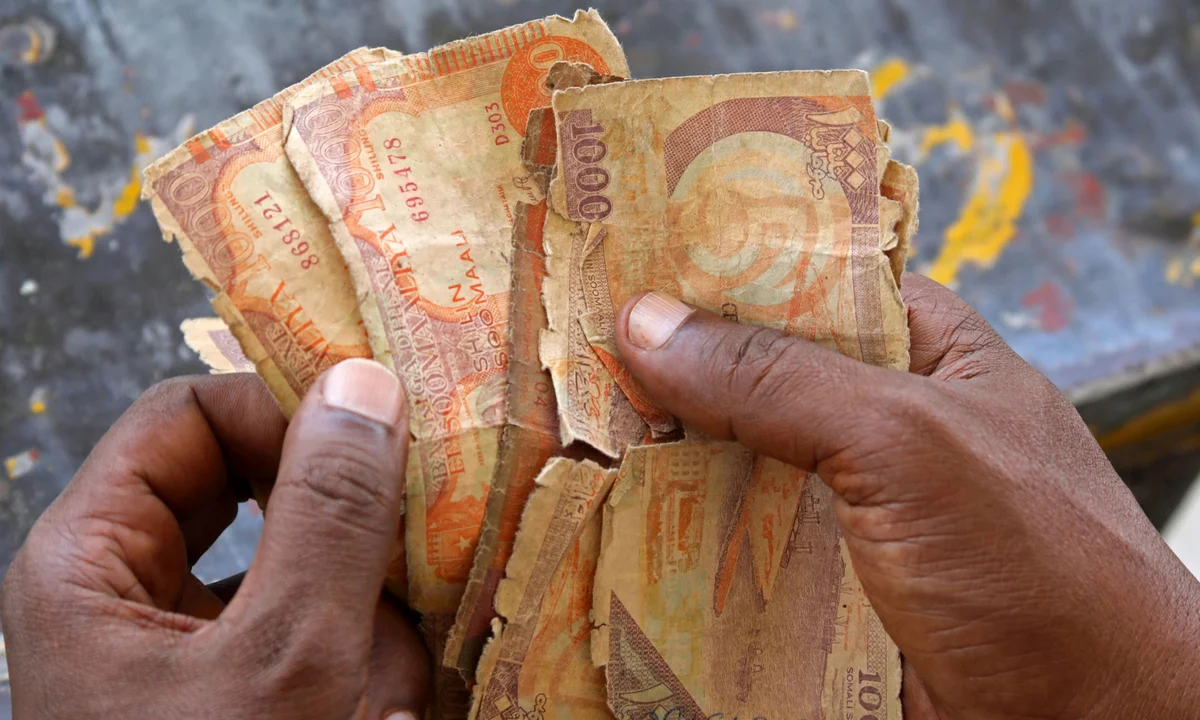
Somalia’s reform effort remains anchored by a three-year Extended Credit Facility (ECF) arrangement with the IMF
Economic & Social Transformation Series
Few African economies have traveled as far, from as low a base, as Somalia’s has over the past decade. A country that spent thirty years locked out of the international financial system re-entered it in December 2023, when the International Monetary Fund and the World Bank approved its Completion Point under the Heavily Indebted Poor Countries (HIPC) Initiative, unlocking $4.5 billion in debt relief. Two and a half years later, the young federal state is testing whether that hard-won macroeconomic normalization can survive a far less forgiving environment: deep cuts to the foreign aid that has long underwritten its budget, recurring climate shocks, and a poverty rate that has climbed to two-thirds of the population. Somalia’s story in mid-2026 is therefore not one of takeoff, but of a fragile institutional rebuilding effort colliding with the harshest external financing environment in years.
The debt relief dividend
The scale of the December 2023 milestone is easy to understate. Somalia became the 37th country to reach the HIPC Completion Point, and the accompanying relief cut its external debt from 64 percent of GDP in 2018 to less than 6 percent of GDP by the end of 2023 — one of the most dramatic deleveraging episodes recorded anywhere. The relief package was broad-based: roughly $343 million from the IMF, $448.5 million from the World Bank’s International Development Association, $131 million from the African Development Fund, $573 million from other multilateral creditors, and around $3 billion from bilateral and commercial creditors. To get there, Mogadishu implemented thirteen of fourteen “floating triggers,” spanning public financial management, domestic revenue mobilization, governance, social sectors, and national statistics — an unglamorous reform agenda that quietly rebuilt core state functions.
Debt sustainability has broadly held since. The joint IMF–World Bank debt sustainability analysis attached to the Fund’s late-2025 program review projects external debt easing from 8.6 percent of GDP in 2024 to 8.2 percent in 2026, before rising gradually to 11.3 percent by 2030 and 19 percent by 2035 as grants give way to concessional borrowing. That trajectory is manageable — but it assumes the grant financing on which Somalia still depends does not collapse faster than domestic revenue can replace it.
A program economy under IMF anchor
Somalia’s reform effort remains anchored by a three-year Extended Credit Facility (ECF) arrangement with the IMF. On December 8, 2025, the Fund’s Executive Board completed the fourth review of that arrangement and — tellingly — approved an augmentation of access worth roughly $40 million, lifting total program financing to about $140 million. Augmentations of this kind are typically a response to balance-of-payments needs that have grown beyond original projections; in Somalia’s case, the driver was explicit: persistent and sizeable foreign aid cuts, recurrent climate shocks, and elevated uncertainty weighing on growth and public finances.
The fiscal framework nonetheless remains disciplined by regional standards. The Cabinet-approved 2026 budget targets an overall deficit of only around three-quarters of one percent of GDP, built on continued domestic revenue mobilization and expenditure restraint, while accommodating additional security and election-related spending and — significantly — an expansion of domestically financed social spending designed to cushion the withdrawal of donor-funded programs. Inflation is projected to rise to about 6 percent in 2026 before easing as shocks dissipate.
Growth under pressure
The growth picture has deteriorated in step with the aid environment. After expanding about 4 percent in 2023–24, real GDP growth slowed to roughly 3 percent in 2025, and the IMF now projects just 2.6 percent for 2026 — a marked downgrade from the 3 to 3.25 percent range it forecast as recently as October 2025. The World Bank’s May 13, 2026 economic update for Somalia captured the mood in its title: growth continues, but shocks and aid cuts intensify risks to jobs and livelihoods.
The aid shock is quantifiable. United States assistance to Somalia totaled about $1.18 billion in fiscal year 2023, of which more than $880 million flowed through USAID; following the 2025 freeze and restructuring of American foreign assistance, roughly $183 million in humanitarian and development support earmarked for Somalia was terminated outright. Somalia’s central bank governor has publicly acknowledged that the cuts are hitting not only humanitarian operations but the tax base itself, since donor-financed activity generates a meaningful share of formal-sector transactions in Mogadishu and the federal member states.
Livestock, remittances, and a deepening poverty crisis
Underneath the macroeconomic scaffolding, the real economy remains narrow. Livestock contributes roughly 40 percent of GDP and more than half of export earnings, leaving national income hostage to rainfall; recent seasons of drought and flooding drove a 10.3 percent real-terms decline in livestock exports. The second pillar is the diaspora: remittances, which the World Bank estimated at 16.7 percent of GDP in 2022, continue to outstrip both aid and foreign direct investment as a source of household income, and they did much of the work of keeping consumption afloat in 2025.
The social indicators, however, are moving the wrong way. According to World Bank poverty monitoring, the share of Somalis living in poverty rose sharply from 54.4 percent in 2022 to 67.0 percent in 2024, driven primarily by climatic shocks that destroyed rural livelihoods faster than urban growth could absorb displaced workers. That figure hangs over every fiscal and political choice the government makes: a state that has stabilized its debt but not its people’s livelihoods remains structurally fragile.
Betting on integration: the EAC and the blue economy
Somalia’s medium-term answer is integration. Admitted to the East African Community on November 24, 2023, and a full partner state — the bloc’s eighth — since March 4, 2024, Somalia has spent 2025 and 2026 aligning laws, institutions, and economic regulations with EAC standards rather than chasing headline milestones. A concrete marker came in February 2026, when Mogadishu signed an immigration memorandum of understanding with Tanzania introducing visa-free and visa-on-arrival arrangements — the first practical implementation of regional mobility commitments. The strategic logic is geographic: Somalia’s more than 3,000-kilometer coastline, the longest in Africa, positions it as a potential maritime gateway linking the EAC hinterland to Gulf and Asian markets, provided port, customs, and security infrastructure can be built out.
The same coastline underpins a deepening — and contested — partnership with Türkiye. In February 2026 the state-owned Turkish Petroleum Corporation deployed a deep-sea drilling vessel to begin work at the Curad-1 well offshore, the first serious test of Somalia’s hydrocarbon potential in decades. Ankara’s parallel fisheries arrangement, channelled through the SOMTURK licensing framework, routes 30 percent of fisheries revenue to Turkish partners — terms that critics, including regional analysts writing in April 2026, describe as lopsided, and that defenders frame as the price of attracting capital no one else would commit to Somali waters. Either way, the blue economy has become the clearest expression of Somalia’s post-debt-relief development strategy: monetize geography, since the fiscal state remains too small to drive transformation alone.
Outlook
Somalia enters the second half of 2026 with a paradox. Its macroeconomic fundamentals — single-digit debt, a sub-1-percent fiscal deficit, an on-track IMF program — would be the envy of many larger African economies. Yet its social fundamentals are among the continent’s weakest, and the aid model that bridged the two is being dismantled in real time. The next two years will show whether domestic revenue mobilization, EAC market access, and coastal resources can grow fast enough to replace shrinking grants. The debt chapter is closed; the development chapter has barely begun.



