Written By | Business Experts
How LNG, climate-resilient agriculture and AfCFTA membership are reshaping one of Africa's most disaster-exposed economies.
A Project Too Big to Abandon
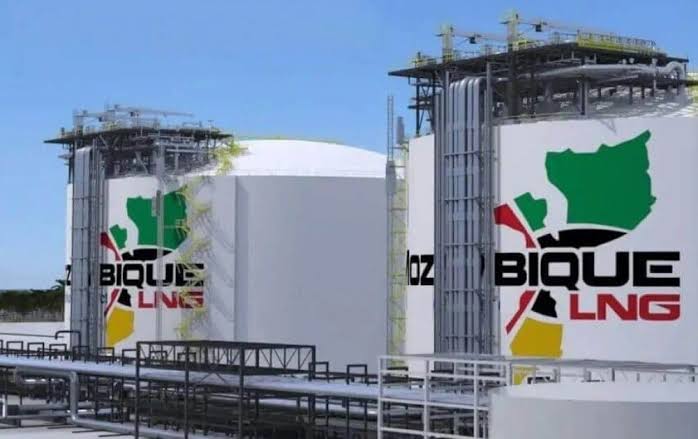
For five years, "force majeure" hung over Mozambique's most consequential economic project. In April 2021, an insurgent attack on Palma forced TotalEnergies to halt construction on its $20 billion Mozambique LNG project—the largest single foreign direct investment in Africa's history. On January 29, 2026, that freeze formally ended. TotalEnergies CEO Patrick Pouyanné met President Daniel Chapo in Maputo to announce the full restart, contingent on improved security and the lifting of force majeure in November 2025.
More than 4,000 workers are now mobilized—over 3,000 of them Mozambican—with construction at roughly 40% completion. The project is designed to produce over 13 million tonnes of LNG annually once onstream, now targeted for 2029. TotalEnergies has booked roughly $4.5 billion in incremental costs from the five-year delay. Over its lifetime, the government could collect as much as $35 billion in revenue, with over $4 billion in contracts expected to flow to Mozambican companies.
A Fragile Macroeconomic Starting Point
The restart comes at a necessary moment. The IMF projects real GDP growth of just 0.5% in 2026, depressed by foreign currency shortages and post-election unrest. Public debt is projected at roughly 91% of GDP—unsustainable under current policies. The IMF calls for front-loaded fiscal adjustment, including wage bill containment and new revenue measures.
In March 2026, Maputo fully repaid a $630 million obligation to the IMF ahead of schedule, a gesture of credibility. But Fitch suggests a debt restructuring may still be needed before any new IMF programme is finalized.
The medium-term outlook hinges on gas. Under the IMF baseline, GDP growth is projected to accelerate to around 12% by 2030 once Mozambique LNG and Coral North reach production, with Rovuma LNG boosting further into 2031. The restart is thus the pivot point for the entire fiscal and growth outlook of a country with one of Southern Africa's most precarious balance sheets.
Climate Shocks Keep Outpacing Recovery
Roughly 68.2% of Mozambique's 32.4 million people live below the poverty line, and the economy's dependence on rain-fed agriculture leaves most exposed to annual droughts, floods and cyclones. Early 2026 brought flooding affecting nearly 700,000 people.
The African Development Bank's response has shifted toward pre-positioned financing. Its ADRiFi programme uses parametric insurance for automatic payouts when drought indicators cross a threshold. In Magude district, a $1.89 million ARC payout provided water access for 8,797 cattle and food assistance to 1,045 households. The Bank is also advancing a RISE-PS project to strengthen livelihoods in conflict- and climate-affected provinces, including Cabo Delgado.
These are not separate stories: the provinces most exposed to climate shocks overlap with insurgency-affected areas now hosting LNG construction. Climate resilience and energy security are now two sides of the same development challenge.
AfCFTA Membership and the Diversification Question
Mozambique became a full AfCFTA member in January 2025, gaining preferential access to a market of 1.4 billion people. Analysis from the Institute for Security Studies finds that an infrastructure-led scenario produces the largest cumulative GDP gain by 2043, with the AfCFTA trade scenario following close behind, specifically for poverty reduction.
The World Bank's latest Mozambique Economic Update frames the challenge bluntly: reliable gas could enable new power generation and fertilizer manufacturing, with ports, pipelines and processing infrastructure creating regional spillovers. But the report is equally blunt that the economy remains characterized by heavy dependence on resource megaprojects, an informal agricultural sector, and limited progress in translating mineral wealth into broad-based diversification.
What to Watch
Three signals will indicate Mozambique's direction over the next 12 to 24 months. First, whether Maputo and the IMF can agree on a new financing programme—and whether that requires formal debt restructuring. Second, whether security in Cabo Delgado remains stable enough for LNG to progress beyond "containment mode" toward the 2029 production target. Third, whether disaster-risk financing tools scale fast enough to keep pace with a worsening cyclone and flood pattern that could erode the human capital and agricultural base the country will need once gas revenues finally begin to flow.



