Written By | BK Mugizi
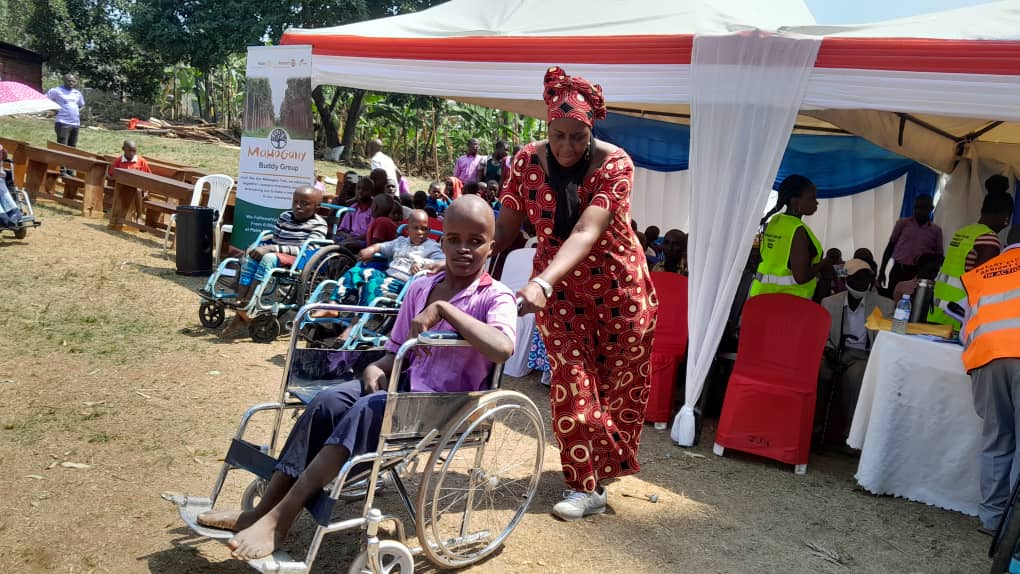
A parent pushes her child on a wheelchair at Ishekye Unit for the Handicapped in Sheema District
Sheema
Members of the public have been urged to end discrimination against persons with disabilities (PWDs) and instead promote their rights, dignity and full inclusion in society.
The call was made by the Director of Programmes at the National Union of Disabled Persons of Uganda (NUDIPU), John Chris Ninsiima, who said discrimination against persons with disabilities remains widespread and continues to deny many people equal opportunities in education, employment and community life.
"Disability does not mean inability. Society should focus on what persons with disabilities are capable of doing rather than their limitations," Ninsiima said.
Speaking to Media House, Ninsiima cited his own academic and professional achievements despite living with a visual impairment, saying his experience demonstrates that disability is not a barrier to success when people are given equal opportunities.
Ninsiima said NUDIPU is implementing an inclusive education programme in Sheema District and other parts of Uganda to ensure that children with disabilities have access to quality education alongside other learners.
The programme is being implemented at St. Charles Lwanga High School Kashekuro, Kagazi Primary School, Ishekye Unit for the Handicapped Primary School and Bugongi Primary School in Sheema District. It aims to improve access to education, strengthen teachers' capacity to support learners with disabilities, and create school environments where every child can thrive.
"Every child deserves the right to quality education regardless of disability. Inclusive education gives children confidence and prepares them for independent living," he said.
The Senior Community Development Officer for Sheema District, Doreen Komugisha, said the district has 3,744 registered persons with disabilities.
She urged parents and guardians to register children and older persons with disabilities with the National Identification and Registration Authority (NIRA), saying national identification enables them to access government services and development programmes.
Komugisha also encouraged families to work closely with Community Development Officers so that they can benefit from government interventions targeting persons with disabilities.
"Registration is important because it enables persons with disabilities to access government programmes and other essential services," she said.
She expressed concern that some parents still consider educating children with disabilities a waste of resources, thereby denying them opportunities to realise their full potential.
She appealed to parents to enrol children with disabilities in school, saying education equips them with skills that enable them to become productive and independent members of society.
Komugisha said Sheema District has established specialised learning centres to support inclusive education, including Kagazi Primary School in Sheema North, Ishekye Unit for the Handicapped in Sheema Municipality, Bugongi Central School and St. John's Secondary School Nyabwina.
"Children with disabilities have the same potential as any other child. They only need support and an opportunity to learn," she said.
Meanwhile, the Headteacher of Ishekye Unit for the Handicapped in Sheema Municipality, Kabatooro Joy, said the school, which has more than 200 learners with disabilities, continues to face challenges because many pupils are brought to school without scholastic materials and other basic necessities.
"Some parents bring children without books, uniforms, bedding and other essential items, making it difficult for them to study comfortably. We appeal to parents and well-wishers to support these learners so they can fully benefit from education," Kabatooro said.
Uganda has strengthened the protection of persons with disabilities through laws promoting equal rights, political representation and inclusive education.
However, stakeholders say discrimination, unemployment and limited accessibility remain major challenges, calling for stronger enforcement of disability rights and increased public awareness.



