Written By |
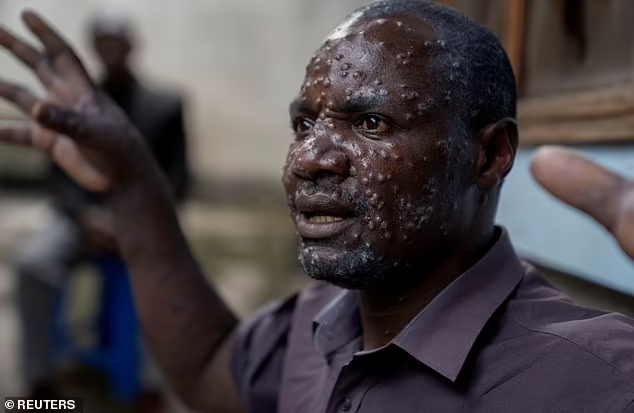
Jean Kakura Biyambo, a father of six from the Muja internally displaced persons camp in DRC, gestures from a general hospital where he has been receiving treatment for mpox, on July 16 (Reuters Photo)
Experts have warned that a new 'lethal' variant of mpox, formerly known as monkeypox, is spreading 'unchecked' and posing a 'severe' risk to hundreds of thousands of people, as health providers lack the resources to stop the spread. The Democratic Republic of Congo (DRC) and its neighbors are still reeling from a devastating outbreak in 2022-23, which infected nearly 100,000 people and caused severe fever, flu-like symptoms, and painful rashes of pus-filled blisters. However, insiders warn that not enough has been done to prevent a repeat of the epidemic. Now, a more deadly variant of the disease is crossing borders, with a reported mortality rate of 10 percent in children, threatening to decimate populations while authorities are powerless to curtail the spread.
Researchers caution that the new 'Clade 1b' variant of the disease has already crossed the DRC's 'porous' borders, causing dozens of deaths in recent weeks between Burundi, South Africa, and the DRC, with many thousands displaced by conflicts in the region. As the NHS urges those traveling to the UK from West Africa with symptoms to seek immediate medical support, concerns mount about the preparedness of the affected nations to detect and treat the disease before it spreads. Typically found in central and East Africa, mpox has plagued populations since the early 1970s. While a vaccine now exists for the disease, uptake has been slow in nations lacking the resources and infrastructure for a coordinated program.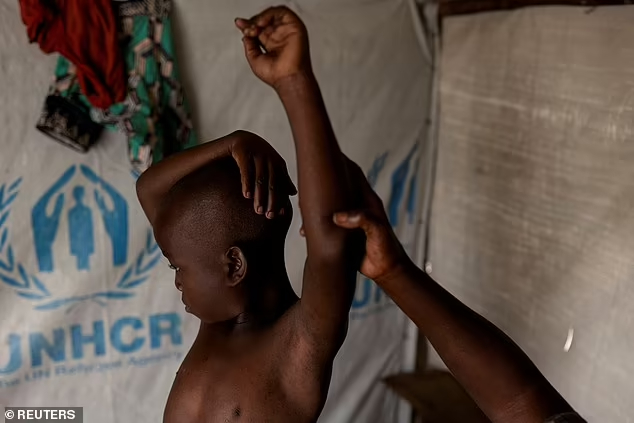
Fideline Kiza Kasao checks the progress of her son Kito Balume after recovering from Mpox (Reuters Photo)
Nearly 100,000 people were infected in 2022 during a global outbreak of the disease, caused mostly by the Clade IIb virus. This variant was less deadly than the emerging Clade Ib variant but killed around 183 people, according to the CDC. The United States reported as many as 32,063 cases with 58 deaths during this period, with significant numbers of cases in North, Central, and South America, Europe, Africa, Asia, and Australasia. Now, experts tracking recent trends warn that a more deadly variant is showing both a propensity to travel across borders and a five percent mortality rate in adults and ten percent in children. While the 2022 strain was largely driven by male-to-male sexual contact, according to Health Experts, the Clade Ib variant appears to be transmissible through close non-sexual contact and is exacerbated by heterosexual sexual contact, particularly among sex workers, who account for about 30 percent of recorded cases.
Authorities in the DRC urgently approved mpox vaccines to try to contain the outbreak in June, surpassing 1,000 deaths from 20,000 cases within the past year. However, many worry that the affected nations lack the resources to effectively stop the spread in its tracks. Zeil Rosenberg MD, executive vice president of Tonix Pharmaceuticals, a company currently developing an mpox vaccine, said that the disease is now spreading to regions where it has historically not been endemic, raising concerns of a repeat of the deadly 2022 outbreak that infected nearly 100,000 people.
"The Democratic Republic of Congo (DRC) remains the center of an unchecked explosion of cases, with 11,000 cases reported this year alone and showing no signs of slowing," he warned. He explained that there are two 'clades' of mpox currently in circulation. The first carries more severe symptoms and a mortality rate of up to ten percent. The second, responsible for the 2022 outbreak, is less lethal but has been able to thrive outside of Africa in the past. "The most severe and lethal Clade 1 mpox, historically endemic to central Africa, has become predominant and is now found throughout the region," he warned.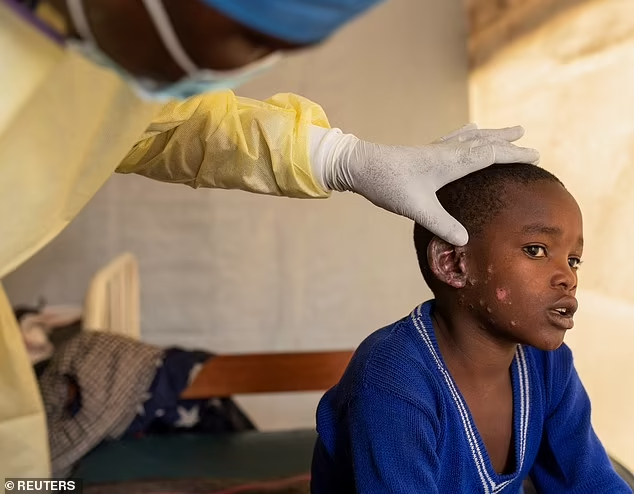
A child with skin lesions receives treatment at the treatment centre in Munigi, DRC, on July 19 (Reuters Photo)
Professor David Heymann at the London School of Hygiene & Tropical Medicine (LSHTM), said that mpox could soon "fill the epidemiological niche left by smallpox," with the vaccine no longer effective in preventing cases. "Person-to-person transmission is now occurring, and if infected individuals travel to other countries, the same situation regarding smallpox vaccination exists... outbreaks of person-to-person transmission could occur. As the infection is thought to have a fatality rate of 10%, and higher in those living with HIV infection, the risk of serious impacts is high. Though the world joined together for mpox outside Africa, the situation in Africa continues to be neglected at a risk to persons in DRC."
"There are a number of challenges in controlling this outbreak," explained Brian Labus, assistant professor at the University of Nevada, Las Vegas' Department of Epidemiology and Biostatistics. "We have seen spread in camps for displaced persons, where high population density increases the risk of infectious disease spread."
He warned that the virus has mutated and now spreads more easily between people. "While we can prevent the disease with vaccines, none are currently available in the affected areas. When you add these problems to the routine challenges of controlling disease in remote, low-resource environments, it has been very difficult to get the outbreak under control."
Children have been the main victims of the disease in the DRC, suffering 67 percent of the cases and 78 percent of reported deaths. "Clade 1b has demonstrated evidence of sexual transmission, both among gay and bisexual men and in heterosexuals, and the potential for global spread is significant," added Dr. Rosenberg.
Dr. Labus said the new variant could spread through contact with infected animals, consumption of contaminated meat, and non-sexual contact between people.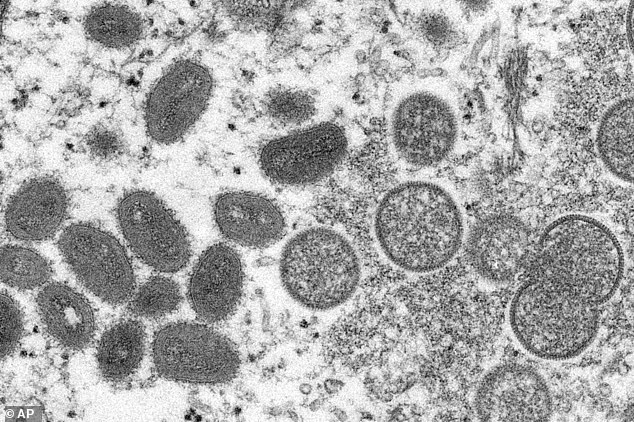
Mpox virions shown under a microscope. Experts warn the new 1b Clade is harder to detect (Reuters Photo)
Sufferers of the new, more deadly strain have all presented with rashes. More than half have had fever and/or swollen lymph nodes, and "the vast majority" had genital lesions. However, the rise of asymptomatic cases has "raised the level of concern" that the disease could cross borders unchecked without the means to identify and quarantine carriers. These cases have been "harder" to detect in the laboratory, with testing methods proving unreliable and posing further challenges to those working to contain the outbreak.
Of growing concern is the propensity for displaced persons within the DRC to move across its 'porous borders,' fleeing conflict or its outcomes, and spreading the disease faster than authorities can act to curtail it. The NHS is now urging people who have traveled to West Africa in the past three months and who display symptoms to see a doctor urgently amid fears the virus could spread out of Africa. "As with the global epidemic of 2022-23, travel between countries is a prime cause of cross-border transmission," Dr. Rosenberg warned.
"Considering that mpox has an incubation period of 1-2 weeks, seeing a doctor if symptoms develop within 3 weeks of travel, and receiving appropriate immediate antiviral treatment, is a prudent measure both for personal and public health reasons."
"We have not seen transmission outside central Africa during the outbreak, but it is possible that it could occur," Dr. Labus said. "We put a lot of international effort into controlling outbreaks wherever they occur, as outbreaks of disease anywhere in the world can pose a risk to the rest of us, and we want to stop them before they spread."
As it stands, the means to stop the spread have not developed significantly since the 2022 outbreak. Vaccine availability remains 'remarkably absent on the African continent,' with little sign of improvement in the last two years, Dr. Rosenberg said. "Lack of international aid, vaccine inequality—where developed countries scoop up all the mpox vaccines at the expense of developing countries—and lack of infrastructure to support vaccine rollout efforts all play a role in the anemic response to date."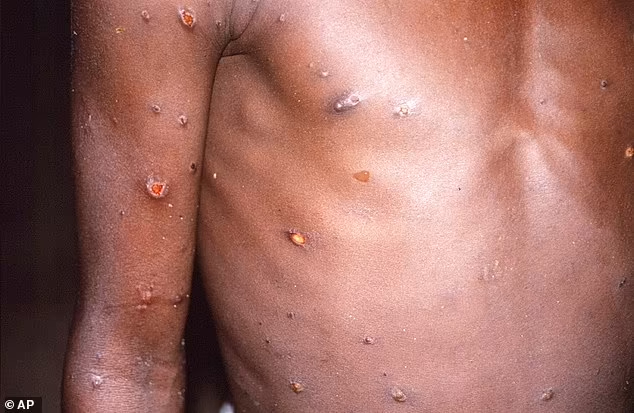
Symptoms of mpox shown on a patient, as provided by the CDC (AP Photo)
What is Monkeypox?
Monkeypox is a rare viral infection usually found in the tropical areas of West and Central Africa. It is typically spread through direct contact with animals such as squirrels, which are known to harbor the virus. However, it can also be transmitted through very close contact with an infected person. Monkeypox was first discovered when an outbreak of a pox-like disease occurred in monkeys kept for research in 1958. The first human case was recorded in 1970 in the Democratic Republic of Congo, and the infection has been reported in a number of central and western African countries since then. Only a handful of cases have been reported outside of Africa, and they were confined to people with travel links to the continent.
How Deadly is It?
Monkeypox is usually mild, with most patients recovering within a few weeks without treatment. However, the disease can prove fatal. Monkeypox can kill up to 10 percent of the people it infects. With milder strains, the fatality rate is closer to one in 100—similar to when COVID-19 first emerged.
Is There a Cure?
Because monkeypox is closely related to the virus that causes smallpox, jabs for smallpox can also protect people from getting monkeypox. One vaccine, Jynneos, also known as Imvamune or Imvanex, has been licensed in the US but is not approved in the UK. The vaccine has been shown to be around 85 percent effective in preventing monkeypox infection. Antivirals and pooled blood from individuals vaccinated against smallpox can be used to treat severe cases.
Torch Media Africa



