Written By | Sports Desk
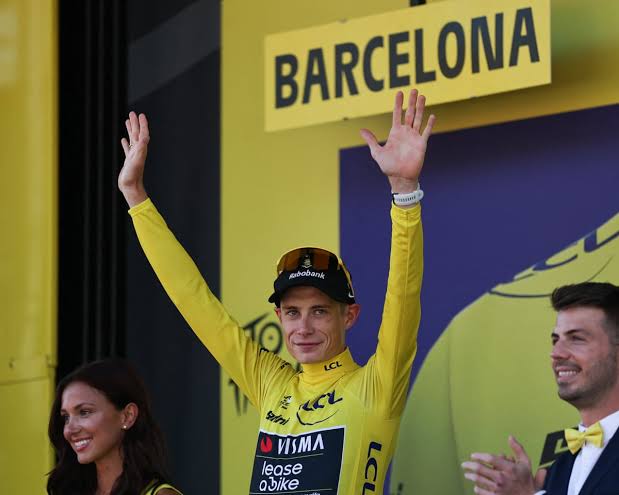
For the first time in seven years, the world's greatest bike race opened with a team time trial — and Visma-Lease a Bike turned the streets of Barcelona into a statement of intent.
BARCELONA, SPAIN
The Tour de France has a habit of announcing itself with drama, but rarely does the opening day deliver a verdict this emphatic. On Saturday afternoon, under a blazing Catalan sun and in front of enormous crowds lining the Passeig de Gracia, Visma-Lease a Bike blitzed the 19.6-kilometre team time trial that launched the 2026 Tour, stopping the clock at 21 minutes 47.87 seconds and putting Jonas Vingegaard back in the yellow jersey for the first time in three years.
It was the kind of collective performance that makes rival team buses go quiet. Netcompany-INEOS, riding with trademark precision, finished 7.33 seconds back in second. UAE Team Emirates-XRG — the squad built around defending champion Tadej Pogacar — could only manage third, 11.28 seconds adrift. In a race that is routinely decided by seconds, the Tour's very first day may already have redrawn its script.
A Format Reborn
The team time trial is cycling's most beautiful and brutal discipline: eight riders in perfect formation, centimetres apart at over 55 kilometres per hour, each pull on the front a small act of sacrifice. Yet the Tour had not opened with one in seven years — the last team test came in 2019 — and its return for the Barcelona Grand Depart was billed as the organisers' bid to make the opening weekend a genuine general-classification battle rather than a sprinters' procession.
It worked. The 19.6-kilometre course threaded through Barcelona's most iconic streets, swooping past Gaudi facades and along the Mediterranean seafront, and it punished any team that lost its rhythm. Squads set off in reverse order of ambition, with UAE Team Emirates-XRG rolling down the start ramp last as the team of the defending champion. By then, Visma's time had been sitting on the hot seat for the better part of an hour, daring anyone to beat it. Nobody came close.
The Numbers That Matter
Because the individual times were taken as riders crossed the line, the day produced an instant general classification with real teeth. Vingegaard leads, with Italian time-trial powerhouse Filippo Ganna at eight seconds, Pogacar at 12, his young Spanish teammate Juan Ayuso at 16, and Remco Evenepoel — the Olympic time-trial champion who has rebuilt his season around this Tour — at 19 seconds.
Twelve seconds may sound trivial across a three-week race that covers more than 3,300 kilometres. It is not. Vingegaard and Pogacar have spent four years trading blows in the high mountains, where their duels are often settled by handfuls of seconds on a single summit finish. Starting the second week with a buffer rather than a deficit changes how a team races: Visma can now force UAE to chase, to take risks, to burn domestiques early. Psychology matters in July, and on Saturday the Danish champion banked a piece of it.
Vingegaard's Long Road Back
The sight of Vingegaard in yellow carries emotional weight beyond the stopwatch. The two-time Tour winner has endured a bruising stretch — crashes, illness and the relentless rise of Pogacar had kept him out of the race lead since 2023. His team's performance in Barcelona was a reminder that the quiet Dane remains the one rider the defending champion truly fears.
For Visma-Lease a Bike, the win also validated a winter of obsessive preparation. Team time trials are won in wind tunnels and training camps months before the race, in thousands of small decisions about equipment, pacing plans and rider order. Beating INEOS — the discipline's historical masters — by more than seven seconds suggests the Dutch squad left nothing to chance.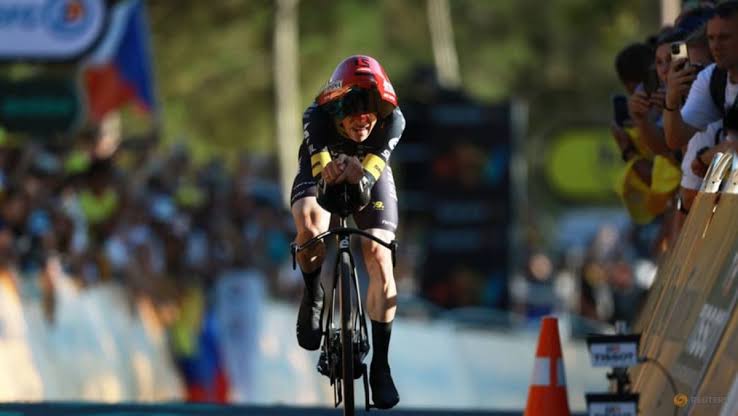
What the Experts Saw
Cycling analysts were quick to note the scale of the result. Commentary throughout the day described a 'thriller' among the big three general-classification teams, with the gaps between them larger than most predictions. The consensus after the stage was that Visma had delivered the perfect opening: yellow on day one, time in hand over every major rival, and no energy wasted defending a lead they had not yet needed to protect.
The caution flags are real, though. Pogacar has overturned far bigger deficits with a single acceleration in the Pyrenees, and Evenepoel's 19-second gap is negligible for a rider of his time-trialling pedigree with an individual test still to come later in the race. If anything, the result guarantees aggression: UAE cannot afford to wait until the final week.
What It Means for Fans
For viewers planning their July around the Tour, the Barcelona result is excellent news. A race that begins with the favourites separated by seconds — rather than a comfortable status quo — tends to produce fireworks early. The Spanish opening days offer punchy, hilly terrain where brave riders can steal time, and every intermediate bonus sprint now matters.
It is also a rare moment for casual fans to appreciate the team time trial itself, a discipline that rewards teamwork over individual stardom. Saturday's stage was a reminder of why riders call it the most painful hour in cycling: there is nowhere to hide, and the clock forgives nothing.
The Road Ahead
The Tour continues through July 26, winding from Catalonia across the Pyrenees and eventually to Paris. Sunday's second stage keeps the race on Spanish roads, where crosswinds, heat and nervous positioning can cost an unwary contender more time than any mountain. The Grand Depart abroad is now a Tour tradition — recent editions have launched from Copenhagen, Bilbao and Florence — but Barcelona's combination of a technical urban course and a discipline absent for seven years made this one feel genuinely novel.
Vingegaard wears yellow; Pogacar, as ever, lurks. If the opening day is any guide, the 2026 edition will not be decided by caution. Barcelona asked the peloton a question on day one, and only one team answered perfectly. The other twenty-two have three weeks to respond.



