Written By |
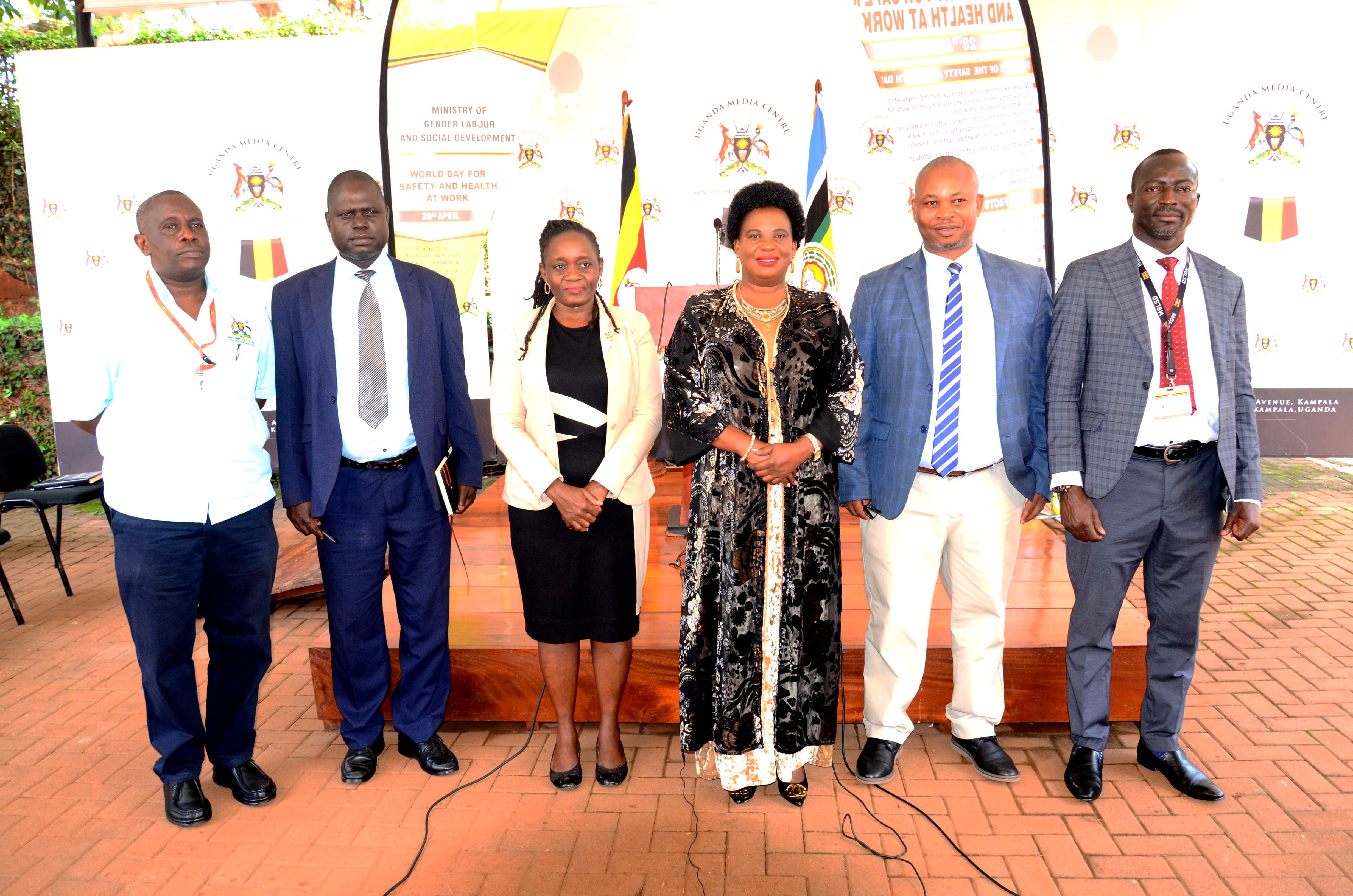
Gender Ministry officials together with the Minister of Gender, Labour and Social Devt Betty Amongi Ongom (fouth left) in a group picture at Uganda Media Centre in Kampala on Friday. (Photo by Milton Niinga)
By Milton Niinga
The Minister of Gender, Labour and Social Development, Betty Amongi Ongom, has vowed to take strict action against employers and companies that fail to comply with safety regulations, aiming to create a safer working environment for employees and reduce workplace accidents, injuries, and illnesses.
Through the Ministry of Gender, Labour and Social Development (MGLSD), the government plans to impose substantial fines for non-compliance and negligence, and to streamline health insurance provisions for all employed staff and casual workers to ensure minimum welfare standards at work.
"In most factories, we discovered that only selected employees are enrolled on full contractual obligations, creating avenues to dodge National Social Security Fund (NSSF) remittances for temporary staff, who are often on the frontline doing risky assignments," Amongi said.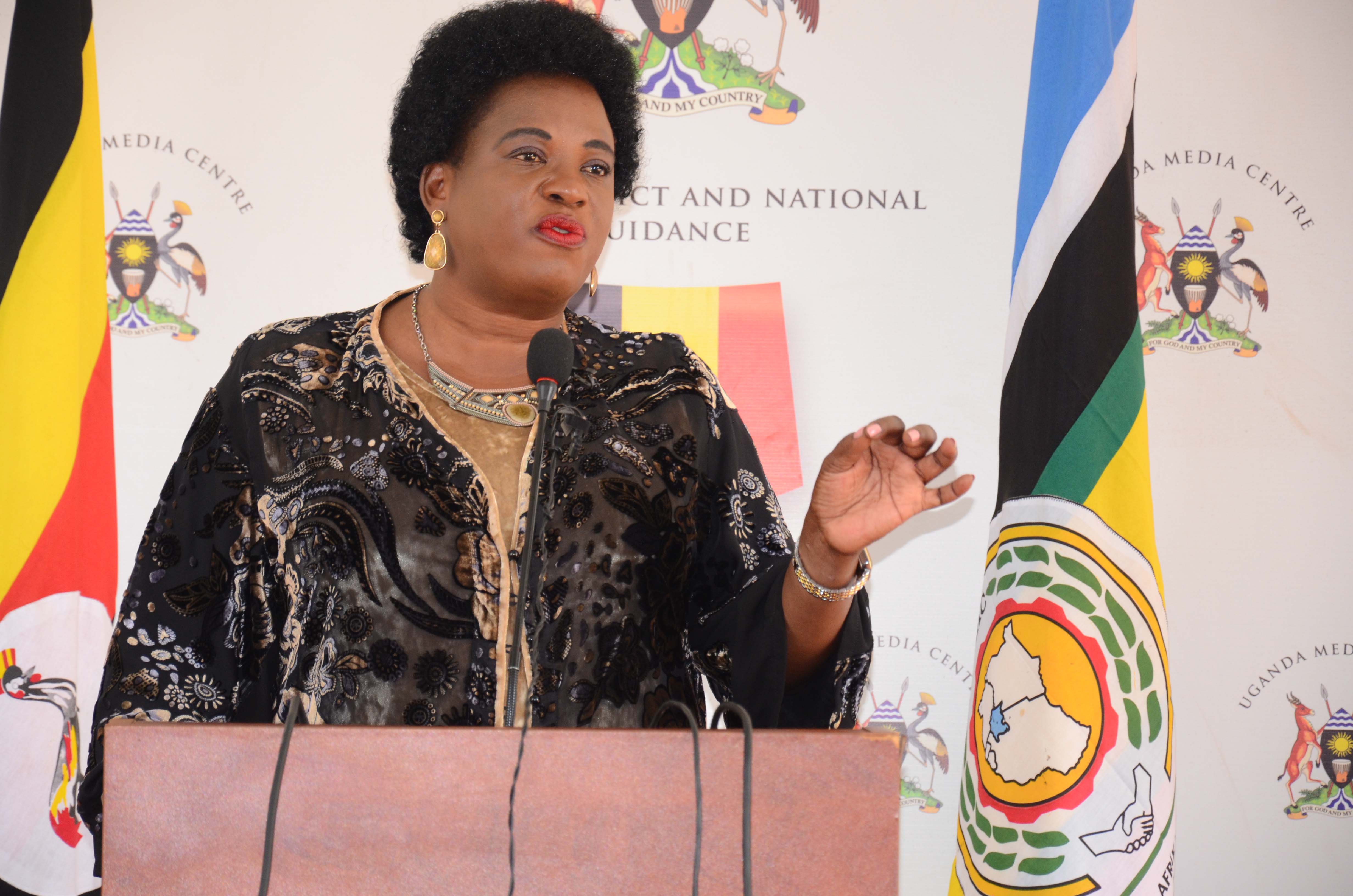
Ministry of Gender, Labour and Social Development, Betty Amongi Ongom warns companies over non compliance to safety and health of workers. (Photo by Niinga Milton)
Addressing the press on Friday at the Uganda Media Centre in Kampala ahead of the World Day for Safety and Health at Work, to be marked on Monday next week, Amongi noted that streamlined measures have been incorporated in the newly assented Occupational Safety and Health (Amendment) Act, already signed by President Yoweri Kaguta Museveni, to address these shortcomings.
"The new law requires the training and certification of machine operators, considering that most workplace accidents reported in 2024 were a result of untrained operators. In last year’s report, out of 1,000 accidents recorded, 997 were caused by untrained machine operators," Amongi revealed.
She emphasized that the use of interns or casual workers to operate machines or perform risky assignments without insurance coverage must stop, stating, "Interns come to learn, not to operate."
"In Buikwe District, we are currently investigating the Nile Breweries Njeru factory and other industrial players who have been identified for subjecting workers to poor working conditions and meager wages," Amongi warned.
Under the new law, companies and employers will be required to limit the duration for which they can engage interns or casual workers before offering them permanent employment, she added.
"The government is determined to tackle excessive casualization of labor, poor working conditions, and inadequate occupational safety measures, particularly among public and private companies that have long exploited Ugandan workers," she observed.
This year’s theme, "Revolutionizing Health and Safety: The Role of AI and Digitalization at Work," highlights the need to adapt to new technologies while prioritizing worker safety and well-being.
Employer responsibilities
Eva Katusabe, the Commissioner of the Occupational Safety and Health Department, revealed that employers are responsible for conducting risk assessments, developing safe work procedures, providing personal protective equipment (PPE), and maintaining a clean and organized workplace.
"The MGLSD has established legal and regulatory frameworks, including the Occupational Safety and Health (OSH) Amendment Act, to guide employers in ensuring safe work environments," Katusabe said.
She emphasized the need for greater commitment to prioritizing worker safety and health, especially in the context of technological advancements.
"The integration of digital tools and AI in workplaces can enhance safety protocols but also raises concerns about cybersecurity threats, techno-stress, and mental health," Katusabe cautioned.
Eng. Chris Opuch, Principal Specialized Safety Inspector at the OSH Department, noted a worrying rise in non-compliance with safety regulations, inadequate compensation for injured workers, and a lack of proper hazard management training.
Uganda will commemorate the World Day for Safety and Health at Work at the Uganda Industrial Research Institute (UIRI) in Nakawa Division, Kampala, on Monday, April 28, 2025.
Torch Media Africa



