Written By | Sports Desk
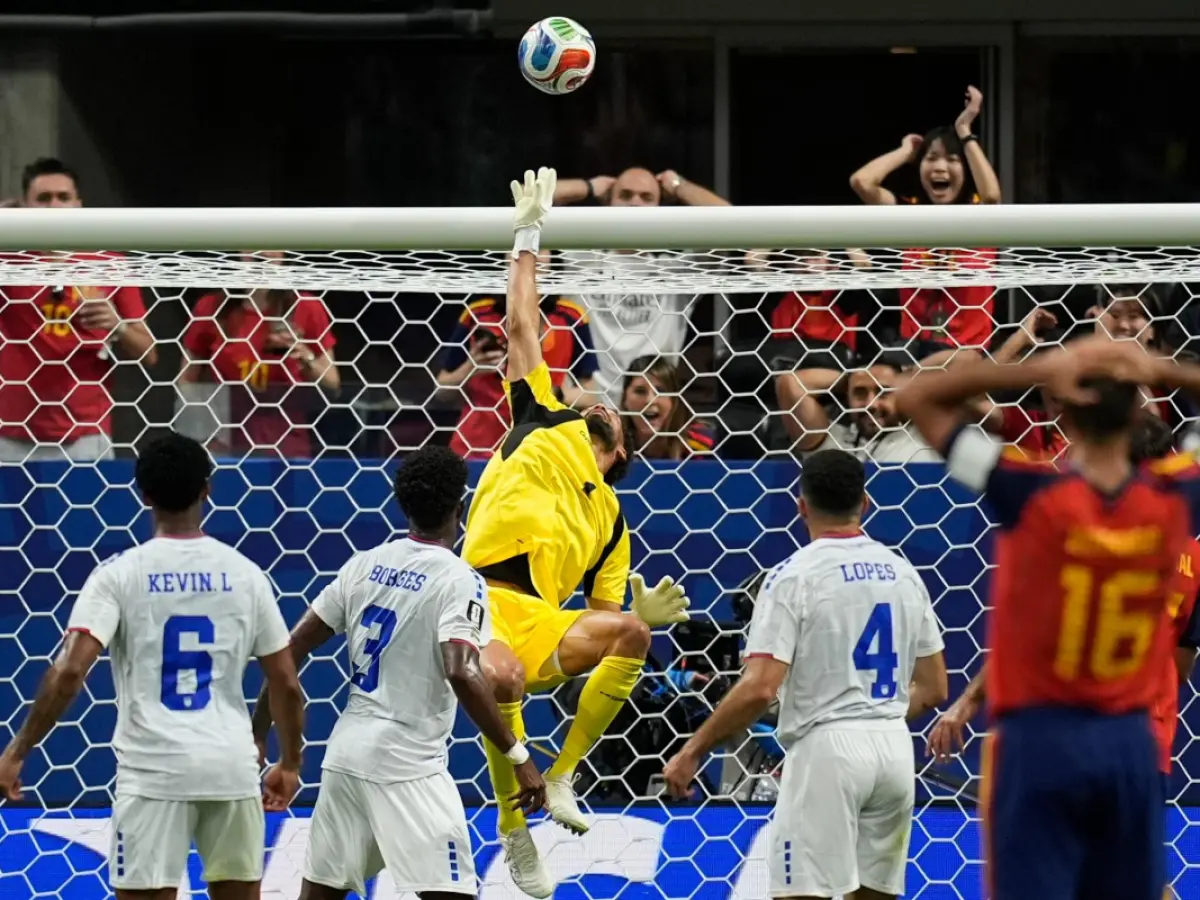
Cape Verde stunned Spain with a 0-0 draw
ATLANTA
Cape Verde, a nation of half a million people, walked into its first-ever World Cup match against reigning European champions Spain — and walked out with a result nobody saw coming, on a day so strange FIFA had not seen its like in 68 years.
There is a moment, somewhere around the 85th minute, when a small nation's entire football history compresses into a single held breath. For Cape Verde, an archipelago of ten volcanic islands off West Africa with a population smaller than Tulsa, Oklahoma, that moment came Monday night in Atlanta — and when the whistle blew, the scoreboard read Spain 0, Cape Verde 0. The reigning European champions, ranked second in the world, had been held scoreless by a team ranked 67th, playing its first-ever World Cup match.
It was one of the great upsets of the new World Cup — and not even the strangest thing to happen that day. Iran and New Zealand finished 2-2, Saudi Arabia and Uruguay drew 1-1, and every one of the day's four matches ended in a draw. FIFA's historians had to dig for a precedent, and when they found one, it dated back to 1958. Sixty-eight years had passed since a World Cup matchday produced four draws and zero winners. It happened again on June 15, 2026, and Cape Verde's result was the headline act.
A Nation the Size of a Suburb
To understand why a scoreless draw against Spain triggered street celebrations across Praia, Mindelo, and diaspora neighborhoods from Boston to Rotterdam, you have to understand what Cape Verde is working with. Roughly 525,000 people across ten islands — fewer than Wyoming. Its qualification for the 2026 World Cup was already being called the greatest achievement in the country's sporting history before a ball was kicked. Holding Spain scoreless was the exclamation point.
Head coach Pedro "Bubista" Leitão fielded a squad built almost entirely on grit rather than star power. Just one player in his matchday squad plies his trade in one of Europe's "big five" leagues; the rest is a patchwork of journeymen and diaspora-born talents. Captain Ryan Mendes, the team's all-time leading scorer, anchored a side that, on paper, had no business surviving 90 minutes against a team that has won a European Championship and a World Cup in the last two decades.
It very nearly did more than survive. In the dying seconds, defender Dani Borges rose for a header that looked destined to hand Cape Verde the most stunning victory of the tournament. Spanish goalkeeper Unai Simon turned it away, and the match ended scoreless — but the deflation in the Spanish end and the eruption among the islands' traveling supporters told its own story about which team had won the night.
"We knew we were playing against one of the best national teams in the world, but we also know our quality," goalkeeper Vozinha said afterward, his voice still catching with adrenaline. "We worked a lot for this big day."
In the stands, the emotion was just as raw. "I'm so happy, I'm so happy. I'm so proud, so proud, so proud," said Dilma Andrade, a Cape Verdean fan who had traveled to Atlanta. "Our first time in a World Cup, and so proud."
Spain Searches for Answers
For Spain, the result was less catastrophe than wake-up call. Manager Luis de la Fuente allowed himself a moment of candor: "This team was clearly inferior to us, but they did the things they had to do well." He projected calm to a Spanish public unaccustomed to seeing La Roja held without a goal by a debutant nation. "This team is reliable, whatever happens. We'll be better in the next game, for sure."
That next game looms large. Group H is shaping up to be one of the most unpredictable groups of the expanded 48-team format. Cape Verde travels to Miami to face Uruguay before closing against Saudi Arabia in Houston — two matches that now carry the real possibility of a debutant nation advancing out of the group stage.
Why a Day of Draws Matters
There's a tendency to treat a day full of 0-0s and 1-1s as a letdown. But the rarity of June 15's results — the first four-draw day since 1958 — says something larger about international football. The gap between traditional powers and rising nations has narrowed, helped along by a 48-team format that has given debutants like Cape Verde a stage they never previously had.
For readers who tune in once every four years, the takeaway is simple: do not assume the group stage is a formality. Some of this World Cup's most emotionally resonant moments may come not from the eventual champion lifting the trophy, but from nights like this one in Atlanta, when a country smaller than a mid-sized American city stood toe-to-toe with the champions of Europe and did not blink.
Cape Verde's World Cup story is far from over. Whether the Blue Sharks advance from Group H or bow out after three historic matches, the achievement of competing — and nearly beating — Spain on the world's biggest stage will be remembered on the islands for generations. The result in the books read as a draw. Everyone inside the stadium knew it felt like something closer to a famous victory.