UGANDAN POLITICS
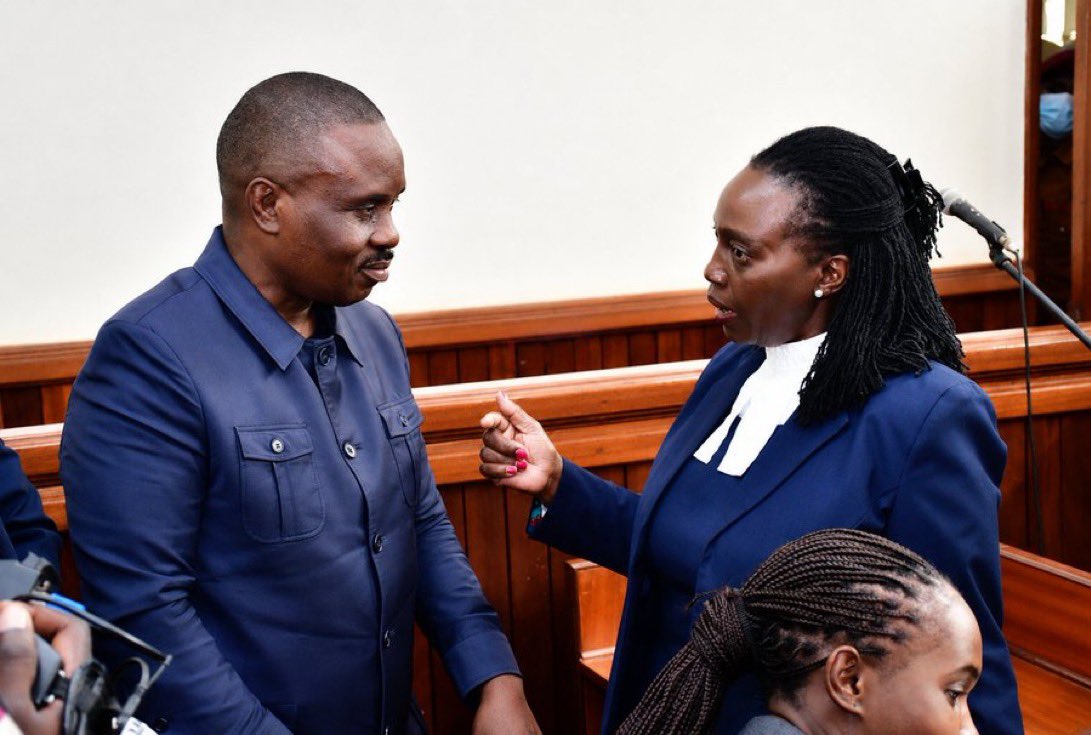
Uganda's opposition politics is being tested this month by a courtroom standoff that has come to symbolize the broader crackdown on dissent following the country's disputed January 2026 general election. Veteran opposition leader Dr. Kizza Besigye, on trial alongside co-accused Hajj Obeid Lutale, has told the High Court in Kampala that he will not proceed with his defense, and would rather remain in custody, unless he is represented by his chosen lawyers: former Kampala Lord Mayor Erias Lukwago and Kenyan Senior Counsel Martha Karua. Both lawyers have effectively been removed from the case in recent weeks — Lukwago through arrest and hospitalization, and Karua through deportation — turning what began as a treason-related prosecution into a flashpoint over the right to counsel itself.
The case against Besigye and Lutale dates back to their arrest in Nairobi in November 2024, during a book launch event organized by Karua. Ugandan prosecutors allege the pair traveled to Kenya to coordinate plans to overthrow the government, charges Besigye's camp has consistently dismissed as politically motivated. The prosecution unfolded against the backdrop of Uganda's January 15, 2026 presidential election, in which incumbent President Yoweri Museveni was declared winner with a reported 71.65 percent of the vote. International observers, including the U.S. Senate, characterized the vote as a 'hollow exercise,' while Human Rights Watch documented what it described as widespread human rights abuses during the campaign and polling period. No detailed tally was published alongside the results, deepening opposition claims of fraud.
The legal drama escalated sharply in late June. On June 23, Makindye Chief Magistrate Sarah Basemera rejected Besigye's bail application. Shortly afterward, Lukwago — one of the lead lawyers on the defense team — was arrested. Rights groups, including the International Federation for Human Rights (FIDH), have characterized his detention as an enforced disappearance, noting that his whereabouts were initially unclear before authorities confirmed he had been remanded. Lukwago's health deteriorated in custody, and he is currently receiving specialized treatment at Mulago National Referral Hospital. Karua, meanwhile, was detained at Entebbe International Airport when she traveled to Uganda to represent her clients and was subsequently deported, barring her from the country entirely.
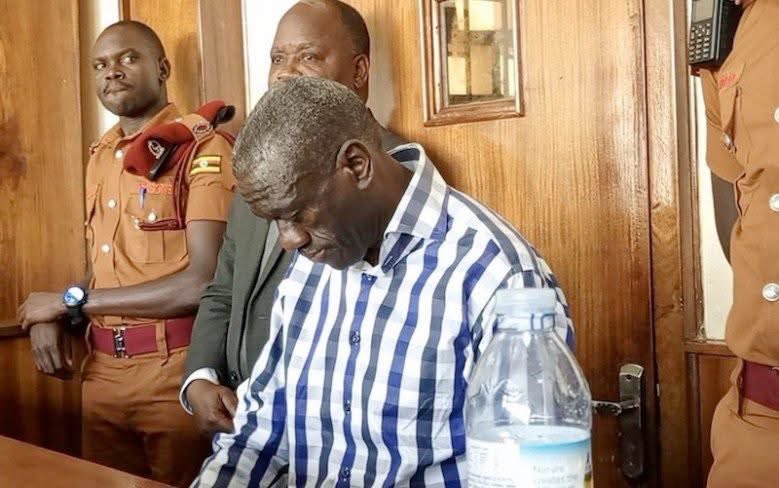
With both preferred lawyers effectively sidelined, the court has pressed Besigye and Lutale to accept alternative legal representation so the trial can move forward. Both defendants have refused. 'I would rather remain in prison than proceed without Lukwago and Martha Karua leading my defence,' Besigye told the judge, according to court reporting. His legal position is that being forced to accept lawyers he did not choose would violate his constitutional right to a fair trial and to counsel of his own choosing. Opposition figures have gone further, alleging that the removal of Lukwago and Karua was a deliberate strategy by the state to delay and weaken Besigye's defense rather than a coincidence of unrelated legal and immigration matters.
The standoff is unfolding alongside a broader tightening of space for independent political activity and media in Uganda. Journalists and media organizations covering opposition activities have reported increased pressure, including online targeting, as the military has stepped up scrutiny of independent outlets. Press freedom advocates say the pattern fits a wider trend since the January election: tighter restrictions on assembly, harassment of opposition-aligned lawyers and journalists, and closer monitoring of dissenting voices. Analysts at organizations such as the Africa Center for Strategic Studies have described the run-up to and aftermath of the election as a period of 'growing electoral violence,' with Museveni — in power since 1986 — securing what would be a seventh term.
Even as the Besigye case dominates opposition politics nationally, Uganda is simultaneously gearing up for a large-scale exercise in grassroots democracy: Local Council One (LC1) elections, scheduled for July 28, 2026, the first such nationwide polls in years after the terms of sitting local leaders were repeatedly extended, most recently expiring on June 28. The Electoral Commission has set a detailed timeline, with voter and register verification held from July 6 to 10, register display from July 13 to 14, women's council campaigns from July 20 to 22 ahead of a July 23 vote, and LC1 chairperson campaigns running July 20 to 27 ahead of polling day. Voting will take place in all 71,214 villages across the country using the traditional open 'lining-up' system, in which voters stand behind their preferred candidate or that candidate's portrait rather than casting a secret ballot. The Commission says it will recruit roughly 142,500 polling officials to run the exercise, and LC2 elections are scheduled to follow on August 10. A cabinet minister has even proposed that election day be declared a public holiday to boost turnout.
The LC1 vote matters well beyond the village level. Local council chairpersons administer a wide range of everyday governance functions — from settling local disputes and issuing recommendation letters needed for identity documents, land transactions, and travel, to serving as the first point of contact between citizens and the state. Because the terms of the outgoing leaders had been extended for years without fresh elections, the July 28 polls are widely seen as a test of whether Uganda's electoral machinery, so heavily criticized after the January presidential vote, can deliver a credible process at the grassroots. Civil society groups and some LC1 aspirants, including contested cases in areas like Kabale, have already raised concerns about the fairness of the open lining-up voting method, which by design exposes how each voter casts their ballot and can enable intimidation.
Taken together, the Besigye legal saga and the approaching LC1 elections illustrate the twin pressures shaping Uganda's political landscape in mid-2026: a national opposition movement increasingly hemmed in by arrests, deportations of legal counsel, and prosecutions widely viewed as politically charged, and a grassroots electoral process meant to renew local governance but conducted under a voting method that offers little privacy. For Besigye and his allies, the immediate question is whether the state will allow Karua and Lukwago — or lawyers of the defendants' own choosing — back into the case, or whether the prosecution will proceed regardless. For the country more broadly, the coming weeks will test whether the local elections proceed smoothly and credibly, or become another flashpoint in a political environment that international observers already regard as tense and constrained.
What to watch next: the High Court's ruling on whether Besigye's trial can proceed without his chosen lawyers, any further developments in Lukwago's health and legal status, whether Karua is permitted to re-enter Uganda, and the conduct and outcome of the July 28 LC1 elections, including whether observers and civil society raise significant complaints about the process. Any further crackdown on media or opposition figures in the run-up to these local polls would likely draw continued international attention, given the criticism already directed at January's presidential election.
Published By | News Editor