Written By | International News Desk
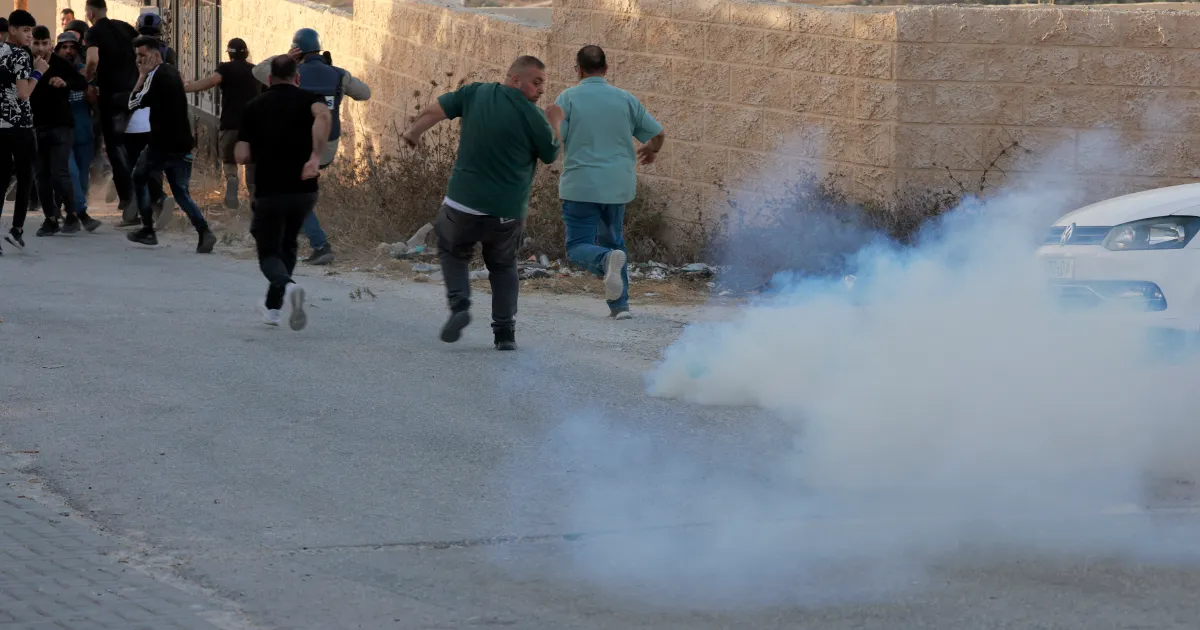
Israeli crackdown in occupied West Bank intensifies, settlers cause mayhem
Background
The occupied West Bank has spent much of 2026 sliding toward its most violent stretch in years, and on July 24 that slow-motion escalation snapped into a sharp new crisis. Israeli Prime Minister Benjamin Netanyahu and Defense Minister Israel Katz ordered what they called a "wide-scale military operation" across Palestinian villages after a confrontation near the village of Tal (also transliterated Tall), southwest of Nablus, left multiple Palestinians and Israelis dead. The order marks one of the most significant Israeli military escalations inside the West Bank this year, arriving at a moment when the territory was already absorbing a documented surge in settler violence and when Israel itself is heading into an unusually turbulent election season.
To understand why a single clash produced such a sweeping response, it helps to look at the trend lines behind it. According to Human Rights Watch, which published a report on July 24 warning that the surge in settler violence in the West Bank "threatens mass atrocities," attacks by Israeli settlers on Palestinians have been climbing for years and accelerated sharply in 2026. The rate of recorded settler attacks has grown from roughly one every three days in 2020 to more than three per day this year. In the first half of 2026 alone, monitors recorded more than 1,020 settler-violence incidents, a 45 percent increase over the same period in 2025, and settler attacks now account for an estimated 55 percent of all Palestinian injuries recorded in the West Bank this year. Save the Children has separately reported that more than 1,000 Palestinian children were displaced by settler violence in the West Bank in just the first six months of 2026. The United Nations, through both its news service and the UN Office for the Coordination of Humanitarian Affairs in the Occupied Palestinian Territory, had already been warning for weeks before the July 24 incident that Israeli attacks on Palestinians in the West Bank were "escalating," with recurring casualties, property destruction and displacement documented in successive humanitarian situation reports through July.
That backdrop matters because it shapes how both Palestinians and international monitors are reading the events of July 24: not as an isolated flashpoint, but as the latest and most violent turn in a year-long deterioration that has drawn comparisons, in scale of coverage if not in every detail, to the West Bank unrest of July 2024. It also lands amid a fraught Israeli domestic political moment. The Knesset dissolved itself in mid-July, triggering an October 27 national election that will test Netanyahu's leadership after nearly three years of war and mounting public frustration, with rivals including a former military chief gaining traction in early polling. Analysts have noted that Israeli governments facing electoral pressure from the right have historically found it politically costly to appear restrained on West Bank security policy, a dynamic that some observers say helps explain the speed and scale of the government's response to the Tal incident.
Key Developments
The immediate trigger came on July 24, when tensions in and around the Palestinian village of Tal, southwest of Nablus, boiled over into a lethal confrontation. Accounts differ somewhat on the precise sequence, but multiple outlets, including NBC News, France 24 and The Times of Israel, reported that the clash began after Israeli settlers entered or raided the area, provoking a confrontation with local Palestinians. During the ensuing chaos, a Palestinian reportedly seized a weapon from an Israeli, touching off a shootout. Casualty figures reported across outlets carry a notable discrepancy worth flagging directly: several reports, including NBC News and France 24, describe four Palestinians and one Israeli killed, while other accounts, including Al Jazeera's rolling coverage, describe four Palestinians and two Israeli soldiers killed. What is consistent across reporting is that at least four Palestinians died in the incident, alongside one or two Israelis, and that the toll was severe enough to be treated by Israeli officials as a major terror attack. Wikipedia's continuously updated "July 2026 West Bank unrest" entry and multiple news trackers noted that the July 24 deaths brought the cumulative Palestinian death toll in West Bank violence since July 19 to roughly ten.
Within hours, Netanyahu and Katz jointly announced a sweeping set of measures. The Israel Defense Forces were ordered to demolish the home of the Palestinian attacker, to launch operations against villages the government described as "hotbeds of terror," to reinforce IDF troop positions across the West Bank, to establish new checkpoints, and to accelerate the authorization and formal establishment of Israeli outposts in the territory, a step that Palestinian and international critics view as a de facto annexation move rather than a security measure. Israeli forces moved quickly: in Tal village itself, troops arrested nearly 50 Palestinians and raided approximately 70 homes in the initial sweep. The military also canceled scheduled leave for soldiers stationed in the West Bank, a signal that commanders are bracing for an extended campaign of what officials termed "extensive counter-terrorism operational activity" rather than a short, contained response. Reporting from The National and other outlets described houses burning and lockdown-like conditions spreading through northern West Bank villages in the operation's opening days, with Israeli forces deployed heavily around Nablus.
The operation is also notable for what it signals about settler activity specifically. Rather than treating settler violence and the militant-attack response as separate tracks, the government's package folded accelerated outpost authorization into its security response, effectively rewarding settlement expansion in the same announcement that ordered a crackdown on Palestinian villages. Human rights monitors have flagged this pairing as particularly alarming, arguing it demonstrates that settler violence is being absorbed into, rather than restrained by, official Israeli policy.
Reactions
The Palestinian Authority's presidency issued a sharp condemnation, describing the actions of Israeli occupation forces and what it called "colonists' gangs" as crimes against the Palestinian people. It specifically condemned the government's decisions to accelerate the establishment and legalization of settlement outposts, reinforce military forces throughout the West Bank, intensify raids, and impose what it characterized as a siege on Nablus and its surrounding villages. The statement reflects the PA's now-familiar position that Israeli military operations following attacks function as pretexts for entrenching settlement infrastructure rather than as narrowly targeted counterterrorism.
International human rights organizations were similarly alarmed. Human Rights Watch's July 24 report calling the settler-violence surge a threat of "mass atrocities" was published the same day as the Tal operation began, giving its warnings immediate real-world resonance. The United Nations, through OCHA's Occupied Palestinian Territory office, had already been documenting a rising toll of casualties, displacement and property damage in the West Bank in its regular situation reports throughout July, and UN officials reiterated concern about the trajectory of violence as the new operation got underway.
Regionally, the response was complicated by timing. A joint statement issued July 23 by the foreign ministers of Turkey, Egypt, Indonesia, Jordan, Pakistan, Qatar, Saudi Arabia and the United Arab Emirates condemned an escalation at the Al-Aqsa Mosque compound, a related but distinct flashpoint in Jerusalem, illustrating that Arab and Muslim-majority governments were already mobilized over developments in the broader Israeli-Palestinian arena even before the Tal incident and subsequent operation dominated headlines. A dedicated, separate joint statement specifically addressing the July 24 West Bank operation had not clearly surfaced in available reporting as of this writing, though further regional statements are likely as the operation continues. Notably, the West Bank escalation also arrived the same week that President Trump suggested Saudi Arabia would normalize relations with Israel "at some point," a comment that underscored how West Bank violence continues to complicate, without necessarily derailing, the broader US-brokered normalization track in the region.
Within Israel, reaction split along familiar lines. Government ministers framed the operation as a necessary and overdue response to what they described as a wave of terror emanating from West Bank villages, while critics, including some Israeli commentators and opposition figures, questioned whether accelerating outpost authorization mid-crisis served security goals or longer-term political ones tied to the coming election.
What's Next
Israeli officials have signaled this will not be a brief operation. The cancellation of soldiers' leave and explicit preparation for "extensive" counter-terrorism activity suggest the military campaign in West Bank villages, including continued home demolitions, arrests and raids, will extend over an unspecified but meaningful period. Given that settler violence has been rising steadily throughout 2026 even before this operation, monitors including Human Rights Watch, the UN and Save the Children are likely to continue documenting rising casualty, displacement and property-destruction figures in the weeks ahead, and further reports and warnings should be expected.
The political dimension may prove just as consequential as the security one. With Israel's election set for October 27 and Netanyahu facing his most serious challenge in years, decisions about West Bank policy, including how aggressively to pursue outpost legalization and how forcefully to respond to future incidents, are likely to be shaped as much by campaign dynamics as by security assessments on the ground. Whether the Palestinian Authority's condemnations translate into any shift in international pressure, whether Arab states issue a more specific response to the Tal operation beyond the general Al-Aqsa statement, and whether the operation triggers further rounds of settler and Palestinian violence in a self-reinforcing cycle are the key questions likely to define coverage of the West Bank over the coming weeks.



