LOS ANGELES
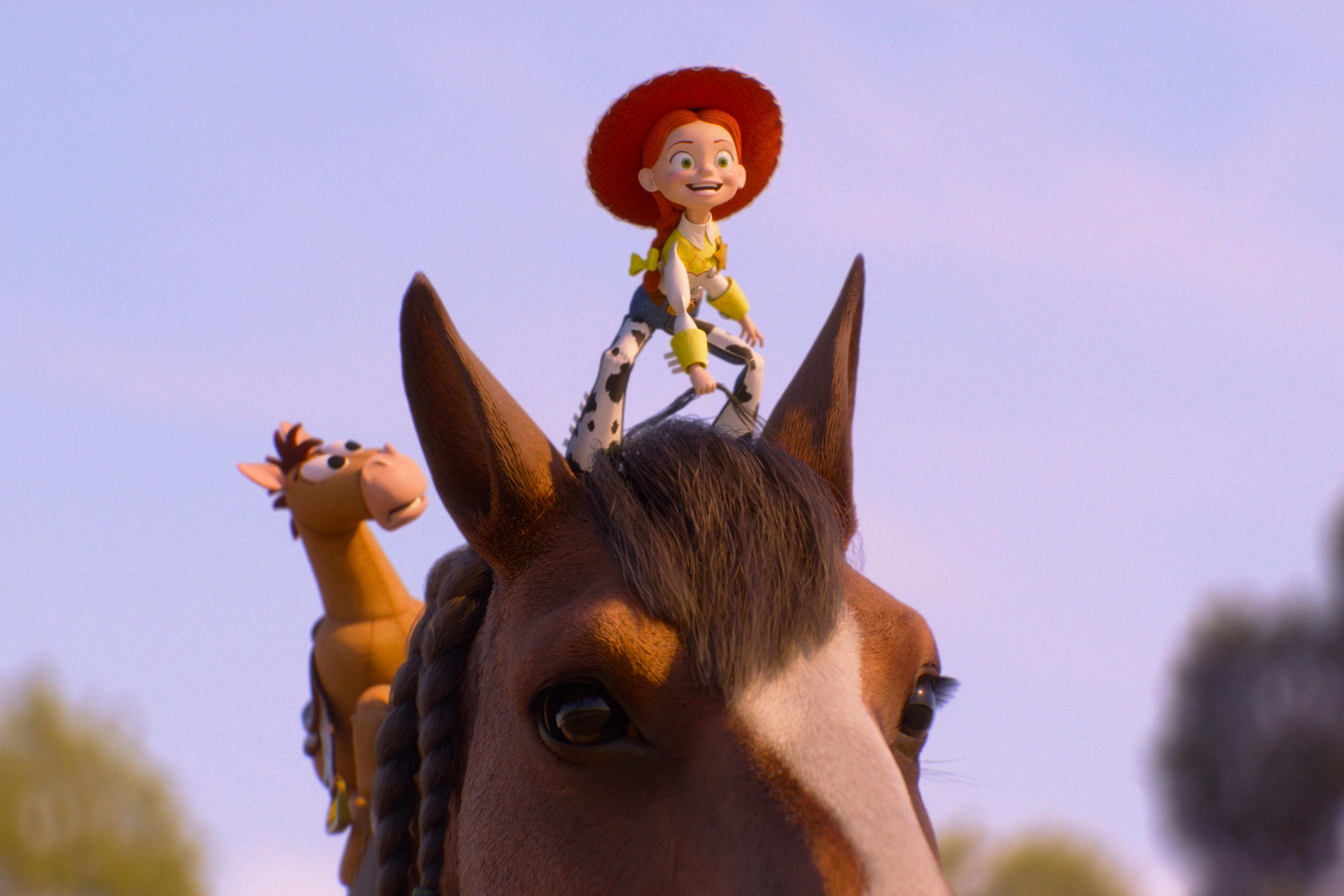
Eleven years after Toy Story 4 sent Woody off into the sunset with Bo Peep, Pixar's most durable franchise returns to theaters today with Toy Story 5 — a film that spends its first act answering a question the series had quietly been avoiding: what happens to the toys he left behind? The answer, it turns out, is Jessie — and after four movies of being a supporting player in someone else's story, the cowgirl voiced by Joan Cusack finally gets one of her own.
Jessie's Long-Overdue Spotlight
The setup picks up from Toy Story 4's bittersweet ending. With Woody gone, Buzz Lightyear and Jessie have spent the intervening years co-leading Bonnie's playroom, settling into a rhythm that gets upended when a sleek, tablet-like device named Lilypad arrives. Lilypad's seductive screen destabilizes the toys' sense of place, forcing Woody back into the fold and the whole gang into a reunion adventure that doubles, characteristically for this series, as an existential crisis dressed up as a kids' movie.
What separates Toy Story 5 from its predecessors, according to early reviews, is how directly it hands its emotional center to Jessie. Critics have noted that the film gives her the journey she has arguably deserved since 1999: a parallel exploration, alongside Woody, of what it really means for a toy's purpose to expire. The twist is thematic — Jessie comes to realize that the same fear toys carry about being abandoned also haunts the gadgets that replace them.
The filmmakers give Jessie the story she deserves. — Hollywood Reporter
Rather than retread Woody's existential arc a fifth time, Toy Story 5 passes the baton, using Jessie's perspective to interrogate planned obsolescence through the series' established emotional grammar of abandonment and belonging. Tom Hanks and Tim Allen return as Woody and Buzz, but the marketing and reviews alike make clear that this is Jessie's movie.

A Pop Star's One-Day Songwriting Sprint
The film's end-credits song has its own tidy mythology. Taylor Swift, who told Pixar's filmmakers she felt Jessie needed her own song, reportedly wrote and recorded "I Knew It, I Knew You" with Jack Antonoff in a single day after watching an early cut — what she described as a fit of "songwriter zoomies." Studio executives gave her no notes on the finished track, an unusually hands-off endorsement for a franchise as carefully managed as Pixar's flagship series.
The Best Worst Score in Franchise History
As of June 17, Toy Story 5 sat at 94 percent on Rotten Tomatoes — a figure that would be a career highlight for almost any other animated franchise, and is, by the standards of this one, technically the lowest of the five Toy Story films. (Toy Story 4 holds the series record at 97 percent.) Critics have been near-unanimous that the dip is a rounding error rather than a real decline, with multiple reviews praising the film's ability to wring fresh feeling out of a franchise many assumed had said its goodbyes already.
That critical consensus has translated into outsized box office expectations. Forecasters have pegged the domestic opening weekend anywhere from $150 million to $185 million, with some global estimates reaching as high as $275 million — numbers that would comfortably eclipse *Toy Story 4*'s franchise-record $120.9 million domestic debut.
What This Means for Moviegoers
For families weighing a trip to the multiplex this weekend, the read from critics is consistent: bring tissues, and don't expect the kids to be the only ones crying. The film's handling of Jessie's arc, and its sly extension of the franchise's abandonment theme into the world of consumer technology, gives it a register that lands differently for parents than for children watching for the first time — exactly the dual-audience trick that made the earlier films generational touchstones.
Whether or not Toy Story 5 delivers the record-breaking opening forecasters predict, its arrival closes out a quietly important experiment for Pixar: proving that a decade-old franchise can still find a genuinely new story to tell, rather than simply trading on nostalgia. Early signs suggest it has.
Sources: Pixar; Disney; Rotten Tomatoes; Hollywood Reporter; Variety; Box Office Pro
Published By | Features Editor