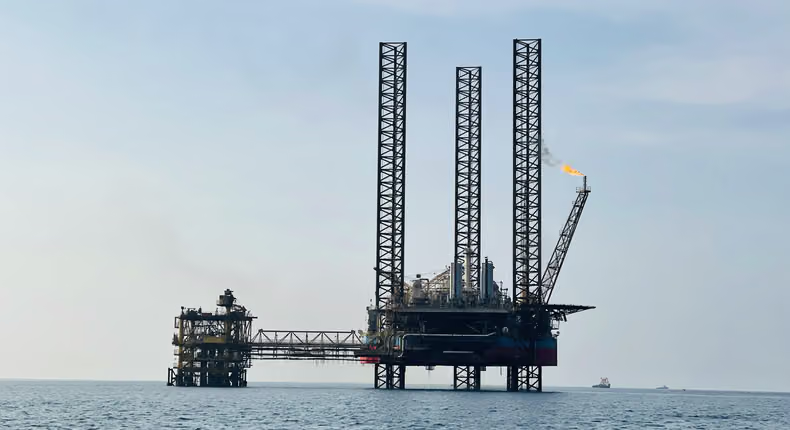
For more than two decades, Angola's economic story has been written in barrels of crude. Oil has financed the state, anchored the currency, and dictated growth in Southern Africa's second-largest economy. But that story is now being rewritten under duress. Production at aging offshore fields has fallen from roughly 1.9 million barrels per day in 2008 to about 1.1 million in 2024, according to the IMF, and the decline shows no sign of reversing as reservoirs deplete and the global energy transition discourages new upstream investment. The result is a structural decline in oil revenue forcing Luanda to confront, more urgently than at any point since the civil war ended, the question of what a non-oil Angola actually looks like.
A Sobering 2026 Article IV Verdict
The IMF's Executive Board concluded its 2026 Article IV consultation with Angola on May 1, and the staff report (Country Report No. 26/96) painted a picture of an economy still absorbing a weak oil year. A sharp production decline in 2025 weakened both fiscal and external accounts, with lower oil revenue and expenditure slippages pushing the overall fiscal deficit to 4.1% of GDP. Real GDP growth held at a modest 3.1% in 2025, a deceleration from 5.0% in 2024, as lower international prices compounded the production shortfall.
The African Development Bank's parallel outlook projects real GDP growth of 2.9% in 2026, edging to 3.3% in 2027. Angola's public debt-to-GDP ratio is expected to hold roughly steady at 48.2%, supported by primary fiscal surpluses, while the fiscal deficit is projected to narrow back below 3% of GDP in 2026-27 as budget consolidation measures take hold under the Fiscal Sustainability Law. IMF directors specifically flagged the importance of safeguarding debt sustainability given the structural—not cyclical—nature of the oil revenue decline, and noted that external debt includes obligations of state oil company Sonangol and state airline TAAG, both carrying government guarantees that add to contingent liabilities.
Risks are not abstract. Oil price volatility, tighter global financial conditions, geopolitical tensions, and climate shocks to agriculture all feature in the Fund's assessment. Angola's reliance on a single, depleting commodity for the bulk of export earnings and government revenue remains, in the IMF's own words, the central vulnerability to monitor.

The Lobito Corridor: From Transit Route to Growth Engine
If there is a single project capturing the diversification narrative, it is the Lobito Corridor—the 1,300-kilometer rail and logistics link connecting the copper belts of the DRC and Zambia to Angola's Atlantic port of Lobito. Angola reaffirmed its commitment to the corridor's expansion in February 2026, positioning the route not just as a transit channel for Central African minerals but as a platform for its own agribusiness and logistics sectors. The AfDB's growth projections explicitly cite agribusiness and logistics investment along the corridor, together with roughly $2 billion in non-diamond mining and rare-earth projects, as key drivers through 2027.
The agricultural opportunity is large precisely because it has been so neglected. Angola has an estimated 35 million hectares of arable land, of which only about 10% is currently cultivated—a legacy of the 1975-2002 civil war from which the farm sector never fully recovered. UNOPS is now working with Angola's government on last-mile infrastructure connecting rural producers in Huambo and Benguela provinces to the corridor's logistics hubs, a project expected to benefit more than 107,000 people directly. The EU and its member states have layered in additional support for sustainable agricultural value chains, vocational training, and rural water and energy access along the same corridor. The ambition, as articulated by Angola's Ministry of Finance, is for Lobito to anchor diversification goals that extend well beyond rail tariffs and port fees—building durable agricultural export capacity that does not move with the price of Brent crude.
Whether that ambition is realized depends on follow-through that has, historically, been Angola's weak point. Credendo's country risk analysis notes that the most pressing near-term threat to macroeconomic stability remains over-reliance on hydrocarbon export revenue, leaving the diversification agenda exposed to the very oil shocks it is meant to insulate against. Sustained progress requires both continued investment discipline along the corridor and the prudent borrowing the IMF has repeatedly urged.
Social Indicators: Growth Without Broad-Based Gains
Angola's macroeconomic stabilization has not yet translated into broad improvements in living standards. The World Bank's most recent poverty data, drawn from the 2018-2019 IDREA household survey, put the national poverty rate at roughly 32%, with a stark urban-rural divide: about 18% in cities versus 54% in rural areas. Updated estimates suggest the national rate remains around 31%, with rural poverty particularly acute—roughly 53% of the rural population still lives on less than $2.15 a day, with subsistence farming as the primary fallback. Angola's Gini coefficient stands at 51.3, among the highest in Sub-Saharan Africa and the third-highest among the continent's lower-middle-income countries, meaning growth has historically done little to narrow the gap between Luanda's oil-linked elite and the rural poor. Angola's Human Capital Index score of 0.36 (2020 World Bank data) underscores how far behind the country remains on education and health outcomes relative to its income level.
The government's response has centered on expanding direct cash transfers. As of February 2026, the Strengthening the National Social Protection System Project had reached over 1.2 million vulnerable households through the Kwenda program, with plans to expand coverage further. Yet the scale of need remains vast, and the fiscal space to expand social spending is constrained precisely because oil revenue—the traditional source of state financing—is in structural decline.
What This Means for Angola's Future
Angola stands at a genuine inflection point. The oil decline is not a temporary trough but a long-term trend, and the government's response—investing in the Lobito Corridor, agricultural rehabilitation, and social protection—reflects a recognition that the old model is exhausted. The IMF's Article IV report offers a qualified vote of confidence: the macroeconomic framework is broadly appropriate, debt is sustainable under the baseline, and the authorities' commitment to fiscal consolidation is credible. But qualification matters. The baseline depends on oil prices cooperating, diversification delivering faster than expected, and the political will to sustain reforms surviving the inevitable friction of implementation.
For Angola's 36 million citizens, the stakes are straightforward: either the diversification agenda produces visible improvements in living standards, or the country remains trapped in an oil-dependent cycle where falling production translates into falling state capacity and stagnant wages. The Lobito Corridor and the agricultural projects along it are not guarantees—they are bets. And for a country that has been betting on oil for half a century, learning to place diversified bets is, in the end, the only strategy that makes sense.
Published By | Business News Editor