Written By |

The court held that monogamous and polygamous marriages operate under fundamentally different legal frameworks
Kampala - The Constitutional Court has upheld the legality of polygamy in Uganda, dismissing a petition that challenged the practice as unconstitutional and discriminatory. In a landmark ruling delivered by Justice Margaret Tibulya and unanimously agreed upon by a panel of five justices, the court ruled that polygamy—recognized under Uganda’s Customary Marriage (Registration) Act and the Marriage and Divorce of Mohammedans Act—does not violate the Constitution’s guarantees of equality, non-discrimination, or protection from cruel, inhuman or degrading treatment.
Hon. Lady Justice Tibulya
The petition, filed by the Women’s Probono Initiative (WPI), argued that polygamy perpetuates gender inequality, exposes women to emotional distress, and undermines their rights to health and dignity. WPI further claimed that exempting husbands in polygamous marriages from prosecution for bigamy creates unequal treatment under Article 21 of the Constitution, which guarantees equality before the law.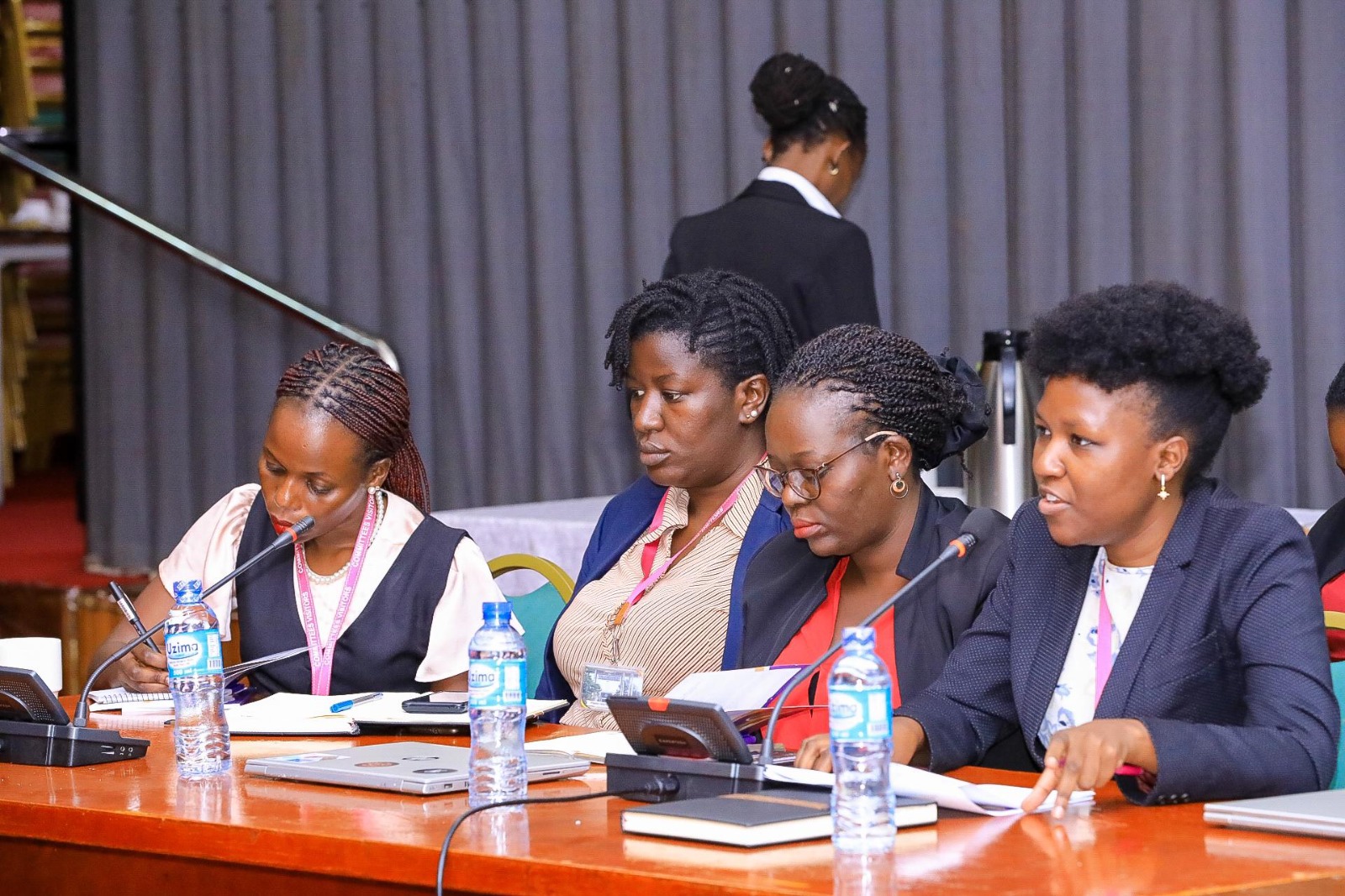
The Marriage Bill 2024, was tabled by Tororo District Woman Representative Sarah Opendi, with an aim of reforming marriage laws in Uganda in February 2025
READ MORE HERE: WOMEN ACTIVISTS REJECT PROPOSAL TO INTRODUCE POLYGAMY IN CIVIL MARRIAGES
However, the court held that monogamous and polygamous marriages operate under fundamentally different legal frameworks, making the two “intrinsically unequal” and therefore not directly comparable under Article 21. “The equality necessary to support legal protections does not require identical treatment of all groups,” Justice Tibulya wrote in her judgment, adding that “there is no greater inequality than the equal treatment of unequals.”
On the question of whether polygamy constitutes torture or degrading treatment, the court found no sufficient evidence to support the claim, ruling that consensual polygamy among adults cannot be considered cruel or inhuman. “Polygamy is not inherently torture,” Tibulya stated. “Except in cases of coercion or forced marriage—which are criminal in nature—consensual polygamy does not amount to cruel, inhuman or degrading treatment.”
Ugandan businessman Hajj Habib, recently married 7 women in consensual marriage. The court ruled that consensual polygamy among adults cannot be considered cruel or inhuman. (Courtersy Photo)
The justices further ruled that Uganda’s legal recognition of polygamy does not breach the state’s affirmative action obligations under Articles 32 and 33, since both monogamous and polygamous marriages are protected under the law.
Citing Article 29, which guarantees freedom of conscience, belief, and religion, the court emphasized that individuals have the right to choose the type of marriage that aligns with their cultural or religious beliefs.
“The state is not under any constitutional duty to coerce its citizens into enjoying specific rights,” Tibulya wrote, warning that reading equality protections too narrowly could stifle cultural and religious freedoms.
With all six grounds of the petition resolved in the negative, the court declined to grant any declarations or orders sought by the petitioners. Each party was ordered to bear its own costs.
Legal analysts say the decision, in Women’s Probono Initiative v Attorney General (Constitutional Petition No. 12 of 2021) [2025] UGCC 6, is a significant reaffirmation of Uganda’s legal pluralism. It could influence future debates around personal law, gender equality, and the complex balance between constitutional rights and cultural or religious practices.
READ FULL JUDGEMENT HERE: Women's Probono Initiative v Attorney General
Torch Media Africa



