Politics
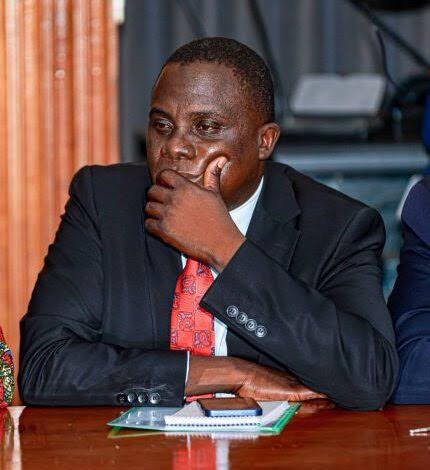
Uganda's political crisis has escalated sharply over the past five weeks, as human rights investigators and independent media document a pattern of soldiers seizing government critics off the streets, holding them incommunicado, and later charging them in politically inflected cases. The latest and most closely watched of these episodes involves Muwanga Kivumbi, deputy president of the opposition National Unity Platform (NUP), whose lawyers have now filed a habeas corpus petition after the state failed to produce him in court and, at one hearing, told the judge his whereabouts were unknown.
Kivumbi's ordeal began well before his current disappearance. He was among a group of suspects arrested between January 2 and January 14, 2026, following a security operation at his home in Butambala District that left more than seven people dead and drew widespread condemnation. Prosecutors in the International Crimes Division of the High Court charged him over alleged attacks on Kibibi Police Station and the Butambala Electoral Commission tally centre, as well as damage to the Butambala–Gomba road and destruction of vehicles — terrorism-related charges that his party has consistently described as politically motivated. After months in custody, the court granted him bail on cash terms of 10 million Ugandan shillings, and he walked free vowing to resume his political activity against the ruling National Resistance Movement (NRM).
That freedom lasted only days. On July 11, a group of armed men — some in Uganda People's Defence Forces (UPDF) uniform, others in plain clothes — intercepted Kivumbi at a roadblock near Mpigi Police Station on the outskirts of Kampala and took him to an undisclosed location. He has not been produced before a court since, has been denied access to his family, his lawyers and his personal physician, and by the state's own admission at a recent hearing, his current location is not known to the prosecution. His detention has now run well past the 48-hour constitutional limit for holding a suspect without charge, prompting NUP to pursue a habeas corpus petition compelling security agencies to produce him or explain the legal basis for continuing to hold him. In Parliament, the newly convened 12th Parliament has also pressed the government for answers, with a minister told to account for Kivumbi's reported rearrest.
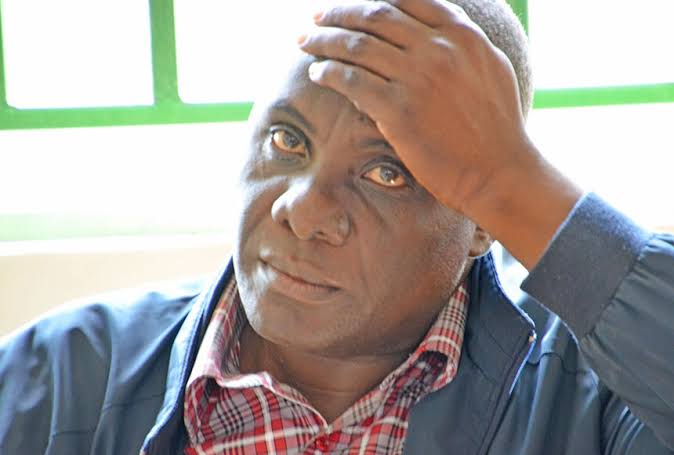
Kivumbi's case is the most prominent example of a broader pattern that Human Rights Watch documented in a report published on July 16. The rights group said that since mid-June, Ugandan security forces have unlawfully seized at least five prominent critics of President Yoweri Museveni and his son, General Muhoozi Kainerugaba, the UPDF's chief of defence forces. On June 15, armed soldiers raided the Kampala home of lawyer Erias Lukwago, seized him, held him at an undisclosed location, and subsequently charged him with treason-related offences connected to the long-running case against opposition figure Kizza Besigye. A week later, on June 22, authorities detained Martha Karua — a Kenyan lawyer and former justice minister serving as lead counsel in Besigye's defence — upon her arrival at Entebbe International Airport, where she had travelled to observe Lukwago's court proceedings, and deported her to Kenya within hours.
On June 28, soldiers detained Miria Matembe, a well-known activist and government critic, holding her at an unknown facility for two days before transferring her to a police station and charging her with 'promoting sectarianism' — an offence rights groups say is routinely used against government critics. She was released on bail the next day. Journalist and government critic Timothy Kalyegira has said he was seized on June 26 and driven in a UPDF Special Forces Command vehicle to a basement holding facility; three days later he was charged with operating digital news outlets without a licence and released on bail. Human Rights Watch also reported that the army has raided and effectively laid siege to Uganda's largest independent media company, forcing it to suspend operations over its coverage of the president — a development that press freedom advocates say marks a significant escalation against Uganda's already constrained media environment.
The government has defended the operations in explicitly political terms. In a televised national address on July 4, President Museveni characterised the wave of detentions as a 'counter-offensive against corruption, crime and impunity,' arguing that security agencies had stepped in to close gaps left by weak state institutions. He has separately defended the refusal to grant bail to some detainees, arguing that releasing suspects ahead of trial risks exposing witnesses to intimidation and could undermine the integrity of the judicial process — a rationale that opposition figures and rights groups reject as a pretext for indefinite, extrajudicial detention.
These events are unfolding against the backdrop of Uganda's disputed January 2026 general election, in which Museveni secured a seventh term. International observers and rights organisations, including Human Rights Watch and Freedom House, have characterised the post-election period as marked by an intensifying assault on the political opposition, with mounting reports of arbitrary detention, enforced disappearance and the use of terrorism and treason statutes against opposition figures. Analysts tracking the region note that the crackdown coincides with an increasingly visible political role for General Muhoozi Kainerugaba, whose public statements and social media activity have long fuelled speculation about his ambitions to eventually succeed his father.
Why this matters extends well beyond the individual cases. Uganda's constitution requires that any person arrested be produced before a court within 48 hours, and the pattern of military units — rather than police — seizing civilian critics and holding them beyond that limit represents, according to HRW and JURIST, a direct violation of that guarantee and of Uganda's international human rights obligations. For the NUP and the broader opposition coalition built around Bobi Wine and Kizza Besigye, the detention of a deputy party president and the deportation of Besigye's own lead defence counsel strikes directly at the movement's capacity to organise and mount legal defences in the aftermath of a contested election. For international partners, the deteriorating rights picture complicates Uganda's diplomatic and economic relationships at precisely the moment the country is trying to present itself as a stable, investment-ready destination ahead of first oil production later this year.
What happens next will hinge largely on the courts. The High Court's response to Kivumbi's habeas corpus petition — whether it orders the state to produce him and on what timeline it can enforce that order against a military that has so far ignored similar directives in other cases — will be an important signal of how much independent authority Uganda's judiciary retains under sustained executive and military pressure. Parliament's requests for the government to account for Kivumbi's whereabouts, though largely symbolic given the NRM's dominant majority, will also be watched for any sign of institutional pushback. Beyond Kivumbi's individual case, rights groups say they will be watching for whether the pattern of seizures continues, whether the independent media company under siege is allowed to resume operations, and whether foreign governments and multilateral bodies move beyond statements of concern toward more concrete diplomatic or economic responses.
Published By | Features Editor