BUSINESS
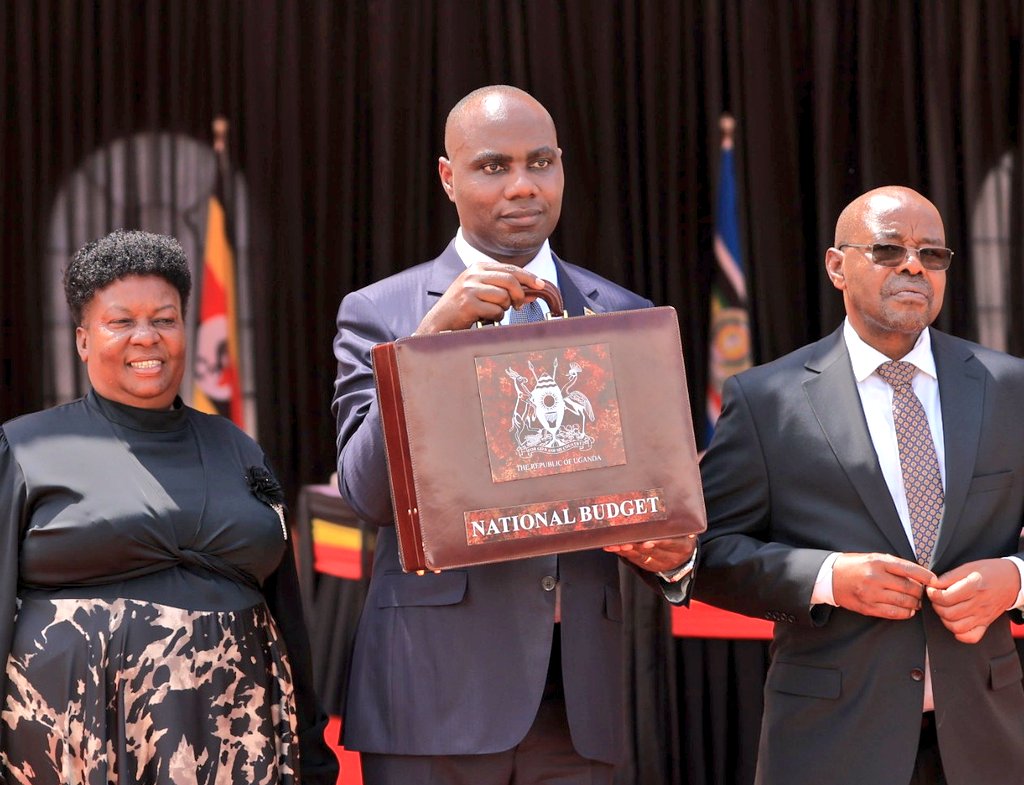
Uganda has entered its 2026/27 financial year with the largest national budget in the country's history and an economic growth forecast that officials say would mark the fastest expansion in three decades. Parliament passed a Shs84.3 trillion budget in June 2026, a figure the government frames as anchored on infrastructure investment and, above all, on the long-awaited arrival of commercial oil production. Finance Minister Henry Musasizi told Parliament that the economy is projected to grow by roughly 10.2 percent in 2026/27, up sharply from the 5.8 percent year-on-year growth recorded in the third quarter of the 2025/26 financial year — itself a deceleration from the 8.5 percent posted in the same quarter a year earlier.
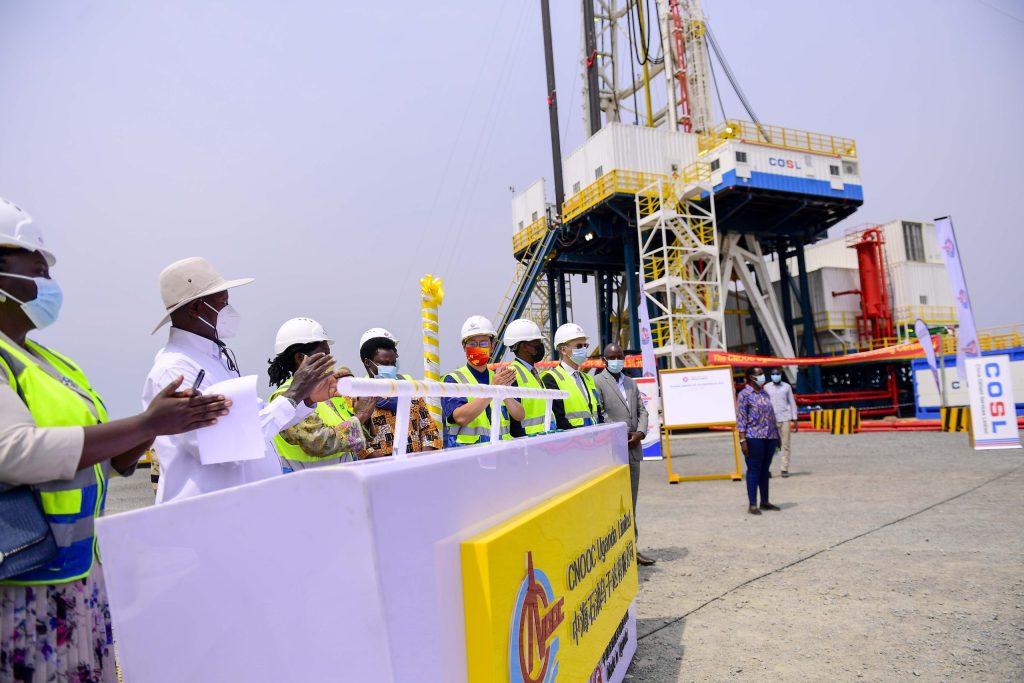
The centerpiece of this optimism is oil. After roughly two decades of exploration, delays, and infrastructure build-out since commercially viable reserves were first confirmed in the Albertine Graben region, Uganda is now positioned for what officials are calling "First Oil." Drilling activity has already exceeded the technical threshold required for initial production: fifty-one additional wells were drilled in recent months, bringing the cumulative total to 199 wells, surpassing the 189 wells the government says are needed to begin commercial output. Expectations are that oil will begin flowing sometime between July and October 2026, though some independent analysts caution that logistical and technical factors could push the actual start of production into 2027. The budget already reflects this anticipated windfall: more than Shs1.8 trillion in oil-related non-tax revenue has been built into the government's financing plans for the year, even before a single barrel has been exported.
Beyond oil, the broader macroeconomic picture presented by Ugandan authorities and international financial institutions is one of relative stability. The Ugandan shilling appreciated by 1.9 percent against the US dollar between May and June 2026, a strengthening officials attribute to higher export earnings, increased diaspora remittances, greater offshore investment inflows, and what the Ministry of Finance describes as sound macroeconomic management. Uganda's foreign exchange reserves have grown substantially as well, reaching USD 6.01 billion at the end of March 2026 — equivalent to about four months of import cover — up from USD 3.555 billion just a year earlier. The country's external position has also been buoyed by a Balance of Payments surplus described as the largest in fifteen years, driven by strong growth in both remittances and export earnings.
Inflation, meanwhile, has ticked upward modestly but remains within the central bank's target range. Consumer price inflation rose from 3.2 percent in May 2026 to 3.7 percent in June 2026, a shift officials attribute primarily to higher transport and energy costs linked to rising international oil prices amid ongoing tensions in the Middle East. Even with this uptick, inflation remains comfortably below the medium-term target ceiling of 5.0 percent, giving the Bank of Uganda room to maintain a broadly accommodative policy stance as the economy scales up around the new energy sector.
On the spending side, domestic revenue is expected to finance the largest share of the record budget, at roughly Shs44.18 trillion, with the remainder coming from a mix of borrowing, grants, and — increasingly — anticipated oil revenues. Government officials, including figures from the Uganda Investment Authority and the Presidential Special Envoy structures overseeing macroeconomic strategy, have publicly framed the budget as an "ambitious push toward accelerated economic transformation," explicitly tying the country's development trajectory to the successful ramp-up of oil exports alongside continued investment in infrastructure, agriculture, and industrial capacity.
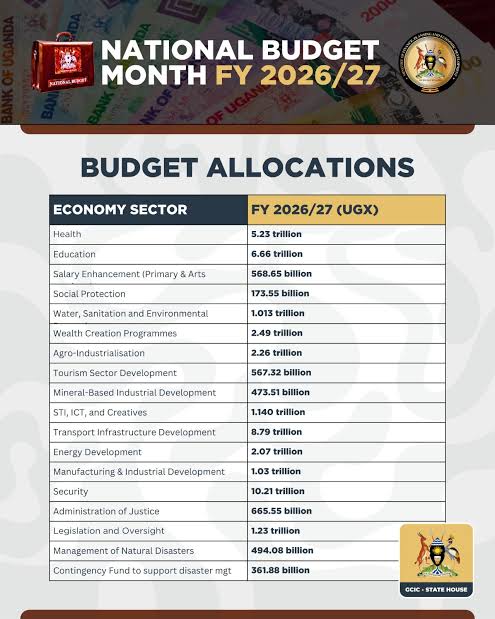
The stakes of getting this transition right are considerable. Oil-dependent growth carries well-documented risks for developing economies, from currency volatility and Dutch-disease-style pressure on non-oil tradable sectors, to governance challenges around revenue management and the temptation of pro-cyclical spending during a boom. Uganda's government has pointed to its Petroleum Fund and revenue-sharing framework, developed over the preceding decade in consultation with the International Monetary Fund and World Bank, as safeguards intended to smooth spending and channel a portion of oil proceeds into long-term savings and investment rather than immediate consumption. The IMF and World Bank continue to monitor Uganda's fiscal trajectory closely, and both institutions' country assessments will likely take on added significance once oil exports actually begin generating revenue at scale.
For businesses and investors, the immediate signals are encouraging: a stronger currency, contained inflation, record foreign exchange reserves, and a government message of accelerating growth. The Uganda Investment Authority has characterized the investment outlook as "robust" and pointed to increasing investor confidence tied to both the oil sector and broader export growth. Still, the true test will come in the months ahead as the country determines whether First Oil arrives on the government's stated July-to-October 2026 timeline or slips, as some analysts anticipate, into 2027. A delay would not upend the budget outright, given the diversified revenue base built into the Shs84.3 trillion plan, but it would complicate the government's ability to hit its ambitious 10.2 percent growth target and could test public patience after two decades of anticipation around Uganda's oil wealth. Equally important will be how transparently oil revenues, once they materialize, are reported and allocated — an issue that watchdog groups, opposition politicians, and international partners are all expected to scrutinize closely as Uganda enters what officials are billing as a transformative economic chapter.
Published By | Business News Editor