Written By | Staff Writer
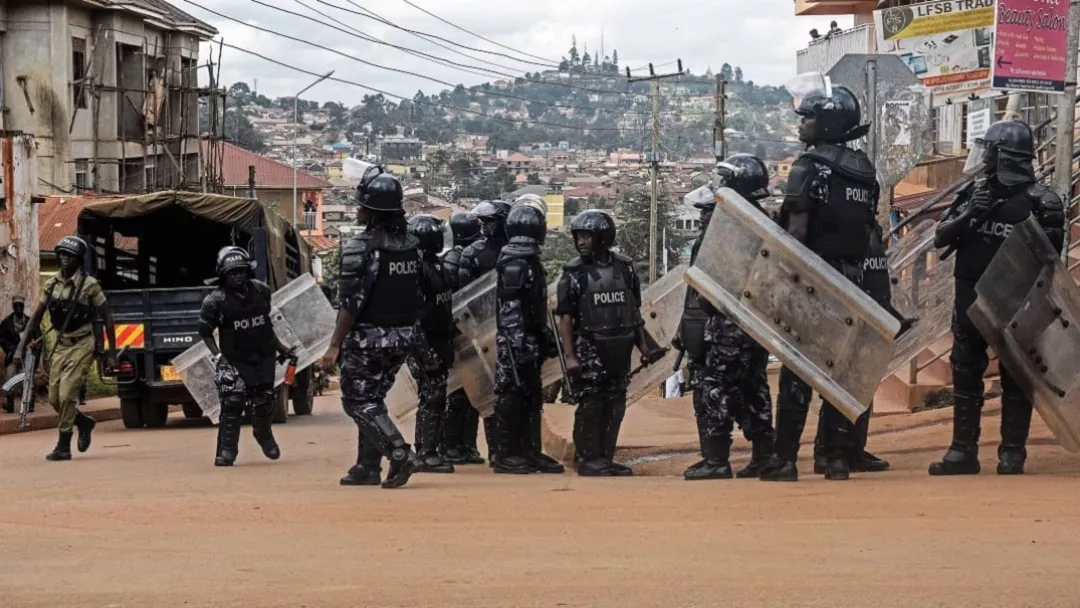
The crackdown on individuals has been accompanied by a wider squeeze on civil society.
Uganda's security establishment has intensified a campaign against government critics, opposition figures and independent media over the past month, raising alarm among human rights groups just as the country prepares for nationwide Local Council elections on July 28. The pattern, documented in a Human Rights Watch report published July 16, describes soldiers seizing at least five critics of President Yoweri Museveni and his son, General Muhoozi Kainerugaba, the chief of the Uganda People's Defence Force (UPDF), holding them incommunicado before handing them over for what the rights group calls "bogus prosecutions."
The most prominent recent case involves Muwanga Kivumbi, deputy president of the National Unity Platform (NUP), Uganda's largest opposition party. According to a court application filed by his lawyers, Kivumbi was granted bail on July 9 and travelled to his ancestral home in Butambala district. On July 10, while returning to Kampala, he was intercepted at a police checkpoint near Mpigi Police Station by UPDF officers and plain-clothed military personnel and taken to an undisclosed location. Members of Parliament have since pressed the government to account for his whereabouts, with Ankole-area legislators and others demanding clarity from the Minister of Internal Affairs, Kahinda Otafiire, and junior minister Kiyonga on the circumstances of what local media are calling his "rearrest."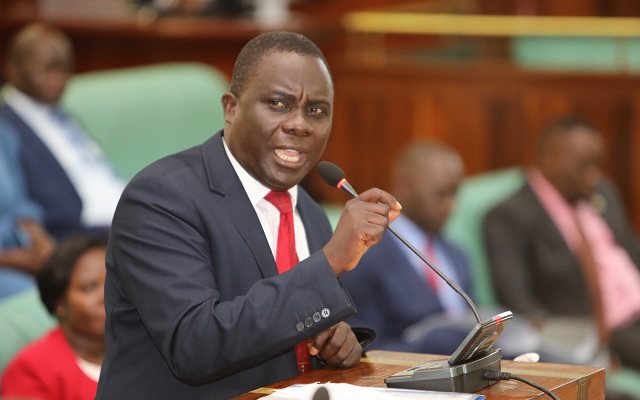
Kivumbi's case fits a broader pattern that has unfolded since mid-June. Journalist and government critic Timothy Kalyegira has written publicly that he was arrested on June 26 and driven in a UPDF vehicle to a basement holding facility, before authorities charged him with operating digital news outlets without a license and released him on bail. Independent media houses have also come under direct pressure: since June 28, the military has surrounded and effectively laid siege to the premises of Nation Media Group, Uganda's largest independent media company, after General Kainerugaba reportedly ordered the shutdown of its television and newspaper operations. Journalists and media executives say they have faced online harassment and intimidation campaigns coordinated to discourage critical coverage of the military and the ruling family.
The crackdown on individuals has been accompanied by a wider squeeze on civil society. Human Rights Watch notes that since January 12, the government has indefinitely suspended at least ten non-governmental organizations, spanning human rights monitors, media watchdogs and election-observation bodies — precisely the kinds of institutions that would normally scrutinize the conduct of the upcoming vote.
Context: an election year already marked by tension. These events are unfolding against the backdrop of the 2026 Ugandan general election cycle, in which President Museveni — in power since 1986 — sought and secured a seventh term amid what regional analysts have described as a climate of growing electoral violence. General Kainerugaba, who has taken an increasingly visible and combative public role, including frequent, unfiltered social media commentary, has become a lightning rod in his own right, seen by critics as signalling his ambitions to eventually succeed his father while using the military's coercive apparatus to sideline rivals and silence dissent. The NUP, led by musician-turned-politician Robert Kyagulanyi (Bobi Wine), remains the most organized opposition force and has repeatedly accused the state of using arbitrary detention, intimidation and violence against its members both during and after the general election.
The immediate flashpoint is the Electoral Commission's decision to hold Local Council One (LC1) elections on July 28 — the first LC1 polls in years, following a lengthy delay that critics attributed to the ruling National Resistance Movement's reluctance to test its grassroots support. LC1 councils are the lowest and most locally embedded tier of Uganda's administrative structure, and they matter disproportionately: LC1 chairpersons issue the recommendation letters residents need for identification documents, land transactions, police bond applications and a host of everyday bureaucratic needs, giving the ruling party significant patronage leverage at the village level if it retains control. Preparations have involved resident verification exercises and compilation of voter registers in the weeks leading up to the vote, and observers say the timing of the current crackdown — squarely in the run-up to that vote — is unlikely to be coincidental.
Who is involved: On one side sit Museveni, Kainerugaba and the UPDF's internal security apparatus, along with the police and the Chieftaincy of Military Intelligence, which rights groups say has been central to the recent detentions. On the other are the NUP and its leadership, independent journalists such as Kalyegira, media houses including Nation Media Group, and a shrinking cohort of civil society organizations still permitted to operate. International observers, including Human Rights Watch, the U.S. State Department and European Union missions in Kampala, have periodically issued statements urging restraint, though Uganda's government has historically dismissed such criticism as foreign interference in domestic affairs.
Why it matters: Uganda is a linchpin state in East Africa, hosting one of the region's largest refugee populations, contributing troops to the African Union mission in Somalia, and now on the cusp of becoming a meaningful oil exporter as the Tilenga and Kingfisher projects approach first production. Political instability or a serious erosion of civil liberties carries consequences well beyond its borders — for regional security cooperation, for foreign direct investment sentiment as the oil sector ramps up, and for the credibility of Uganda's institutions with international lenders such as the IMF and World Bank, which have both flagged governance as a factor in their engagement calculus. Domestically, the targeting of LC1-level democratic processes strikes at the most basic unit of political accountability that ordinary Ugandans interact with, and rights advocates warn that a climate of fear ahead of the July 28 vote could suppress turnout or invite low-level intimidation in more remote areas where independent monitoring is thin, particularly given the recent suspension of several election-observation NGOs.
What to watch next: The immediate question is what happens to Kivumbi — whether he is produced in court, formally charged, or released, and how Parliament's demands for an official account are answered. Beyond that, the conduct of the July 28 LC1 elections will be an early test of whether the pressure on media and civil society translates into a materially unfair vote, or whether local dynamics blunt the effect of top-down intimidation. Analysts will also be watching whether Nation Media Group's operations are allowed to normalize or whether the government moves toward more permanent restrictions on its licensing, and whether additional NGOs face suspension in the weeks ahead. Finally, how foreign governments and multilateral partners respond — whether through public statements, diplomatic pressure, or, more consequentially, conditions attached to financing tied to the oil sector's development — will shape how much external leverage exists to affect the trajectory of Uganda's political climate over the remainder of 2026.



