A Practical Problem, Solved
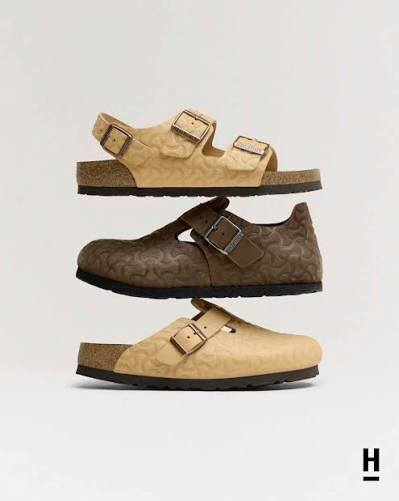
Every enduring fashion icon has an origin story, and the Birkenstock Boston's is refreshingly unglamorous: people who owned Birkenstock sandals wanted to keep wearing them once the weather turned cold. That was it. That was the entire brief handed to designer Karl Birkenstock in 1976, and the result — a soft-soled, closed-toe clog built on the same contoured cork footbed the brand had been refining since the 1890s — became the company's first-ever closed shoe and, eventually, one of the most quietly influential silhouettes in modern footwear. This year, the Boston turns 50, and the brand is marking the milestone with a rare archive collection, a slate of designer collaborations, and a wave of retrospective coverage that treats a famously unglamorous clog with the reverence usually reserved for haute couture.
From 'Soft Clog' to Cultural Fixture
The shoe wasn't always called the Boston. Early advertising cycled through names like "the soft clog" and the "Formal Birkenstock Quiet Clog" before the design settled into its now-iconic name sometime in the 1980s. What made it revolutionary at the time wasn't styling — Birkenstock has never chased trends — but comfort engineering: a molded footbed that contoured to the foot, paired with a closed toe box that let wearers keep the brand's orthopedic support through the winter months for the first time. It was function first, form a distant second, which is precisely why fashion took nearly three decades to catch up to it.

The Slow Build to Icon Status
The Boston's journey from orthopedic-adjacent footwear to runway-adjacent status mirrors broader shifts in fashion's relationship with comfort. As "ugly shoe" trends took hold in the 2010s — track sandals, dad sneakers, and yes, Birkenstocks in general — the Boston rode the wave alongside its two-strap sibling, the Arizona, but carved its own niche as the closed-toe option for people who wanted the comfort story without quite so much visible sandal. That crossover appeal is exactly what's fueling this year's anniversary push: rather than one flagship reissue, Birkenstock has spread the celebration across a genuine constellation of partners.
A Collaboration for Every Corner of the Market
The 50th-anniversary rollout reads like a cross-section of the entire fashion ecosystem. Streetwear specialist CNCPTS reimagined the Boston in wooly felt for cold-weather styling. Italian luxury house Etro brought its signature paisley print to the silhouette, pairing heritage craft with heritage comfort. Bridal designer Danielle Frankel took the clog in an entirely different direction, and Japanese retailer BEAMS literally turned the shoe inside-out for a limited release that plays with the Boston's most recognizable structural details. Meanwhile, Birkenstock's own in-house 1774 collection unveiled "Northeast Providence," a collection built around a muted palette of cinnamon, midnight navy and ginger brown, using canvas and raffia to evoke the quiet, coastal ease of the American Northeast — explicitly designed, per the brand, to honor the Boston's legacy with new materials rather than new silhouettes.
"It's a practical solution to a practical problem, built on the same contoured cork footbed Birkenstock had been perfecting since the 1890s, with a closed toe box added to keep the weather out," is how footwear historians have summarized the shoe's appeal in recent retrospectives — an origin story so plain it borders on anti-marketing, and yet it's exactly that authenticity that luxury collaborators say they're chasing when they attach their names to the silhouette.
Why Designers Keep Coming Back
For brands ranging from streetwear labels to Italian fashion houses, associating with the Boston isn't about chasing a trend cycle — it's about borrowing credibility from an object that has never needed a marketing campaign to justify its existence. In an era where consumers are increasingly skeptical of manufactured hype and drop culture, a shoe whose entire pitch has always been "it solves a real problem" carries a kind of authenticity that's difficult to manufacture from scratch. That's a valuable asset to rent, and it's why the 50th-anniversary collaborator list reads less like a single capsule collection and more like an all-star roster spanning streetwear, luxury, bridal and retail.

What This Means for Shoppers
For consumers, the anniversary is less a single moment to shop and more a slow-rolling event that will likely stretch across the rest of 2026, with new collaborations expected to surface as the year continues. Anyone hunting for archive-inspired pairs should expect the usual resale-market premium on limited releases — the CNCPTS and Etro drops in particular have already generated the kind of sneaker-style resale chatter that was once reserved for limited sneaker releases, not orthopedic-adjacent clogs. For those less interested in collectibility and more in the core product, the anniversary is also a good moment to note that the Boston's underlying comfort proposition — the cork footbed, the closed toe, the function-first design — hasn't meaningfully changed in 50 years, which is arguably the entire point of the celebration.
An Icon Hiding in Plain Sight
Fifty years on, the Birkenstock Boston occupies a strange and enviable place in fashion: simultaneously mocked as an "ugly shoe" and celebrated as a design landmark, worn by people who couldn't care less about trends and by the designers who chase them. That contradiction is, in the end, the clearest evidence of genuine icon status — a shoe that never needed fashion's approval finally getting it anyway, five decades after it was designed to solve a problem nobody thought was a fashion problem at all.
Published By | Features Editor