NEWS
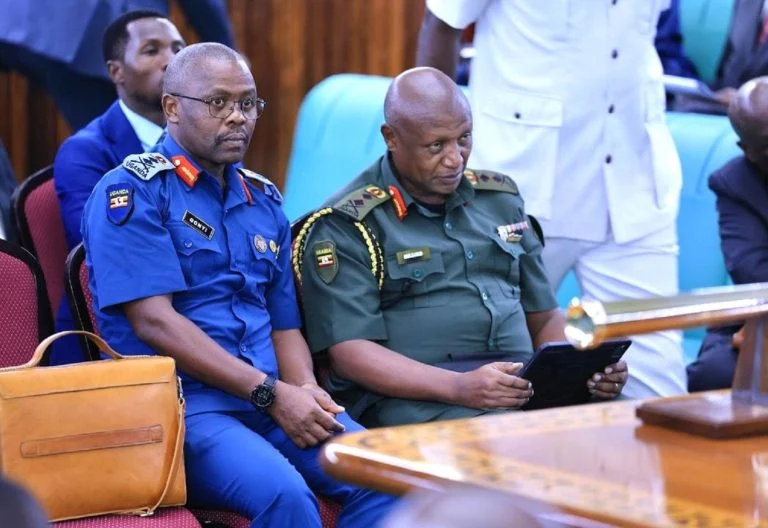
Uganda's Parliament this week voted to back the deployment of Ugandan soldiers to the Gaza Strip as part of an international stabilization force being assembled under a ceasefire and reconstruction plan championed by United States President Donald Trump. The vote, held on Thursday, makes Uganda one of the first countries to publicly commit to contributing troops to the proposed force, and marks a significant expansion of Kampala's role in a conflict thousands of kilometers from East Africa.
The motion, brought before lawmakers by Defence Minister Kiryowa Kiwanuka, asked Parliament to endorse President Yoweri Museveni's decision to make troops available to the International Stabilization Force, or ISF, envisioned under the Gaza peace framework. Kiwanuka told legislators that Trump had, through emissaries, approached Museveni in July seeking Uganda's participation, citing the Uganda People's Defence Force's extensive experience in multinational peacekeeping operations, particularly its long-running deployment in Somalia under the African Union Transition Mission (ATMIS) and its predecessor, AMISOM.
The vote represents the clearest public signal yet of Uganda's willingness to join the broader coalition of nations being assembled to secure and stabilize Gaza in the aftermath of the Israel-Hamas war, under a plan that has been informally referred to as Trump's "Board of Peace" initiative. Details of the force's structure, mandate and rules of engagement remain in flux, and Thursday's motion was described by officials as an in-principle endorsement rather than a final deployment order.

During the parliamentary debate, several lawmakers pressed the government for specifics that were not fully answered. An opposition legislator asked pointedly who would fund Uganda's participation in the force and how long troops might remain in the territory. Kiwanuka responded that a formal status-of-forces agreement governing the legal framework for the deployment would be negotiated and signed only after Parliament's approval, leaving key questions about financing, chain of command and troop numbers unresolved for now.
Opposition politicians voiced sharper concerns beyond logistics. Joseph Ssewungu, the opposition's spokesperson on defence matters, said members of Parliament were not given adequate time to scrutinize the proposal before being asked to vote, a complaint that has become familiar in a legislature where the ruling National Resistance Movement holds a commanding majority. Other lawmakers raised the sensitivity of the assignment given Uganda's membership in the Organisation of Islamic Cooperation. Legislator Hassan Kirumira asked bluntly "on which side is our army going to fight?", reflecting unease among some MPs about Uganda being seen to take sides in a conflict with deep religious and geopolitical resonance across the Muslim world and beyond.
The government's case for participation rests heavily on Uganda's track record as one of Africa's most experienced troop-contributing nations. The UPDF has deployed peacekeepers not only in Somalia but also in the Central African Republic and, at various points, in the Democratic Republic of Congo, and Ugandan officials have long sought to position the country as a reliable security partner for Western governments. Analysts note that a Gaza deployment, if it proceeds, would raise Uganda's profile considerably and could come with financial and diplomatic benefits, including deeper security cooperation with Washington at a time when Kampala has been courting international investment across the oil, energy and infrastructure sectors.
The decision does not occur in a political vacuum. It comes seven months after Uganda's contested January 2026 presidential election, in which Museveni was declared winner with 71.6 percent of the vote against opposition leader Robert Kyagulanyi, known as Bobi Wine, who took 24.7 percent and rejected the result as fraudulent. The period since the election has been marked by a sustained crackdown on dissent: rights groups have documented arbitrary arrests, prosecutions under the Computer Misuse Act for social media posts critical of Museveni and his family, and continued detention of opposition figures, including a senior National Unity Platform official who Human Rights Watch says was tortured after nearly three weeks of unlawful, unacknowledged detention. Against that backdrop, critics argue the Gaza announcement is partly designed to burnish Uganda's international standing and deepen ties with Washington at a moment when the government's human rights record is under renewed scrutiny from Western capitals and rights organizations.
The move also fits into a broader pattern of African governments being drawn into great-power diplomacy around Gaza's reconstruction. Several nations with histories of UN and AU peacekeeping contributions are reportedly being courted for the stabilization force, and Uganda's early endorsement could position it as a lead contributor, with the accompanying funding, training support and diplomatic visibility that typically follow such roles. Museveni's government has in the past used peacekeeping contributions, most notably in Somalia, to secure military assistance, equipment transfers and closer bilateral ties with the United States and European partners.
What happens next will depend heavily on the terms of the status-of-forces agreement Kiwanuka promised to negotiate. Key questions still unanswered include how many troops Uganda intends to send, when a deployment would begin, whether the mission would fall under a UN mandate or a separate multinational command structure, and critically, who bears the financial cost of stationing UPDF personnel in an active and volatile security environment. Ugandan officials have signaled that funding arrangements are still being worked out with international partners, likely including the United States.
Domestically, the vote is likely to sharpen debate over Uganda's foreign policy priorities at a time when many citizens are focused on economic pressures, unemployment and the continuing fallout from a disputed election. Opposition figures are expected to continue pressing the government for transparency on costs and legal exposure, while diplomats and regional analysts will be watching closely to see whether Kampala's early commitment sets a precedent that draws other African troop-contributing nations into the Gaza stabilization effort. A signed status-of-forces agreement, expected in the coming weeks, will offer the first concrete details of what Uganda's role will actually look like on the ground.
Published By | News Editor