A Rivalry Decades in the Making
When two giants fight, it is the ground that suffers. Today, that ground is not merely the Middle East — it is the entire world. The uneasy triangle between the United States, Israel, and Iran did not emerge overnight. Its roots lie in the 1979 Iranian Revolution, when Iran transformed from a close Western ally under the Shah into a theocratic republic openly hostile to American dominance and the existence of Israel. Since then, mistrust has hardened into ideology, and ideology into strategic confrontation.
Iran has consistently accused the United States of maintaining a monopoly over global power — military, economic, and nuclear. Washington, in turn, has viewed Iran as a destabilizing force in the Middle East, funding proxy militias and pursuing nuclear capabilities under the veil of civilian energy development.
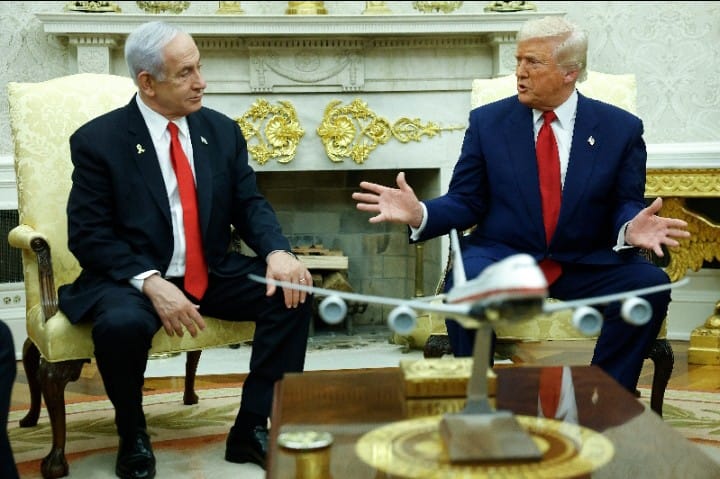
Israel, perceiving Iran’s nuclear ambitions as an existential threat, has acted — sometimes covertly, sometimes overtly — to prevent Tehran from crossing the nuclear threshold. For decades, Washington has stood behind Israel diplomatically, militarily, and financially. Tehran sees this not as a partnership, but as orchestration.
Last Year’s War Trail: From Shadow War to Open Fire
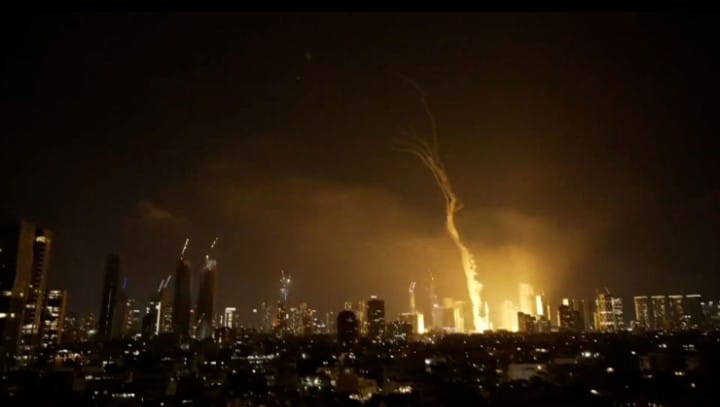
Before the current escalation, last year marked a dangerous turning point. What had long been a shadow war — cyber sabotage, targeted assassinations, and proxy confrontations in Syria and Lebanon — erupted into open missile exchanges between Israel and Iran.
Israel launched precision strikes on Iranian-linked positions across the region, claiming pre-emptive defense. Iran retaliated directly with missile and drone attacks targeting Israeli territory, breaking decades of indirect confrontation.
In the heat of that confrontation, the United States struck three Iranian military facilities suspected of supporting advanced enrichment and weapons development — widely reported to include the Fordow enrichment site, the Natanz nuclear complex, and a Revolutionary Guard-linked military installation near Isfahan. Washington described the strikes as defensive and preventive; Tehran condemned them as acts of aggression.
Iran’s subsequent attack on an American airbase in Qatar escalated tensions dramatically. Although the damage was limited, the symbolism was immense: a direct blow against U.S. military presence in the Gulf.
A ceasefire was eventually brokered through regional mediators. Yet beneath the formal language of de-escalation, preparations intensified. Missile stockpiles were replenished. Air defense systems were reinforced. Joint exercises expanded. Intelligence operations deepened. The ceasefire was not peace — it was an intermission.
The Nuclear Question: Who Owns the Sun?
At the heart of the crisis lies the most destructive invention in human history: nuclear weapons.
After the devastation of Hiroshima and Nagasaki, the global community sought to prevent further proliferation. The result was the United Nations-backed Treaty on the Non-Proliferation of Nuclear Weapons (NPT), signed in 1968.
The treaty recognized five nuclear-weapon states:
- Russia
- China
- The United Kingdom
- France
- The United States
These states were permitted to retain nuclear arsenals, while others agreed not to develop them. Iran remains a signatory, insisting its program is peaceful. Israel maintains strategic ambiguity and is widely believed to possess nuclear capability outside the NPT framework. The treaty promises eventual disarmament — a commitment critics argue has remained largely symbolic.
Preparation Despite the Ceasefire
Since last year’s ceasefire, intelligence assessments suggest all three nations have remained in strategic preparation. Israel expanded its long-range strike capabilities. The United States increased naval deployments in the Gulf and enhanced missile defense cooperation. Iran accelerated missile testing and strengthened alliances with regional militias. Today’s renewed airstrikes confirm what observers feared: the ceasefire was tactical, not transformative. In response to the fresh wave of air operations, major international carriers have canceled or rerouted flights across the region. Airlines such as Emirates, Qatar Airways, Turkish Airlines, Lufthansa, British Airways, and Air France announced suspensions due to airspace insecurity. Even Dubai International Airport — often described as the busiest international hub in the world — experienced widespread disruptions.
Airspace closure is more than a transport issue. It signals that war has entered civilian skies.
Monopoly or Stability?
Former Israeli Prime Minister Benjamin Netanyahu has consistently framed Iran’s nuclear ambitions as an existential threat. Meanwhile, the collapse of the Joint Comprehensive Plan of Action (JCPOA) under the administration of Donald Trump marked a decisive shift from diplomacy to pressure.
Strategists like John Mearsheimer argue that nuclear weapons create deterrence stability. Critics such as Noam Chomsky describe the nuclear order as institutionalized inequality.
The central contradiction persists: if nuclear weapons are deemed too dangerous for some, why are they permanent privileges for others? Officially, the answer is non-proliferation and stability.
Unofficially, it is the preservation of hierarchy.

Is World War III Imminent?
Direct war between nuclear powers remains unlikely due to catastrophic consequences. Yet escalation through proxies, cyber warfare, targeted strikes, and economic sanctions is increasingly common.
If the present confrontation expands:
- Oil prices could surge dramatically.
- Inflation across Africa and Asia would intensify.
- Global supply chains would fracture.
- Refugee movements would destabilize fragile states.
- International diplomacy would face paralysis.
The world economy is interconnected. A missile in the Gulf reverberates through markets in Nairobi, London, Beijing, and São Paulo.
The Moral Reckoning
If nuclear weapons guarantee security, why deny that security to others?
If they are immoral, why keep them? The rivalry between Washington, Tel Aviv, and Tehran is not merely ideological. It is a contest over deterrence, legitimacy, and global order.
When giants collide, they gamble with the planet. The soil trembles long before they do.
Whether this becomes a wider global conflict depends on restraint overcoming pride — and whether the nuclear monopoly evolves into genuine disarmament or remains a guarded aristocracy of power.
For now, the earth waits — tense, watchful, and vulnerable.
About the Author
Evan Sande Ndahura is a Ugandan political and legal commentator, columnist, poet, and social justice advocate whose writings focus on governance, constitutionalism, democracy, and the political economy of power in Africa. He is widely published on issues of judicial accountability, electoral justice, human rights, and institutional reform, with particular emphasis on Uganda’s political and legal systems. Ndahura writes from a Pan-African critical perspective, interrogating the failures of state institutions and the lived realities of ordinary citizens under entrenched systems of power. He believes that the liberation of Africa will occur through a mighty pen, not the gun.
Published By | Features Editor