Written By | News Agencies
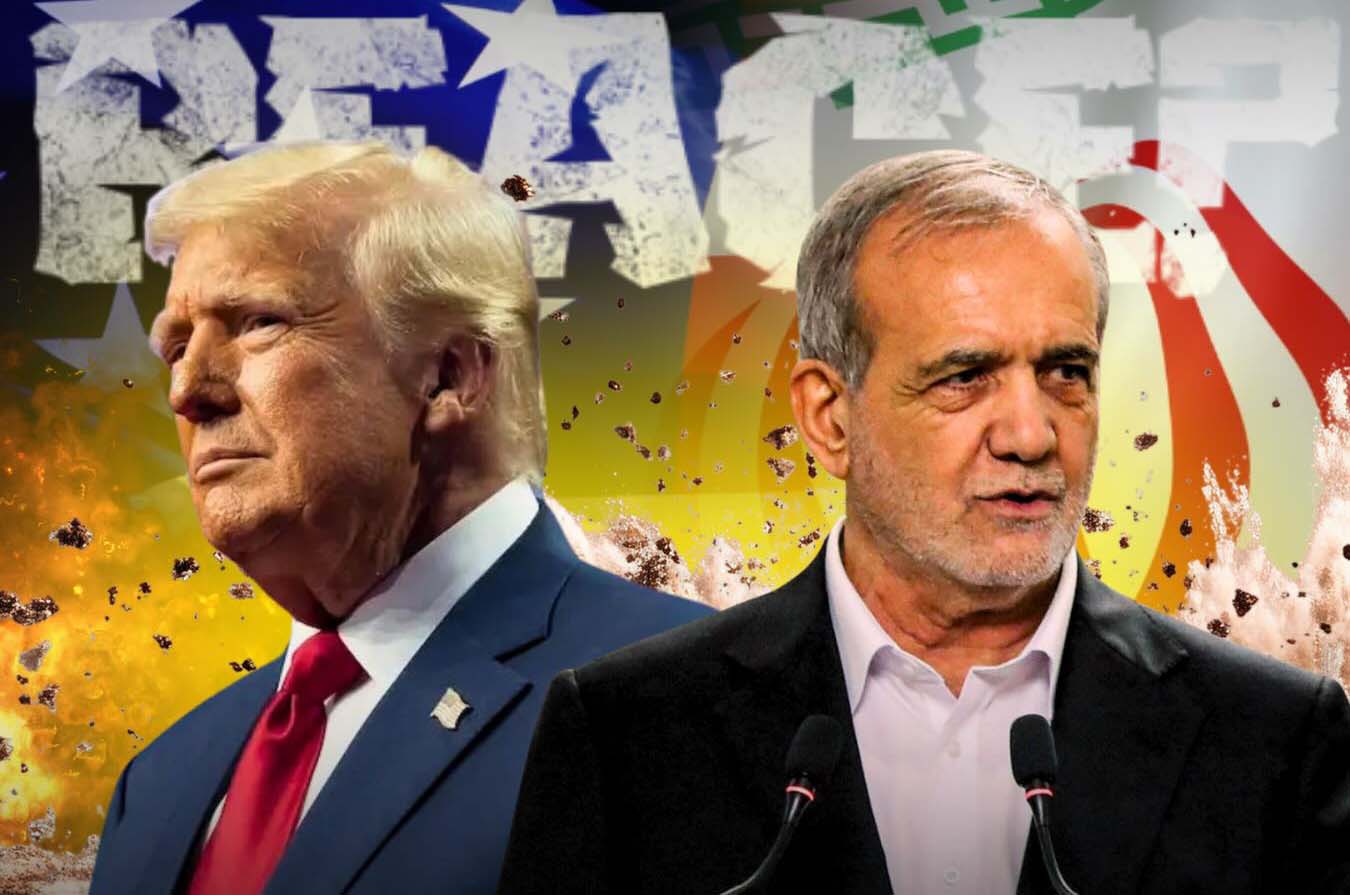
President Donald J. Trump said Washington had agreed to suspend military operations after consultations with Pakistani leaders.
Agencies
The United States and Iran have agreed to a temporary two-week ceasefire following weeks of escalating military confrontation that pushed the Middle East to the brink of a wider war.
The breakthrough, announced on April 7, 2026, offers the first real hope of halting a conflict that has already claimed hundreds of lives and displaced many more.
The agreement follows intense behind-the-scenes diplomacy involving Pakistan’s leadership, which both sides credited for helping to de-escalate tensions.
Speaking on behalf of the United States, President Donald J. Trump said Washington had agreed to suspend military operations after consultations with Pakistani leaders.
“I agree to suspend the bombing and attacks on Iran for a period of two weeks. This will be a mutual ceasefire,” Trump said.
He added that the pause would create room for final negotiations, noting that “almost all of the various points of past contention have been agreed to between the United States and Iran.”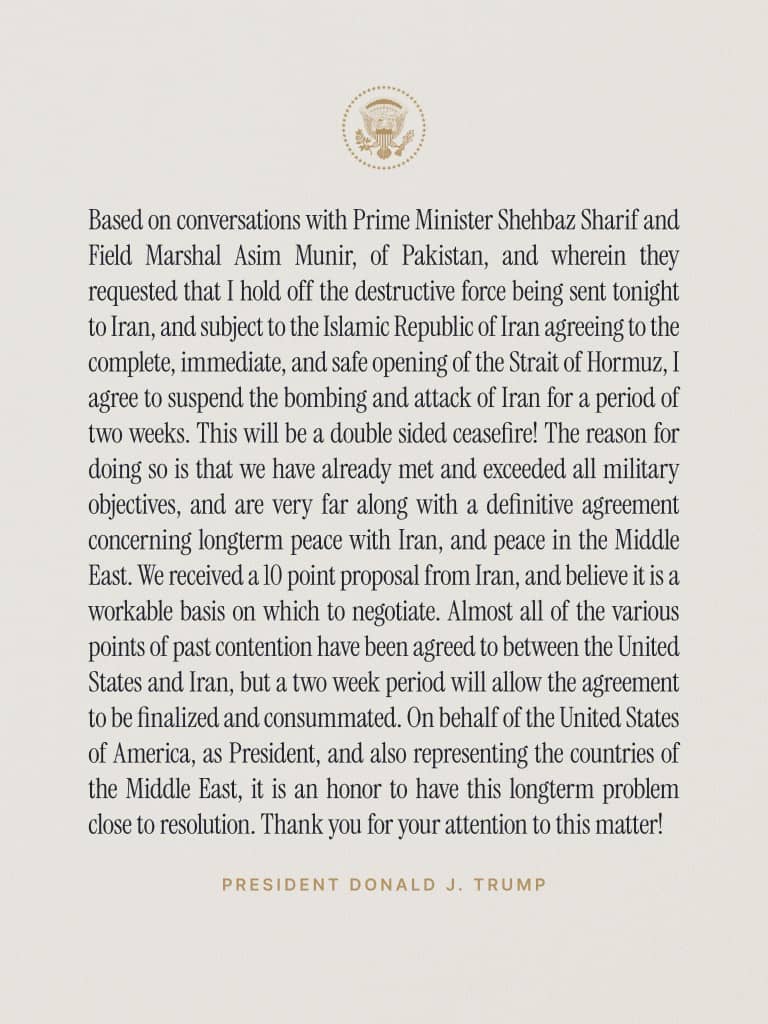
Iran’s conditions
From Tehran, Iran confirmed it would halt its military response, but only on condition that attacks against it cease.
“If attacks against Iran are halted, our powerful armed forces will cease their defensive operations,” the government said in an official statement.
The statement, issued by Foreign Affairs Minister Seyed Abbas Araghchi, also acknowledged Pakistan’s role in easing tensions.
“We express gratitude for their tireless efforts to end the war in the region,” it read.
Iran further announced that, during the ceasefire period, vessels would be allowed safe passage through the strategically critical Strait of Hormuz under coordinated arrangements.
Pakistan’s quiet diplomacy
Diplomatic sources point to Pakistan’s Prime Minister Shehbaz Sharif and Army Chief Field Marshal Asim Munir as key figures in brokering the temporary truce.
According to Trump, the two leaders urged restraint and pushed for an immediate halt to planned military escalation, while encouraging both sides to return to negotiations.
Conflict background and casualties
The conflict erupted in early 2026 following a series of escalating incidents in the Gulf region, including attacks on oil infrastructure and retaliatory strikes between US and Iranian forces.
What began as limited engagements quickly spiralled into a broader confrontation involving strategic airstrikes and proxy forces across the region.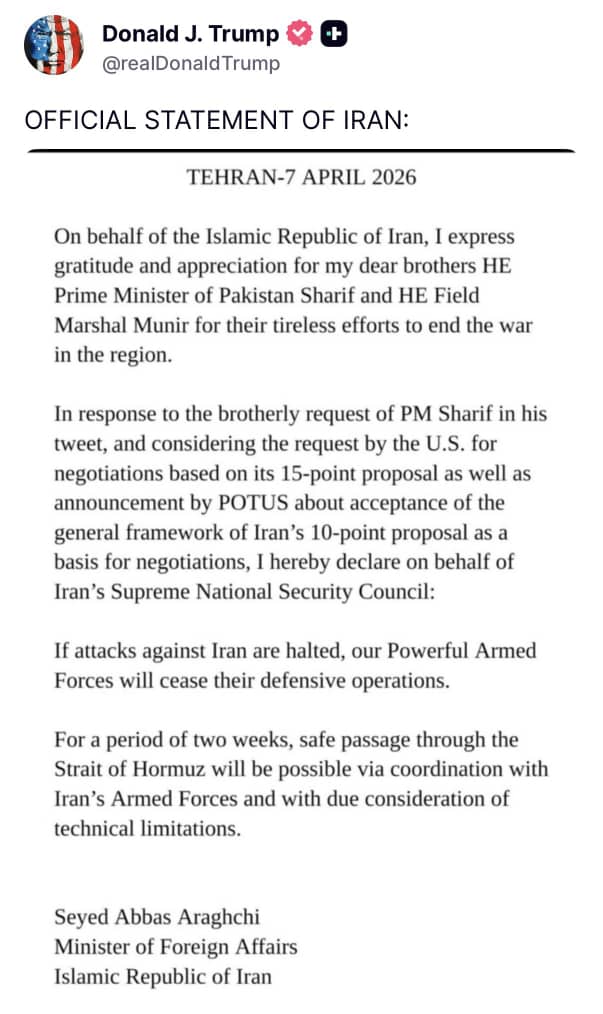
Among the most significant losses reported are:
Estimates indicate that hundreds of people have died, with many more injured and displaced as the conflict intensified.
Window for negotiations
Both Washington and Tehran have signalled readiness to negotiate. The United States has referenced a 15-point proposal, while Iran has tabled a 10-point framework.
Trump expressed optimism that the ceasefire could lead to a lasting agreement.
“A two-week period will allow the agreement to be finalised and consummated,” he said, adding that the crisis was now “close to resolution.”
Global implications
The temporary reopening of the Strait of Hormuz is expected to ease global concerns over oil supply disruptions, as the vital shipping route handles a significant share of the world’s petroleum exports.
However, analysts caution that the ceasefire remains fragile and dependent on both sides honouring their commitments.
The next two weeks are widely seen as critical in determining whether the pause in fighting can translate into a durable peace agreement or whether hostilities will resume.
Torch Media Africa



