COURT
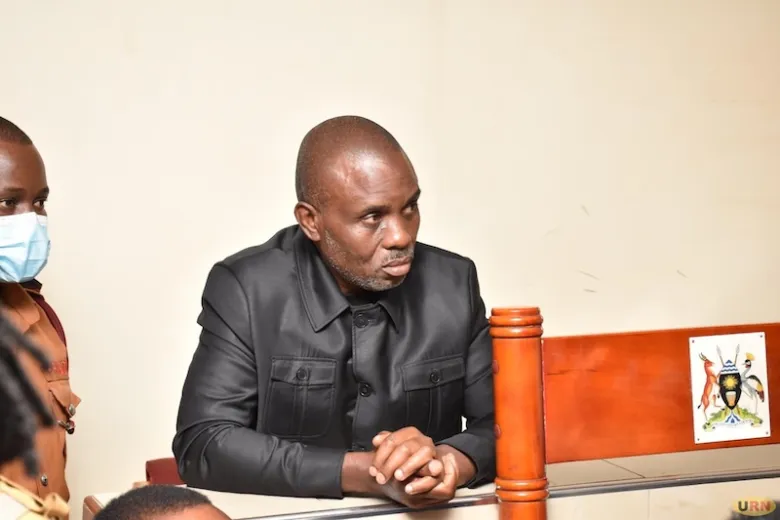
Uganda's already tense political climate has been thrown into fresh turmoil by the detention of Erias Lukwago, the former Lord Mayor of Kampala and one of the country's most prominent opposition lawyers. On June 15, 2026, heavily armed security operatives arrested Lukwago at his residence in Wakaliga, a Kampala suburb, and took him to an undisclosed location. His disappearance triggered two days of incommunicado detention before he was formally produced in court, a sequence that human rights groups and legal professionals have characterized as an enforced disappearance.
The arrest did not occur in isolation. Lukwago was detained shortly after attempting to serve Gen. Muhoozi Kainerugaba, Uganda's Chief of Defence Forces and the son of long-serving President Yoweri Museveni, with court papers connected to the ongoing treason case against veteran opposition leader Dr. Kizza Besigye. Lukwago has represented Besigye's legal team, and prosecutors allege that in the course of that work he failed to report an alleged treason plot to authorities. He was subsequently charged with misprision of treason and arraigned before the Makindye Chief Magistrate's Court. Lukwago and his lawyers reject the charge outright, arguing that the information cited by prosecutors emerged from privileged attorney-client communications and that charging a lawyer over knowledge gained while representing a client sets a dangerous precedent for the legal profession.
What has elevated this case from a routine, if serious, legal dispute into a national flashpoint is the role played by Gen. Kainerugaba himself. Rather than distancing himself from the arrest, the army chief repeatedly and publicly claimed personal responsibility for it through a barrage of posts on X (formerly Twitter), stating that he had "captured" Lukwago and taken him to his "basement." In one widely circulated post, Muhoozi declared that Lukwago "is in prison and he will never come out." Such statements, made by the head of Uganda's armed forces about a sitting detainee awaiting trial, have alarmed legal observers who see them as both prejudicial to any fair judicial process and emblematic of a broader pattern in which military figures increasingly assert direct authority over civilian legal matters.
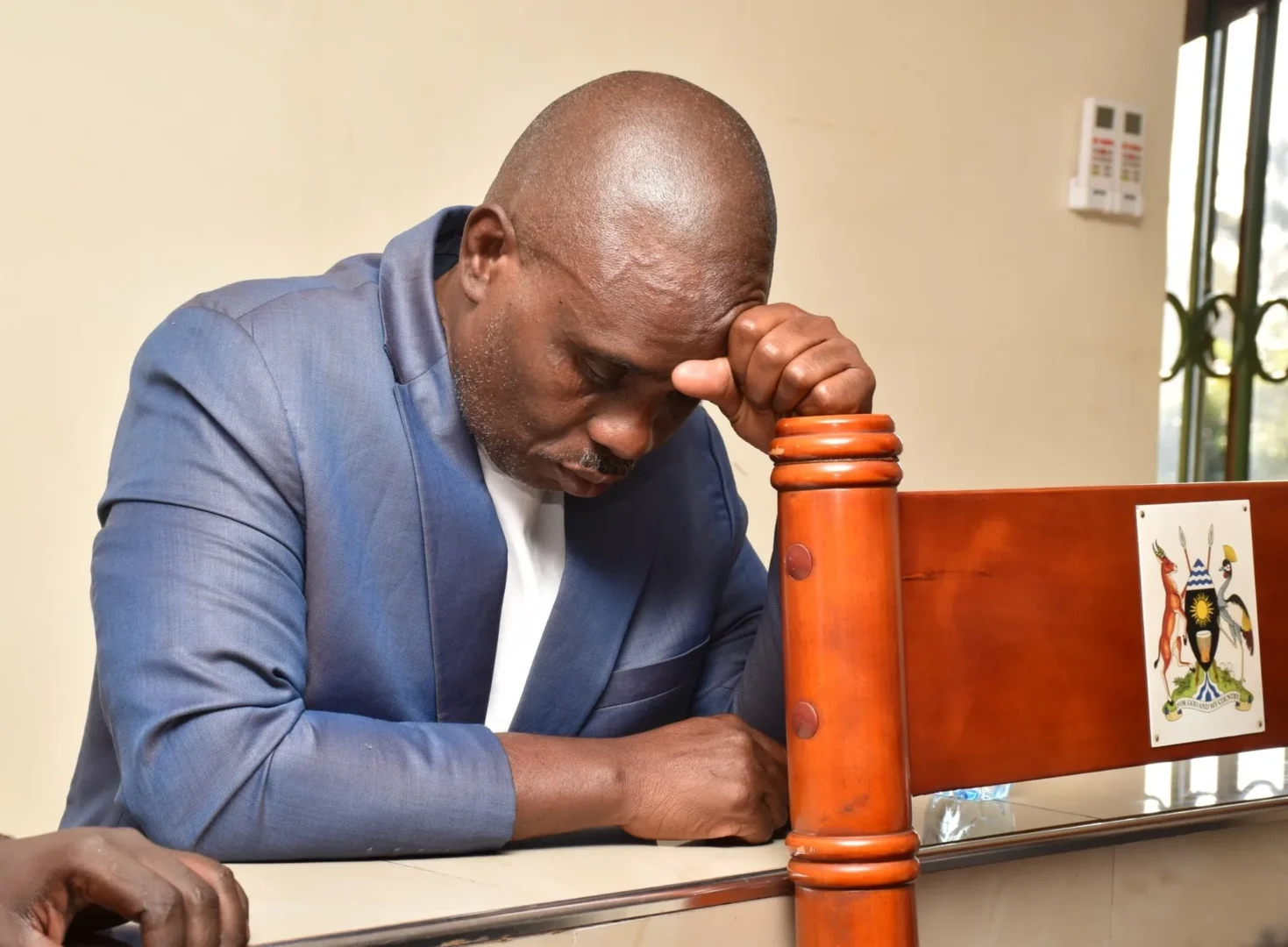
The Uganda Law Society has condemned the arrest as contemptuous of due process and court procedure, while international rights organizations, including the International Federation for Human Rights (FIDH), have formally classified the episode as an enforced disappearance and arbitrary detention. Winnie Byanyima, the Ugandan executive director of UNAIDS and a prominent voice on governance issues, has publicly stated that the Lukwago case exposes a deepening rule-of-law crisis in the country. Momentary relief came when reports suggested Muhoozi, apparently under public pressure, promised to release Lukwago — a claim that fact-checkers later disputed, noting that no formal release or bail had actually been granted. On July 7, 2026, a bail application filed on health grounds was formally rejected by the courts, leaving Lukwago in continued detention as the case grinds forward.
The players at the center of this story extend well beyond Lukwago and Muhoozi. President Museveni, who was declared winner of Uganda's January 2026 presidential election with a reported 71.65 percent of the vote — a result that opposition figures and independent observers have disputed amid an absence of published tallies — presides over a political system in which his son now occupies one of its most powerful security posts. Dr. Besigye, the four-time presidential candidate whose treason case is the origin point of Lukwago's arrest, has spent years in and out of detention himself and remains a symbol of Uganda's fractured opposition politics. The National Unity Platform (NUP), led by musician-turned-politician Bobi Wine, has also been drawn into the story: NUP recently signaled its intent to join the Inter-Party Organisation for Dialogue (IPOD) and sign its memorandum of understanding, a shift driven partly by new legislative requirements tying opposition access to government funding to such participation — a move critics see as another lever of control over dissenting parties.
Why does this matter beyond the fate of one prominent lawyer? Uganda is entering a politically sensitive stretch. Nationwide Local Council (LC1) elections — the first held in years — are scheduled for July 28, 2026, requiring resident verification and voter register compilation across the country. Journalists and independent media figures report growing online harassment and pressure from military-linked accounts, suggesting the security establishment's assertiveness is not confined to high-profile opposition figures but is filtering into the broader civic and media space ahead of the vote. Against this backdrop, a case in which the country's top military officer publicly boasts of detaining and threatening a lawyer — while that lawyer's actual legal fate is decided by courts operating under visible security-establishment pressure — reads as a stress test of Uganda's judicial independence at a moment when the government is simultaneously trying to project stability and strong economic momentum tied to the country's new oil economy.
Looking ahead, several threads are worth watching. First is the treason case itself: further hearings will determine whether misprision of treason charges against Lukwago proceed to trial, and how the courts handle a defendant whose detention has already drawn international scrutiny and whose alleged offense stems directly from privileged legal work. Second is the question of accountability for Gen. Kainerugaba's public statements; despite widespread condemnation, there has been no indication of any disciplinary or legal consequence for a military chief publicly claiming to hold a detainee in his "basement." Third, the run-up to the July 28 LC1 elections will test whether the pattern seen in the Lukwago case — arrests, incommunicado detention, and online intimidation of dissenting voices — becomes more widespread as polling day approaches. Finally, the reaction of international partners and human rights bodies, several of which have already issued statements, may shape whether donor governments and multilateral institutions apply any diplomatic pressure, though Uganda's strategic position in East Africa and its emerging oil wealth have historically limited the practical leverage of such criticism. For now, Lukwago remains in detention, his bail request denied, as Uganda's political and legal establishments navigate a case that has become a proxy battle over judicial independence, executive power, and the boundaries of military authority in civilian affairs.
Published By | News Editor