Written By |
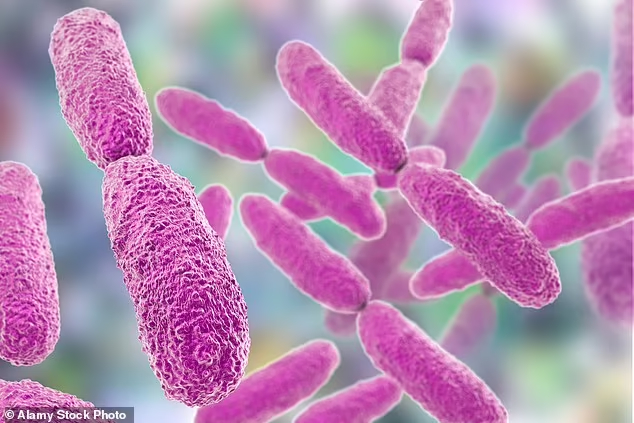
While Klebsiella pneumoniae has been around for years, experts have grown increasingly concerned about a 'hypervirulent' strain, called hvKp. Pictured: A graphical representation of the Klebsiella pneumoniae bacteria
A hypervirulent bacteria resistant to antibiotics, potentially sparking the next pandemic, has been identified in over a dozen countries, including African countries like Algeria. The World Health Organization (WHO) recently warned about the deadly impact of Klebsiella pneumoniae, a little-known bacteria seen in the UK, US, and countries such as Algeria, Argentina, Australia, Canada, China, and India. Of these, 12 countries, including the UK, reported a specific strain that has become a superbug, resistant to all antibiotics used to treat it.
A separate WHO report named Klebsiella pneumoniae as a 'high-risk' pathogen that could trigger the next pandemic. While the bacteria has been around for years, concerns are growing over the 'hypervirulent' strain called hvKp, which can make healthy people severely ill, not just those traditionally vulnerable, like the elderly or immunocompromised. Making matters worse, a sub-strain of hvKp, dubbed hvKp ST23, has become resistant to 'last-line' antibiotics called carbapenems. These powerful drugs are the final option when bacteria like Klebsiella pneumoniae have become immune to other medications, a process known as antimicrobial resistance (AMR). This resistance means that in many countries, doctors can do little more than try to keep patients alive long enough for their bodies to fight off the infection without pharmaceutical aid. The WHO report states that these strains have the potential to 'generate outbreaks' and infect more people.
Klebsiella pneumoniae is a leading cause of hospital-acquired infections. It is estimated to be responsible for up to a third of pneumonia cases acquired in hospitals. The bacteria can also cause other serious health problems, including urinary tract infections, meningitis, and even deadly sepsis.
Despite over a dozen countries reporting cases of concerning Klebsiella pneumoniae strains, only 43 of the 124 nations asked for data by the WHO responded. This suggests that the global spread of the bacteria could be greater than currently known. The WHO also noted that a lack of testing for individual strains in some European countries may contribute to underestimating its prevalence.
The WHO emphasized the importance of increasing laboratory diagnostic capacity to better track hvKp cases and enhancing labs' ability to analyze the genetic makeup of such strains. In the UK, health officials have noted a worrying decline in the effectiveness of drugs designed to combat Klebsiella pneumoniae. A UK Health Security Agency (UKHSA) report published last year detailed how the bacteria is now 17.4% resistant to frontline antibiotics, up from 13.5% in 2018. Cases of Klebsiella pneumoniae have also risen in England, with 11,823 cases recorded in 2022/23, a 20% increase from five years prior.
The rising threat of Klebsiella pneumoniae is part of a broader global problem: antimicrobial resistance (AMR). Experts warn that the increasing resistance of pathogens to common drugs could make the COVID-19 pandemic look minor in comparison. AMR already kills an estimated 1.2 million people globally each year, more than HIV or malaria, and contributes to the deaths of 5 million more. In the UK, AMR is thought to kill almost 8,000 people annually, with many more suffering long-term health consequences. The WHO predicts the global death toll from AMR could reach 10 million per year by 2050.
The overuse and misuse of antibiotics, including their use in agriculture to prevent infections in farm animals, are major drivers of AMR. This agricultural use allows large amounts of antibiotics to enter the environment, where pathogens can develop resistance. If AMR becomes more widespread, surgeries like caesareans and treatments that lower the immune system, such as chemotherapy and organ transplants, could become far riskier, with potentially deadly consequences.
One way to combat AMR is to develop new classes of antibiotics that pathogens have not yet adapted to. However, no such breakthroughs have been made since the 1980s. The high cost of developing new drugs—estimated at £1 billion per antibiotic—poses a significant barrier, especially when the potential revenue is far lower. Different funding models, like a subscription model that pays companies for access to superbug-beating drugs annually, have been suggested but have yet to yield results.
From Agencies



