Written By | Evan Sande Ndahura
Evan Sande Ndahura is a Ugandan political commentator, columnist, researcher, poet, and governance analyst
Commentary
When Yoweri Kaguta Museveni triumphantly entered Kampala in 1986, seated atop a pickup truck amid his battle-hardened comrades, he delivered a statement that would haunt political discourse for decades:
“The problem of Africa… is leaders who overstay in power.”
The irony is profound. Nearly four decades later, Museveni ranks among the world's longest-serving leaders—not through relentless popular demand in free elections, but through a political system meticulously crafted to sustain his rule.
This longevity is no historical accident. It is the tale of a revolution that morphed into a regime, and a regime that fused with one man. 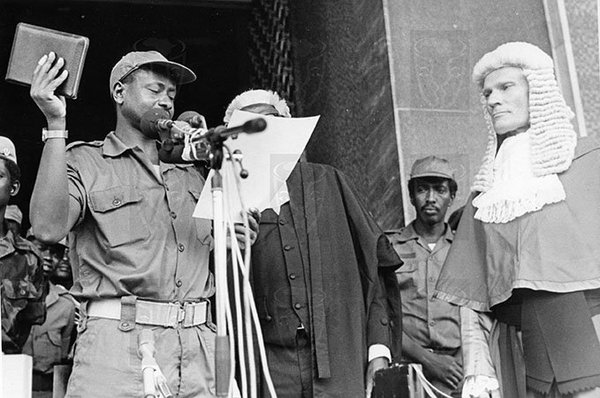
Museveni swearing in in 1986
From Bush War to State House: Institutions Molded in One Image
As the guns of the National Resistance Army (NRA) fell silent in 1986, a profound transformation unfolded beyond the celebrations. The guerrilla force did not simply evolve into a national army; it became the Uganda People's Defence Forces (UPDF), retaining the culture, loyalties, and command structure forged in the Luweero jungles. Likewise, the political wing became the National Resistance Movement (NRM), dominating Uganda's politics ever since. Yet both institutions shared a defining characteristic: they were inextricably linked to Museveni himself.
Political historian Prof. Mahmood Mamdani has observed that NRM governance centralized power around the presidency, subordinating institutions to the leader rather than the reverse. Political scientist Dr. Sabiti Makara describes the NRM as a patronage system dependent on Museveni's personal networks.
It is no surprise, then, that his eventual departure could destabilize both the army and the party—much like Milton Obote's fall doomed the Uganda People's Congress (UPC). The concern is valid: the NRM may not endure without Museveni, and the UPDF's political neutrality could falter.
This fragility stems not from a lack of capable leaders, but from a system that systematically prevented their emergence.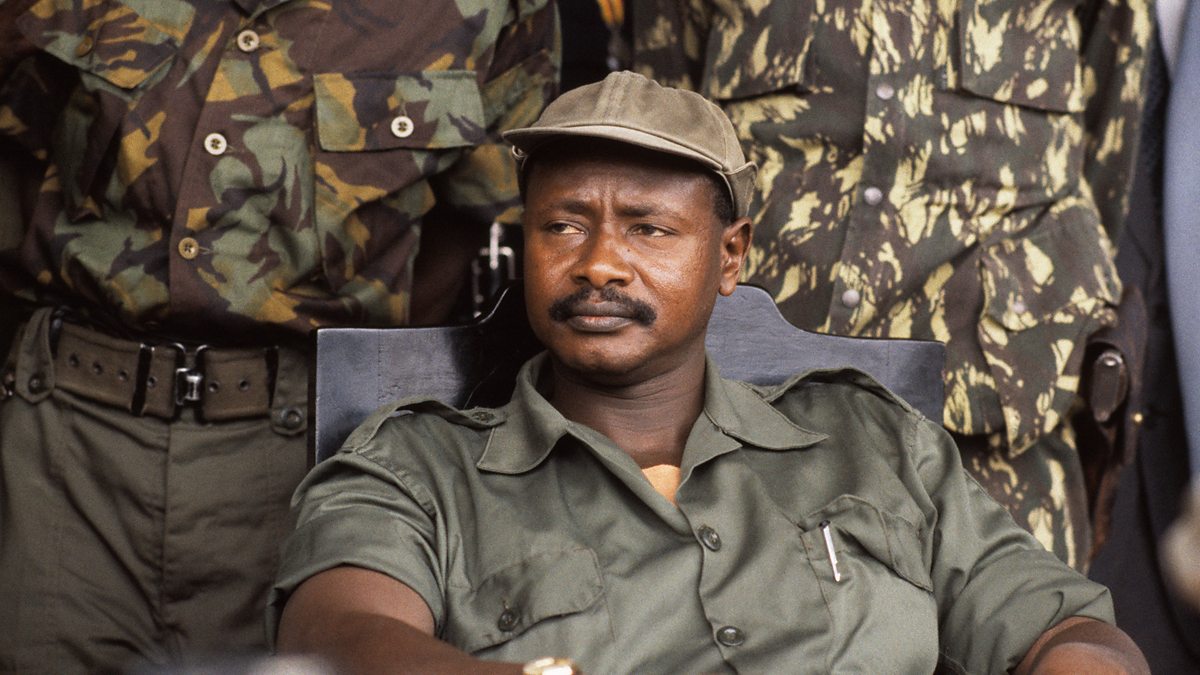
The Revolutionaries Denied Succession
The bush war yielded many formidable figures who, in a different environment, could have been viable successors:
A clear pattern emerges: potential rivals were neutralized—not always through overt ambition or failure, but because the system tethered the revolution to one indispensable figure.
Constitutional Engineering for Perpetual Rule
The 1995 Constitution was once hailed internationally for its progressive design. Yet it contained a fatal flexibility: amendability.
This became Museveni's most potent tool.
Scholars dissented. Human rights expert Dr. Kabumba Busingye called it legal maneuvering for survival, while Dr. Michael Golooba-Mutebi argued it conflated national stability with one man's endurance, ignoring institutional resilience.
These changes did more than extend tenure—they eradicated safeguards for peaceful power transfer.
Museveni's Words: Blueprints for Endurance
Museveni's speeches over the years betray a vision of perpetual leadership:
On the revolution's longevity: “This revolution is not a short-term matter. Whoever thinks they can change it will be wasting their time.” (1986)
On tenure: “The question is not how long one stays, but what one is doing.”
On succession: “Uganda will collapse if we do not handle succession carefully.”
These are not offhand remarks. They weave a deliberate narrative: the revolution is mine, the nation's future hinges on me, and stability demands my presence. This is not mere ideology—it is calculated design.
Contrasting with Liberators Who Voluntarily Stepped Aside
Museveni's path diverges sharply from other African liberation heroes:
These icons grasped a core principle: a freed nation must not remain captive to its liberator.
The Youth and the Post-Museveni Dilemma
Uganda boasts one of the world's youngest populations, yet most have known no president but Museveni.
Dr. Golooba-Mutebi warns that apparent stability masks institutional fragility. The post-Museveni era risks turbulence because:
Young Ugandans thus inherit a nation where transition is less a structured process than a high-stakes uncertainty.
What Lies Ahead After Museveni
About the Author
Evan Sande Ndahura is a Ugandan political commentator, columnist, researcher, poet, and governance analyst.
With over a decade of experience analyzing constitutional affairs, political transitions, military influence in governance, and post-liberation African politics, Ndahura is among the country's most influential young voices.
He has contributed essays to academic forums, mentored university debate teams on constitutional matters, and written extensively on youth agency, leadership gaps, and the NRM state's evolution.
His work seamlessly blends rigorous scholarship with insightful on-the-ground observation of Uganda's social, economic, and political landscape, positioning him as a key commentator on the nation's path beyond personalized rule.
Torch Media Africa



