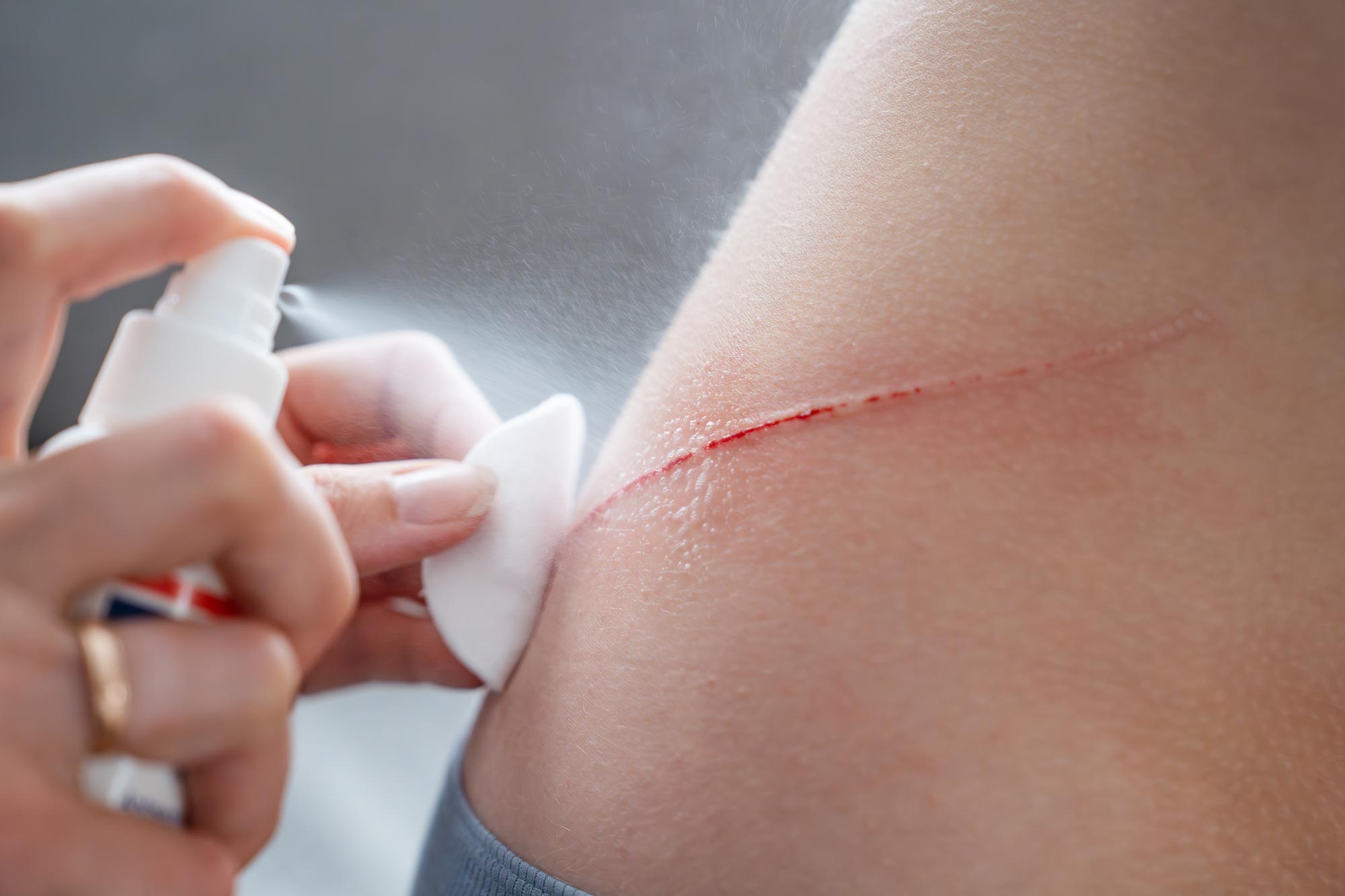
Korean scientists have built a powder that turns into a rock-solid gel the instant it touches blood—sealing catastrophic wounds in about one second flat. Born on the battlefield, it could soon change how ambulances, ERs, and disaster crews fight uncontrolled hemorrhage.
DAEJEON, South Korea
Bleeding gives you no time to think. A severed artery can empty a body in minutes. On battlefields, at car wrecks, in operating rooms, the difference between life and death is measured in seconds. Gauze soaks through. Pressure slips. Existing clotting products struggle with deep, irregular, or high-pressure wounds.
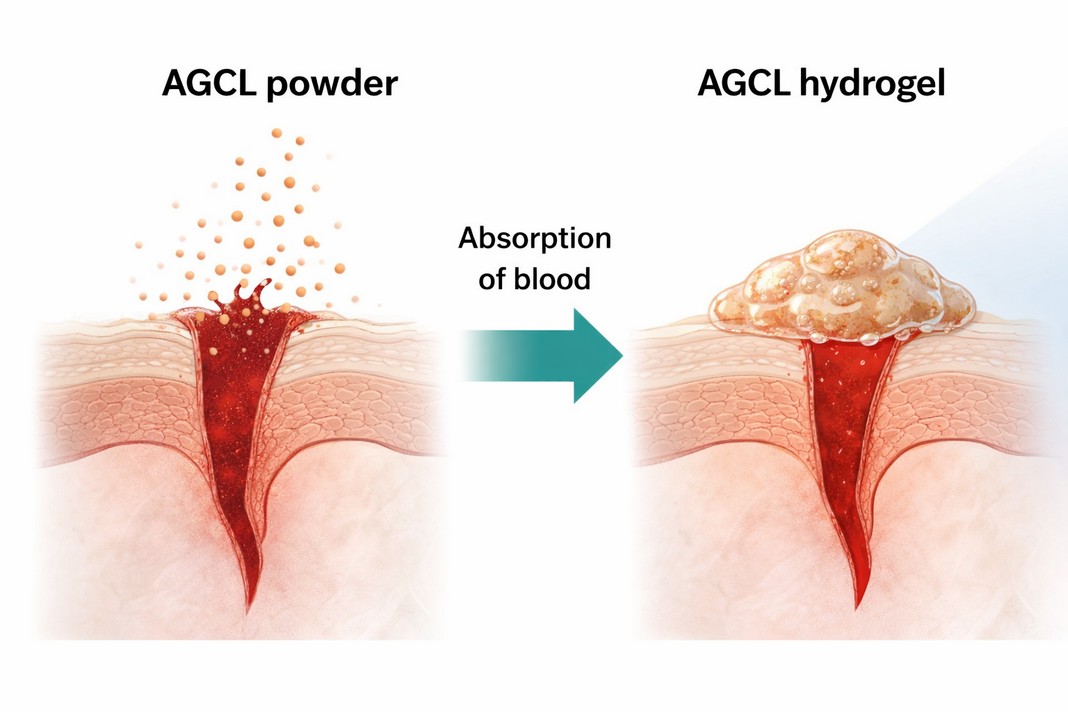
Now a team at the Korea Advanced Institute of Science and Technology (KAIST) says it has built something different: a fine powder that, the moment it meets blood, transforms into a tough sealing gel in about one second. They call it AGCL powder.
A gel that builds itself from your blood
When AGCL hits blood, it reacts with calcium and other ions naturally present in the bloodstream. Within roughly one second, the loose powder knits itself into a strong hydrogel that physically plugs and seals the wound. No waiting, no mixing, no second step. The blood itself is the ingredient.
The powder blends alginate and gellan gum—plant- and microbe-sourced polymers—with chitosan, derived from shellfish shells. Together they form a plug that is both a mechanical dam and an active accelerant of the body's own clotting.
Seven times its weight in blood—and holds under pressure
The gel can absorb more than seven times its own weight in blood while staying structurally stable. It demonstrated sealing pressure above 40 kilopascals—strong enough to withstand heavy, high-pressure bleeding even with manual pressure. The powder remains effective after years of storage in harsh conditions—critical for military medics and remote clinics.
From operating table to battlefield
In animal experiments—including liver surgery, a notoriously bloody procedure—the powder reduced blood loss and shortened bleeding time compared with current products. Two weeks later, liver function had returned to normal, with no signs of organ damage.
Safety testing showed a hemolysis rate below 3%, cell viability above 99%, and 99.9% antibacterial effect—important for wounds in contaminated environments.
Built by a soldier who saw the problem firsthand
The research was led by Professor Steve Park and Professor Sangyong Jon, with input from an army officer who helped shape a tool for combat casualty care. Uncontrolled hemorrhage is the leading cause of preventable death on the battlefield—a powder that fits in a medic's pack and seals a wound in a second is engineered squarely against that statistic.
Why deep and irregular wounds matter
Because AGCL is a flowable powder that gels on contact, it can penetrate into the nooks of a serious wound and set in place, conforming to the injury's shape. That's precisely the scenario—deep, high-pressure, awkwardly shaped bleeds—where people die today despite a responder's best efforts.
The global stakes
Hemorrhage is one of the most common preventable causes of death worldwide. Road accidents alone claim over a million lives annually, many in places where advanced surgical care is hours away. A cheap, shelf-stable, easy-to-use powder that any responder could deploy in seconds could be a public-health tool with global reach—for childbirth complications, remote clinics, disaster zones, and ordinary ERs.

The road from lab to lifesaver
Enthusiasm should be tempered: these results come from laboratory and animal studies. The therapy needs rigorous human trials to confirm safety and effectiveness. Manufacturing and regulation add hurdles. Still, AGCL is built from well-understood, naturally derived materials—alginate, gellan gum, and chitosan—which could smooth the path compared with a novel synthetic compound.
What this means for you
For now, AGCL is a research breakthrough, not something you can buy. It must clear human trials, regulatory review, and manufacturing scale-up—a journey that typically takes years.
But the potential is broad. If it performs in humans as it has in the lab, it could become a standard tool for emergency medicine's most time-critical problem: keeping blood inside the body long enough for help to arrive. There's a quieter lesson here: this isn't a billion-dollar molecule. It's a powder made from seaweed extract, microbial gum, and shellfish shells—cheap, natural, shelf-stable—arranged with enough cleverness to beat the body's clock.
The bottom line
Humanity has been trying to stop bleeding for as long as it's been getting wounded. A one-second, spray-on gel that seals a gushing wound, holds under pressure, resists infection, and survives years in storage would be a meaningful upgrade to that ancient fight. It still has to prove itself in people. But if it does, the KAIST team may have handed medics a way to win back the most precious commodity in any emergency—a few extra seconds—when seconds are all that stand between life and death.
Published By | Features Editor