Written By | International News Desk
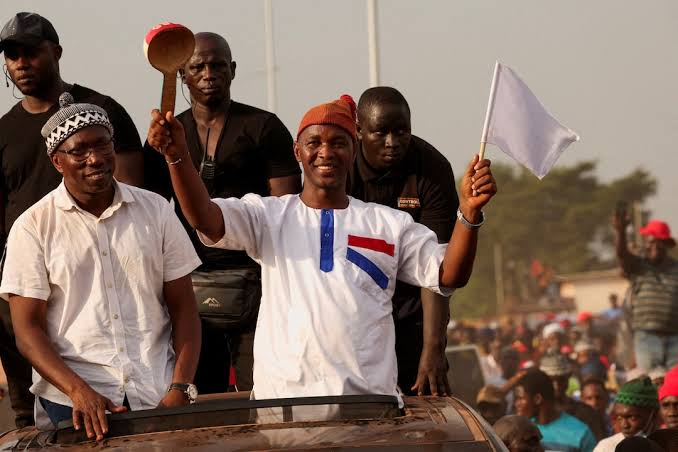
Whether Guinea-Bissau reaches that election with any credibility intact is now an open question
Bissau, Guinea-Bissau
More than eight months after soldiers stormed the presidential palace and suspended a disputed election, Guinea-Bissau's military-appointed government is pressing ahead with an Aug. 30 referendum that would hand sweeping new powers to the presidency — even as the country's most prominent opposition leader sits in a military prison cell rather than on the campaign trail.
The vote, ordered by decree on July 6 by transitional President Horta N'Tam, will ask voters a single yes-or-no question: whether to adopt a new constitution that scraps Guinea-Bissau's parliamentary system in favor of a presidential one. Under the proposal, the head of state would gain the power to appoint the prime minister and Cabinet without legislative approval and to dissolve parliament outright. A general election meant to return the country to civilian rule is scheduled for Dec. 6, the final step in a transition timetable the junta itself designed.
Whether Guinea-Bissau reaches that election with any credibility intact is now an open question. Domingos Simões Pereira, the country's leading opposition figure, former prime minister and longtime head of the African Party for the Independence of Guinea and Cape Verde (PAIGC), was ordered back to prison in mid-July by a military tribunal that accuses him of involvement in an alleged coup plot dating to October 2025. He denies the charge, and his lawyers argue that a military court has no jurisdiction to try a civilian. The reversal came after Pereira had spent months under house arrest, having been released on Jan. 30 following his initial detention during the November coup.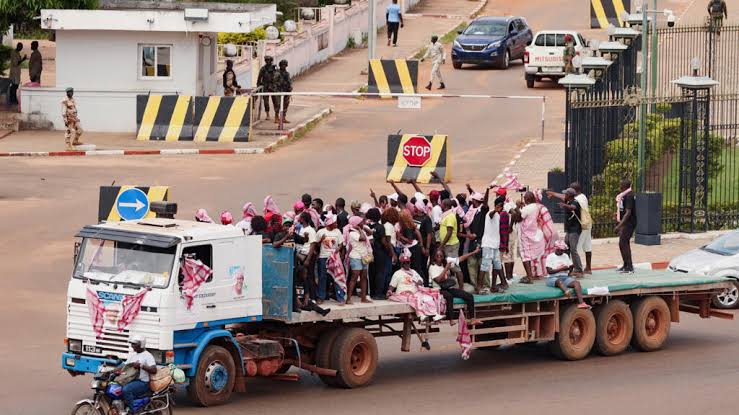
From Disputed Election to Military Rule
The crisis traces back to Nov. 23, 2025, when Guinea-Bissau held a presidential election pitting incumbent Umaro Sissoco Embaló against Pereira, with both men later claiming victory as official results were still being tabulated. Three days later, on Nov. 26, soldiers led by Brig. Gen. Dinis N'Canha, head of the military office of the presidency, arrested Embaló and declared "total control" of the country. N'Canha said the takeover was necessary to stop what he described as a plot by politicians and "national drug lords" to manipulate the election outcome — an allegation that has not been independently substantiated. The junta closed the country's borders, imposed a curfew and suspended the electoral process before the results could be certified.
Senegal negotiated Embaló's release and flew him out of the country within hours of his arrest. The following day, N'Canha's "High Military Command for the Restoration of National Security and Public Order" installed Horta N'Tam, a general, as transitional president. N'Tam has said he will not be a candidate in the eventual return to civilian rule, a pledge intended to reassure critics that the military does not intend to entrench itself in power indefinitely. The Economic Community of West African States (ECOWAS) responded to the coup by suspending Guinea-Bissau from its decision-making bodies, a now-familiar rebuke the regional bloc has issued after a string of West African coups in Mali, Guinea, Niger and Burkina Faso since 2020.
A Constitution Rewritten Without the Opposition
The document voters will consider on Aug. 30 would be the most significant restructuring of Guinea-Bissau's political system since independence from Portugal in 1974. Under the current parliamentary framework, executive authority is shared between a president and a prime minister who answers to the National People's Assembly. The junta's proposed charter would concentrate authority in the presidency, allowing the president to name and dismiss the prime minister and Cabinet ministers unilaterally and to dissolve the legislature — a shift that critics say is designed less to stabilize the country than to guarantee whoever controls the transition retains leverage over whoever wins in December.
Two opposition blocs — the Inclusive Alliance Platform (PAI–Terra Ranka), associated with Pereira's PAIGC, and the Patriotic Alliance (API–Cabaz Garandi) — have accused the transitional authorities of drafting the constitution without meaningful input from political parties or civil society, and are demanding the referendum be postponed. The New York-based Human Rights Foundation went further, calling the vote a "sham referendum" intended "to manufacture false legitimacy" for a document that would "codify a dramatic expansion of presidential powers and cement a future dictatorship." The opposition coalition has also accused ECOWAS of bias, saying the regional bloc's monitoring mission met only with junta officials during a recent visit and ignored the country's most representative political parties.
Regional Pressure Mounts Over Pereira's Detention
ECOWAS has taken a more critical line on Pereira's imprisonment than on the referendum itself. In a statement around July 21, the bloc called on Guinea-Bissau's military-led government to "unconditionally release all detained political figures," naming Pereira specifically, arguing that doing so would "bolster the credibility of the transition process" ahead of both the referendum and the December election. The appeal has so far gone unheeded. Pereira's family says the military's renewed case against him rests on allegations that he played a role in a coup attempt in October 2025 — weeks before the election that triggered the current crisis — a claim his legal team calls unsubstantiated and procedurally improper given that it is being heard in a military rather than civilian court.
Pereira is a significant figure in West African politics beyond Guinea-Bissau's borders. He led PAIGC, the party that spearheaded the country's independence movement under revolutionary leader Amílcar Cabral, for more than a decade and previously served as prime minister. His continued detention just weeks before a referendum that will reshape the very office he has twice sought removes the most prominent voice of organized opposition from public debate at the moment it matters most.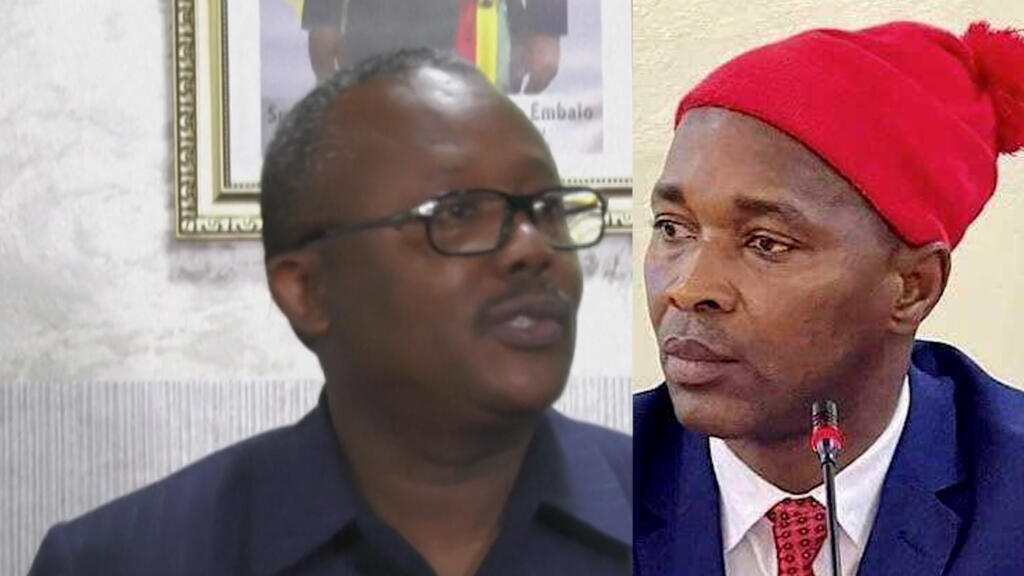
What the Vote Means for Guinea-Bissau's Fragile Democracy
Guinea-Bissau has a well-documented history of political instability — the country has experienced repeated coups and attempted coups since independence, and no elected president had completed a full term in office until Embaló's predecessor. That history gives the junta's critics reason for skepticism when military officers who seized power promise a swift and clean handoff to civilians. It also explains why regional and international actors are parsing the details of the constitutional proposal so closely: a presidency empowered to dissolve parliament and appoint government ministers without legislative checks could make it easier for whoever wins December's election — or for the military behind the scenes — to govern without meaningful institutional constraint.
Turnout and the margin of the referendum result will both be closely watched. A low turnout, especially if opposition parties call for a boycott, would hand the junta a weaker mandate for the constitutional overhaul even if the "yes" side wins comfortably among those who vote. Observers will also be watching whether the transitional government allows international monitors independent access to the process, given the opposition's accusations that ECOWAS's engagement so far has been one-sided.
The road to December 6 remains long. Beyond the referendum, the junta must still organize a competitive general election in a country where its leading opposition figure is imprisoned and his party accuses the process of being rigged from the outset. How Bissau-Guinean authorities handle Pereira's case in the coming weeks — release, prosecution or continued detention without trial — is likely to be read across the region as a signal of whether this transition will produce genuine civilian rule or a new, constitutionally reinforced form of controlled politics.
Stakes Beyond Bissau's Borders
The outcome carries weight far beyond Guinea-Bissau's roughly 2 million people. The country is one of the world's most cashew-dependent economies, and years of political instability have repeatedly interrupted the external investment and credit lines the sector depends on ahead of each autumn harvest. A referendum widely viewed as illegitimate, followed by a general election contested without the country's historic liberation party fully able to campaign, would give international lenders and investors fresh reason for caution at a moment when the transitional government is seeking to demonstrate it can deliver stability. It would also hand ammunition to critics of ECOWAS, which has struggled to enforce its own anti-coup norms consistently since Mali, Guinea, Burkina Faso and Niger all saw military takeovers between 2020 and 2023 without the bloc managing to reverse any of them through sanctions or diplomatic pressure alone. A fifth unresolved transition, this time unfolding alongside a constitutional referendum most opposition parties reject, would reinforce the view — increasingly common among West African publics — that regional and international bodies can condemn coups but rarely undo them.
For ordinary Bissau-Guineans, the more immediate concern is simpler: whether a country that has cycled through more coups and attempted coups than completed presidential terms since 1974 can finally produce a transition that sticks. The junta's own promise — a referendum, then elections, then a return to civilian rule by year's end — is a familiar script in West Africa's recent history. Whether this iteration ends differently than the last will depend, in large part, on decisions being made in the coming weeks about a single prisoner's case.



