Written By |
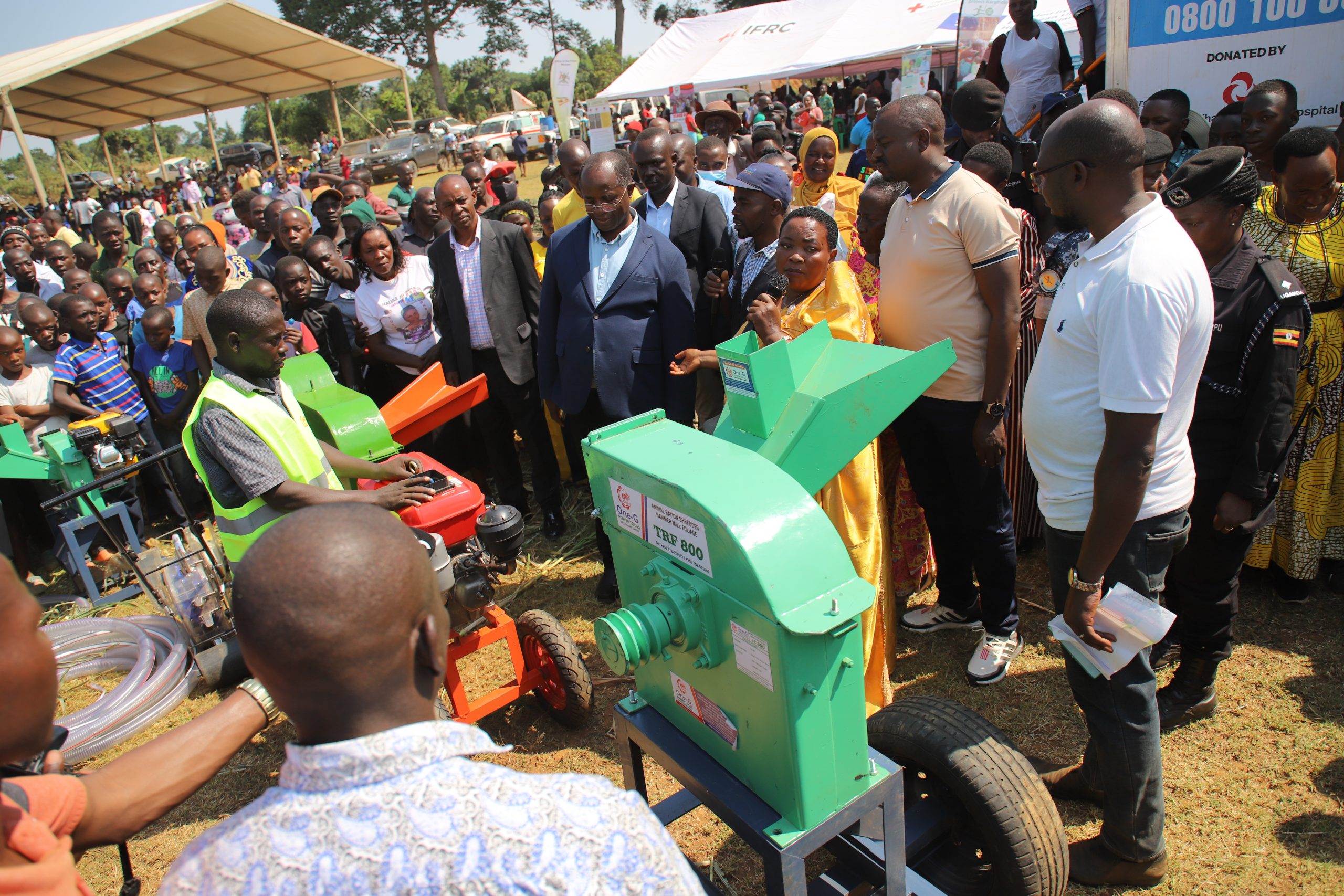
Nabbanja Robinah and other ministers inspecting stalls during the Agricultural expo at Kyanamukaka sub county-in Masaka district
Prime Minister Robinah Nabbanja has expressed her displeasure over the high school dropout rates in Lyantonde district, which is estimated at 63%. It is estimated that only 37% of pupils who start Primary One (P1) in public schools in Lyantonde complete the primary level. Residents intimated to the premier that the number of pupils, especially girls, dropping out of school to marry continues to increase in Lyantonde district despite the availability of a by-law to check the problem.
“I have talked to residents in Lyantonde, and they have told me that most pupils drop out of school before even completing the primary cycle. This is very unfortunate and unacceptable. The leaders must address this problem,” said Nabbanja.
Nabbanja made the remarks while leading a campaign in partnership with the Ministry of Agriculture and other ministries, departments, agencies (MDAs), and private agro-input dealers. This nationwide campaign includes agricultural expos, service delivery monitoring, visiting model farmers, and knowledge-sharing sessions. In 2007, Lyantonde district passed a by-law that all children must go to school and complete at least Senior Four. The by-law sought to imprison parents who fail to take their children to school. Under this by-law, all parents had to pay either some money to buy food at school or take Matooke, maize flour, and milk to feed their children while at school. The by-law also set a fine of sh100,000 for all parents who defied the law or six months’ imprisonment.
Nabbanja also blamed the dropouts on high levels of poverty in the district, which means many parents cannot afford the instituted fees. She directed authorities in Lyantonde district to arrest head teachers of government-aided schools who send learners home for fees. However, there are reports that parents, especially in Kashagama Sub County, Lyantonde town council, Lyantonde rural, and Mpumudde Sub County, withdraw their girls from schools to force them into early marriages due to cultural reasons.
"The LC V Chairman, Resident District Commissioner, and others, there are these committees that arbitrarily levy fees because they have money and assume everyone else does, which continues to force our children out of school," she said.
Nabbanja said that these committee members share this money with the teachers, yet the country is losing tomorrow's leaders by sending learners home for failing to pay school fees and other requirements. She emphasized that the President instituted Universal Primary Education (UPE) and Universal Secondary Education (USE) to ensure all children can go to school whether poor or not.
"I had a poor background because I was raised in a poor family, although my story has changed. I’m aware that we have poor children who can overcome their circumstances and succeed like I did,” said Nabbanja.
The premier ordered the Resident District Commissioner (RDC), District Police Commander (DPC), and District Education Officer (DEO) to arrest any head teachers who send students home for failing to pay fees. However, Lyantonde District Chairperson Fred Muhangi said the teachers are not solely to blame for the situation in the district. Muhangi said the poor conditions of government schools force parents to contribute additional funds to support teachers to get accommodation and provide food for their children.
"Some parents decide to pay some money to support their children for food and porridge while at school," he noted. "If the government wants this to stop, they should ensure that teachers have houses and increase the funds allocated to government schools, as the current funding is insufficient,” Muhangi said.
At the expo venue, farmers had an opportunity to interact with various agricultural experts. Nabbanja told farmers at the agricultural expo in Lyantonde that the campaign was designed to implement the six policy guidelines issued by President Yoweri Museveni in 2022. The policies include production, multiplication, distribution, and certification of seeds and stocking materials; disease control; agricultural mechanization and irrigation; farmer education and mobilization; partnerships with big landowners; and interventions in the fisheries sector.
Torch Media Africa



