South Africa entered the second half of 2026 in an unusual position for a country whose recent past has largely been defined by stagnation: its finance minister was using the phrase "fiscal turning point" without irony, multilateral lenders were nudging growth forecasts upward rather than trimming them, and a flagship structural reform program was reporting more successes than failures for the first time in years. Yet beneath the improved headline numbers sits an economy still growing too slowly to dent record joblessness, and a reform agenda whose two most consequential components — the state power utility and the state freight-and-ports operator — remain the pieces most likely to disappoint. The result is a country simultaneously turning a corner and still a considerable distance from where it needs to be.
A Modest but Real Growth Upgrade
In its January 2026 World Economic Outlook update, the International Monetary Fund raised its South Africa growth forecast for 2026 by 0.2 percentage points to 1.4%, citing continued reform momentum even as it flagged broader risks to the global outlook. The World Bank moved in the same direction, lifting its 2026 projection for South African GDP growth by 0.3 percentage points, also to 1.4%, with a further rise to 1.5% pencilled in for 2027. More recent IMF commentary has trimmed that figure slightly, to around 1.1% for 2026, underscoring how fragile the recovery still is. The World Bank was explicit about the mechanism it expects to drive the improvement: "Continued reform momentum — particularly in energy and logistics — alongside rising public investment is expected to crowd in private investment and support medium-term growth prospects." South Africa's National Treasury, in its 2026 Budget Review, described 2025 as a year in which the economy "demonstrated remarkable resilience in the face of global turbulence," holding inflation in check and preserving macroeconomic stability even as growth stayed well below the rates needed to absorb new entrants to the labour force.
Godongwana's "Fiscal Turning Point" Budget
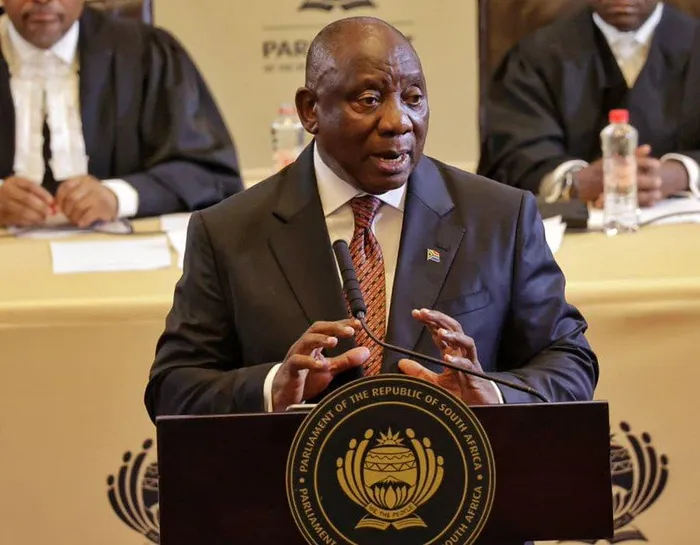
Finance Minister Enoch Godongwana used his February 25, 2026 Budget Speech to declare a fiscal turning point, and the numbers back the framing to a degree rarely available to a South African finance minister this decade. The consolidated budget deficit narrowed to 4.5% of GDP for 2025/26, down from the 4.8% estimated in the 2025 Budget, and National Treasury projects it will fall further to 4.0% in 2026/27 and 3.1% the year after. Gross national debt is now expected to stabilise as a share of GDP at 78.9% in 2025/26, then decline to 77.3% in 2026/27 and 76.5% by 2028/29. "For the first time in 17 years, debt will stabilise and it will continue to fall in the coming years," Godongwana told Parliament, adding that the deficit had narrowed significantly and debt-service costs were falling in tandem. Independent analysts have been more circumspect, noting that South Africa's economy is "picking up, but hasn't reached a turning point yet" — the debt stabilisation is real, but it depends on continued fiscal discipline and a growth rate that has repeatedly underdelivered against Treasury's own projections in recent budget cycles.
Operation Vulindlela: Progress, but the Hardest Reforms Lag
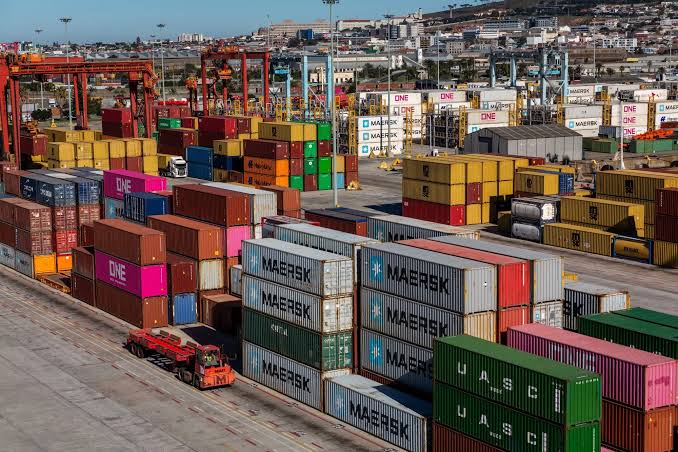
The clearest test of whether South Africa's growth upgrade is durable lies in Operation Vulindlela, the joint Presidency–National Treasury reform unit tasked with unblocking network industries. Its most recent progress reporting in 2026 shows 67% of tracked reforms on schedule, 7% fully completed, 6% facing significant challenges, and 20% delayed — a mixed scorecard that the government has nonetheless presented as validation of the program's second phase. Electricity-sector reform, the highest-profile workstream, shows a similar split: 60% of reforms on track, 20% delayed, and the remainder running into material obstacles. The centrepiece of that workstream — carving Eskom's transmission business out into a fully independent, state-owned National Transmission Company of South Africa — saw its regulator begin an initial phase of operations on April 1, 2026, but full implementation of the new market structure is not expected before the 2027/28 financial year. Operation Vulindlela's own reporting has repeatedly flagged Eskom's restructuring as an area "facing significant challenges," a signal that the utility whose load-shedding crisis defined South Africa's economic narrative for much of the early 2020s has not yet completed the institutional overhaul meant to prevent a recurrence. Transnet, the state logistics operator, tells a more encouraging story on volumes: rail freight is estimated to reach roughly 168 million tonnes in the 2025/26 financial year, up from 160.1 million tonnes the year before, with a target of 180 million tonnes for 2026/27. Eleven private train-operating companies have now been brought onto Transnet's rail network under the government's third-party access reforms, injecting capital and competition into a system long criticised for underinvestment. Even so, commentary on the reform program cautions that Eskom and Transnet, taken together, remain the two institutions "blocking growth reforms" more than any others — the exact network bottlenecks that Operation Vulindlela was created to solve four years ago.
A Labour Market Still in Crisis
The starkest gap between South Africa's improving macro headlines and lived economic reality is the labour market. The official unemployment rate rose to 32.7% in the first quarter of 2026, up from 31.4% in the fourth quarter of 2025 — a reminder that fiscal stabilisation and modest GDP growth have not yet translated into net job creation at scale. The youth labour market is in considerably worse shape: Statistics South Africa's Q1 2026 data put unemployment among 15-to-24-year-olds at 60.9%, and among 25-to-34-year-olds at 40.6%, meaning a majority of South Africa's youngest job seekers remain outside the formal labour market entirely. These figures sit at the heart of why the country's G20 presidency in 2025 made inequality — rather than trade or monetary policy alone — a headline priority.
Inflation Cooling, but Slowly
On price stability, the news is more unambiguously positive. Headline consumer price inflation eased to 3.5% year-on-year in January 2026, down from 3.6% in December 2025, sitting comfortably inside the South African Reserve Bank's target band. Revised full-year forecasts put average 2026 inflation at 4.4%, with a sustained move toward the SARB's preferred 3% midpoint target not expected until 2028. The disinflation trend has given the central bank room to support the recovery without the currency and price pressures that constrained policy earlier in the decade, but it also reflects an economy still operating well below potential.
The G20 Legacy: Inequality as a Systemic Issue
South Africa closed out its 2025 G20 presidency — the first held by an African nation — with inequality elevated to a permanent item on the group's agenda rather than a side conversation. On December 4, 2025, President Cyril Ramaphosa's administration helped launch the G20 Extraordinary Committee of Independent Experts on Global Wealth Inequality, chaired by Nobel laureate Joseph Stiglitz, with a mandate that included proposing a standing International Panel on Inequality modelled on the Intergovernmental Panel on Climate Change. Commentary from the University of Toronto's G20 Research Group and the Mo Ibrahim Foundation credited the presidency with proving, in a fractious geopolitical moment, that multilateral coordination on inequality, debt distress and climate finance was still possible. Critical minerals — lithium, cobalt, graphite and rare earths, all central to Africa's own resource endowment — featured prominently in South Africa's push to steer the G20 away from purely extractive resource models and toward beneficiation and technology transfer, a theme with direct relevance to South Africa's own long-stalled mining-sector transformation ambitions. Ownership of the G20 presidency passed to the United States for 2026, but South African officials and independent commentators alike have urged that the inequality and critical-minerals agenda not be allowed to fade now that the spotlight has moved on.
What It Adds Up To
Taken together, the 2026 data describe an economy where the fiscal story has genuinely improved — a stabilising debt ratio, a narrowing deficit, and cooling inflation all represent real progress relative to the trajectory of the past several years — while the structural and social story remains largely unresolved. Operation Vulindlela has unblocked real bottlenecks in energy and logistics, evidenced by rising Transnet rail volumes and an active, if incomplete, electricity-market restructuring, but the two hardest reforms (an independent transmission grid operator and a fully competitive freight-rail network) will not be finished before 2027 at the earliest. Growth at 1.1%–1.4% is simply not fast enough to move the needle on 32.7% unemployment or 60.9% youth joblessness, and until it is, the fiscal turning point that Godongwana described to Parliament will remain a necessary but not sufficient condition for the broader economic transformation South Africa's G20 presidency argued the world urgently needs.
Published By | Business News Editor