Written By |
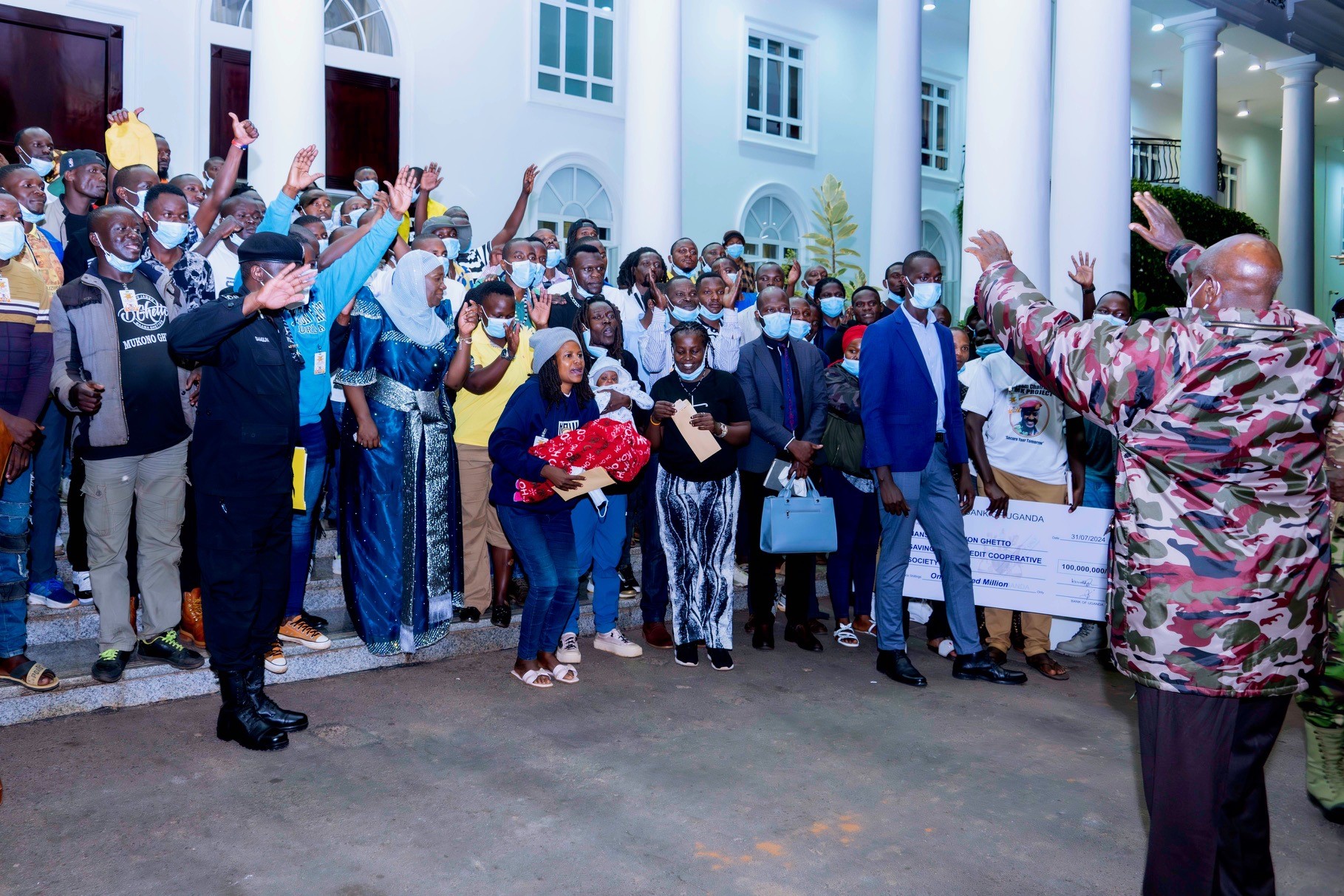
President Museveni with some of the members of the ghetto saccos at statehouse today
President Museveni has fulfilled his pledge of sh1.2b to 12 Savings and Credit Cooperative Societies (SACCOS) formed by the youth from Kampala’s slum areas (ghettos). The beneficiaries are from Rubaga Kakeeka Zone, Kasangati Ghetto Community, Kampala Central Division, Nakawa Division, Makindye East, Kawempe South, Makindye West, Kawempe North, Mukono Industrial, Kasokoso, Nansana Division, and Masajja Para Zone in Makindye.
Each of the 12 ghetto SACCOS will receive sh100m, which Museveni promised during a meeting at Kololo Independence Grounds last year. Museveni fulfilled the pledge today when he met 100 leaders of the ghetto SACCOS at State House Entebbe. “From the sh100m, you can do something for yourselves. In the villages, we’re encouraging people to go into commercial farming. It’s good that you have a base here in town for small businesses, artisanship, and services like salons,” Museveni told the youths, according to a release from the Presidential Press Unit.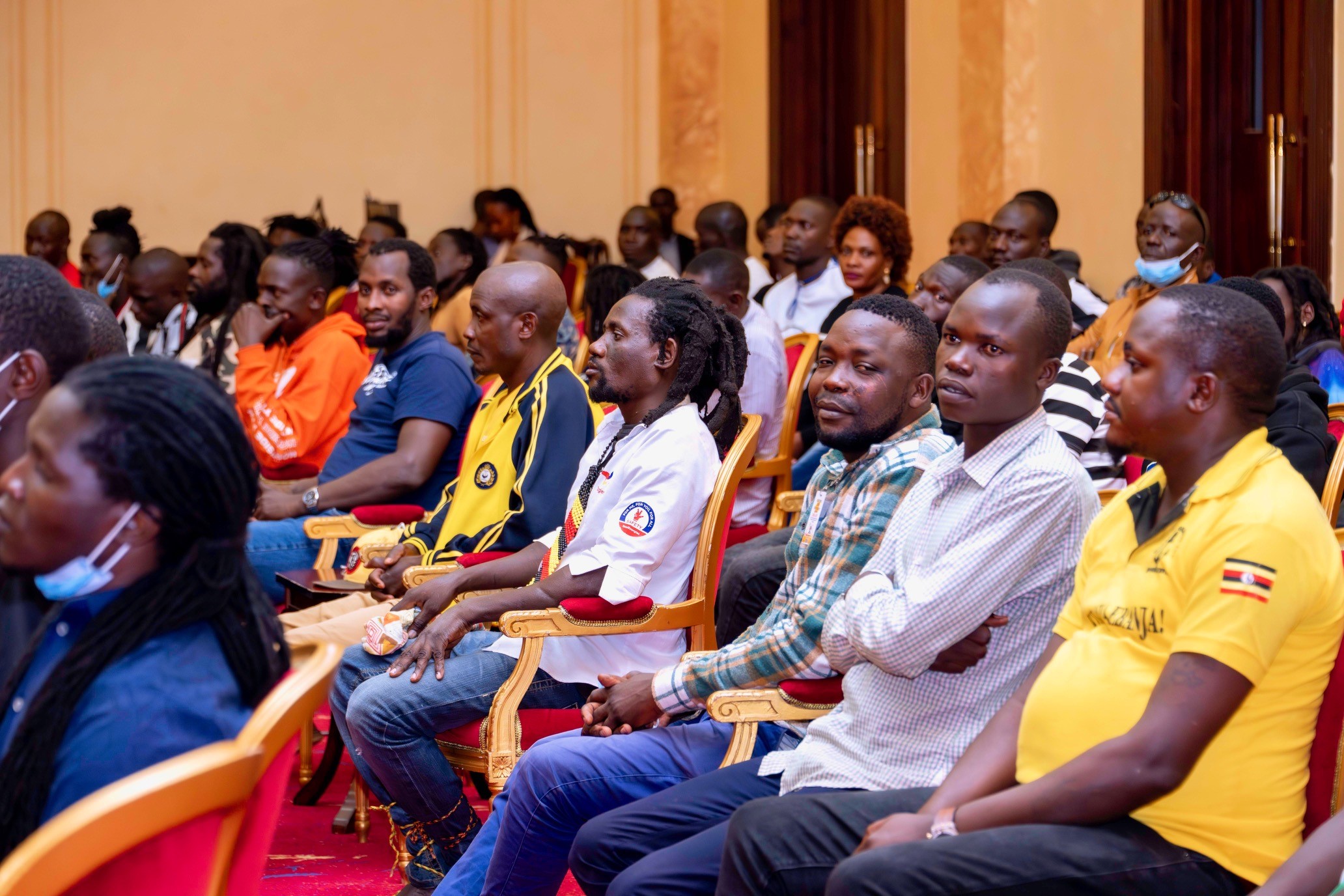
Some of the ghetto members meeting the President at State House
During the meeting, the President emphasized the role of ghetto people in Uganda's liberation.
“In the 1950s, ghetto people were called ‘Abawejere’ and were centered around Katwe. Much of the independence activities were in Katwe. I linked up with the ghetto in 1968. Katwe is my place,” he said.
President Museveni explained that when former President Idi Amin announced his coup on January 25, 1971, the former students and Abawejere decided to fight him because they believed in solving the people’s problems. “We had and still have a program for the prosperity of the people. On January 27, 1971, I left to fight Amin with two people from Kampala, Abbas Kibazo and Zubair Bakari. We entered Tanzania and met Mwalimu Nyerere, starting the fight against Amin. During this time, my contacts were mainly the bawejere,” he said.
“In 1971, we also recruited Ahmed Seguya from Katwe. He was among the 14 fighters sent to Mozambique for training. Seguya was our first army commander when we fought Obote in 1981, but he died due to liver problems. Amin emphasized identity politics based on religion, claiming to fight for Islam, yet he did nothing for Muslims,” Museveni added.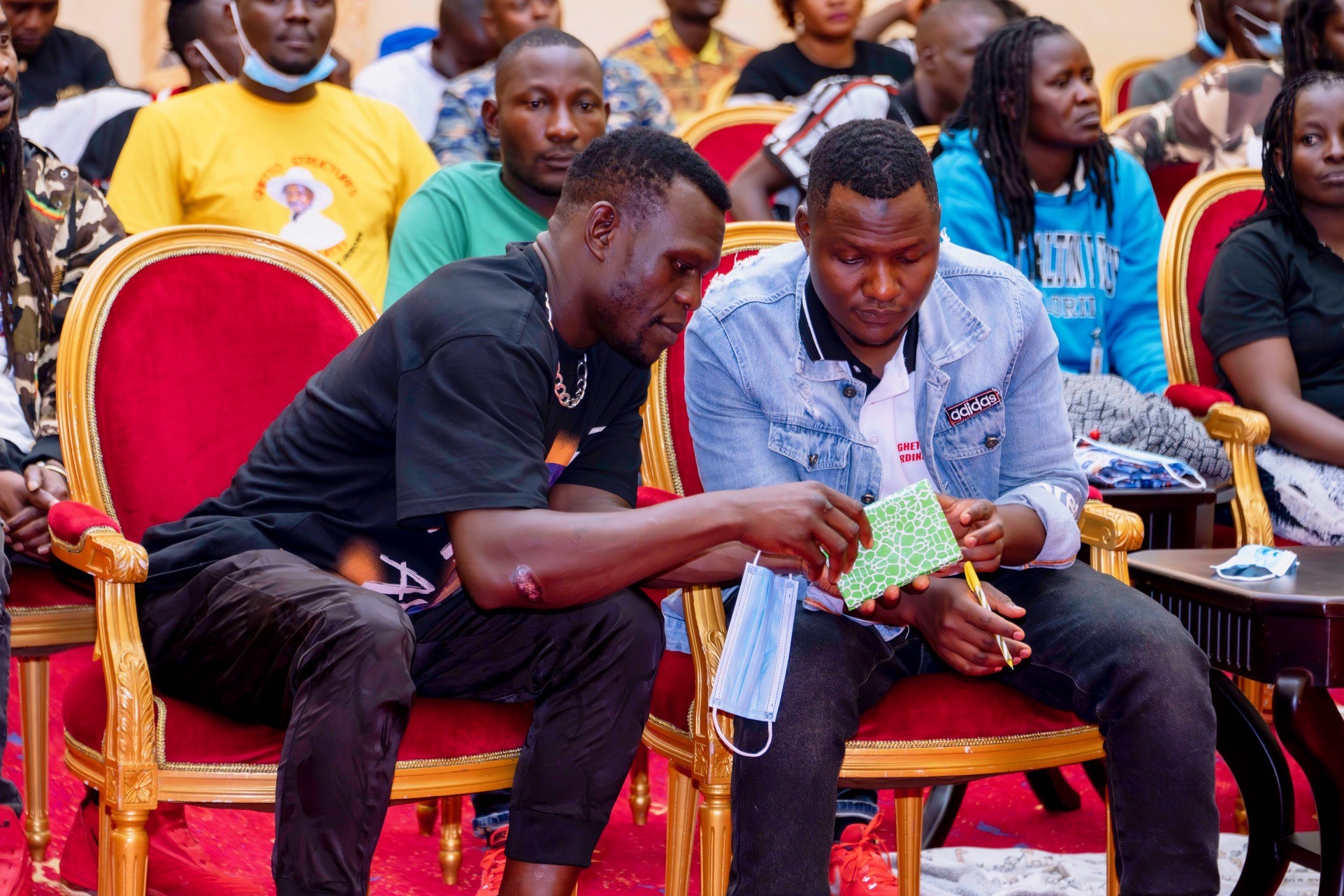
Museveni urged the ghetto youths to hold their leaders accountable
President Museveni urged the ghetto youths to hold their leaders accountable and advocate for their interests, like free education and prosperity for all. He also warned against being used by politicians with selfish motives, which often leads to criminality. The Minister of Kampala Capital City and Metropolitan Affairs, Hajjat Minsa Kabanda, thanked Museveni for his support. “These people have been trained to manage their SACCOS, and most of them are now transformed. Those who are not yet transformed will be soon,” Kabanda said.
Brig. Gen. Christopher Ddamulira, Director of Crime Intelligence and project coordinator, said the ghetto project started under Museveni’s guidance in March 2022. They created leadership among the youth and organized them into SACCOS. There are now 3,280 savers in the 12 SACCOS, who have saved sh13.7m on their own.



