Written By | International News Desk
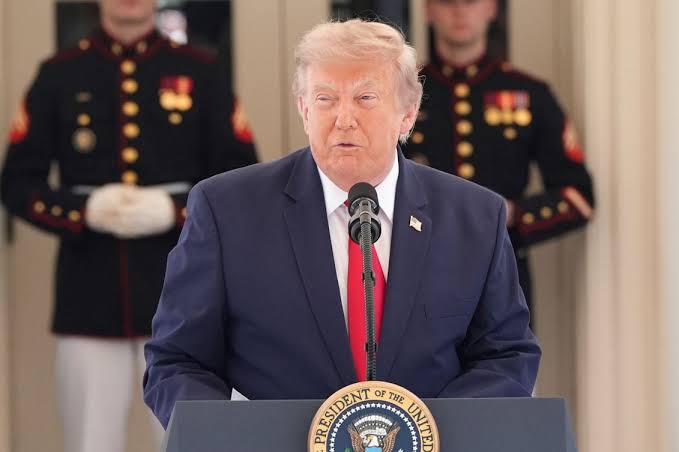
In May 2026, a judge dismissed the $10 billion claim at Trump's own request, clearing the way for a settlement.
Background
The case at the center of this week's ruling dates back to 2019-2020, when Charles E. Littlejohn, a contractor working for the IRS through the consulting firm Booz Allen Hamilton, leaked the tax returns of thousands of wealthy Americans to The New York Times and ProPublica. Prosecutors later said Littlejohn had sought the IRS contracting job specifically so he could access and disclose that data; among those whose returns were leaked were Donald Trump, his sons, and the Trump Organization. Littlejohn was eventually prosecuted and pleaded guilty.
More than five years later, in January 2026, Trump, his sons Donald Trump Jr. and Eric Trump, and the Trump Organization filed suit against the IRS and the Treasury Department in the U.S. District Court for the Southern District of Florida, arguing the agencies were responsible for failing to prevent the Littlejohn leak and seeking at least $10 billion in damages. Legal analysts quickly flagged problems with the suit: it was filed more than two years after the leaks became public in 2020, raising a statute-of-limitations issue, and critics noted that claims over an individual contractor's unauthorized disclosures are ordinarily brought against that person directly rather than against the government under the relevant tax-privacy statute, 26 U.S.C. § 7431. Trump sued in his personal capacity, not as president, even though he heads the executive branch that includes both defendant agencies.
In May 2026, a judge dismissed the $10 billion claim at Trump's own request, clearing the way for a settlement. That settlement, finalized shortly afterward, produced no monetary payment to Trump personally but did create something called the “Anti-Weaponization Fund,” established by the Attorney General and funded with $1.776 billion drawn from the federal judgment fund — money intended to compensate other individuals and entities who claimed they had been targeted by “lawfare” or government “weaponization.” The deal also included a memorandum from Acting Attorney General Todd Blanche barring the IRS from investigating Trump, his family or his businesses over past tax matters, or pursuing other claims predating the settlement — an effective grant of audit immunity. Facing bipartisan criticism, the administration abandoned the $1.8 billion fund itself in June 2026, though the audit-immunity provision remained in place.
Key Developments
On July 13, U.S. District Judge Kathleen Williams issued a 56-page decision that went well beyond simply unwinding the settlement. Williams found that the lawsuit and the deal that resolved it were “the product of collusion,” writing that “there was never adverseness between the Parties; there was never a case or controversy; and there was never a question as to who would prevail.” Because Trump, as president, effectively controlled both sides of the litigation — directing his own private attorneys while also overseeing the Justice Department defending the government — Williams concluded there had been no genuine legal dispute for a court to resolve in the first place.
Williams wrote that the suit amounted to an attempt “to use the Court to provide some legitimacy to an agreement to confer immunity to people and entities affiliated with the President and to earmark billions of dollars from American taxpayers to redress grievances not defined in the law.” She also criticized the Trump administration directly for failing to genuinely defend the lawsuit or respond adequately to the court's jurisdictional questions, writing that its position “would not withstand judicial scrutiny.”
The judge did not stop at voiding the settlement. She ordered sanctions against the attorneys involved and referred Trump's private attorney, Alejandro Brito, to the Florida Bar for potential disciplinary action. She also limited the ability of a second attorney, Daniel Epstein, to practice in the Southern District of Florida. Beyond the private lawyers, Williams directed that her opinion be forwarded to attorney disciplinary boards in New York and Washington, D.C., that are already reviewing separate ethics complaints against Acting Attorney General Todd Blanche and Associate Attorney General Stanley Woodward. The judge suggested both officials should have recused themselves from the matter given their prior work, before joining the administration, representing private clients who stood to benefit from how the case was resolved.
Reactions
A spokesman for Trump's private legal team pushed back on the ruling by returning to the underlying grievance rather than addressing the judge's collusion finding directly, saying: “The IRS wrongly allowed a rogue, politically-motivated employee to leak private and confidential information about President Trump, his family, and the Trump Organization to the New York Times, ProPublica and other left-wing news outlets.” The Justice Department, for its part, was faulted by Williams for essentially declining to mount a real defense of the lawsuit at all, a fact several outlets highlighted as unusual given that the department was nominally the defendant.
Government watchdog groups seized on the decision as vindication of complaints they had raised earlier in the year about the settlement, with organizations such as Democracy Forward framing the ruling as confirmation that the fund and the audit-immunity memo amounted to self-dealing by a sitting president using taxpayer resources and Justice Department leverage for personal and political benefit. Legal commentators described the 56-page opinion as unusually blunt in accusing a president and his own Justice Department of manufacturing a lawsuit against each other to launder an outcome through the federal courts, with several noting the referral of Blanche and Woodward — two of the department's most senior political appointees — to outside disciplinary bodies as a particularly serious rebuke.
Congressional Democrats had already been probing the settlement before Williams issued her ruling. Senate Democrats including Elizabeth Warren, Chuck Schumer and Ron Wyden sent letters last month to eleven companies with ties to Trump and his family, asking whether those businesses stood to benefit from the audit-immunity terms embedded in the deal. In those letters, the senators warned that the arrangement could function as a “broad and valuable get-out-of-jail-free card” for the president's family and associated companies on any future financial misconduct, not merely the tax-return leak the suit was nominally about. Williams's finding that the whole arrangement was collusive is likely to sharpen those inquiries considerably, giving Senate Democrats a federal judge's factual findings to cite rather than relying solely on their own suspicions about the settlement's structure.
What's Next
The most immediate consequence is procedural: with the settlement voided, the underlying $10 billion claim and the legal questions around it — including the statute-of-limitations problem and whether the suit should ever have named the government rather than Littlejohn individually — are back in play, though it remains unclear whether Trump's legal team will attempt to refile or simply let the matter drop now that its practical goal, the audit-immunity memo, has been invalidated along with everything else. Attorney Alejandro Brito now faces a Florida Bar referral that could result in formal discipline, while the New York and Washington, D.C. bar authorities reviewing complaints against Blanche and Woodward have a federal judge's detailed factual findings to draw on as they weigh whether the government's second- and third-ranking law enforcement officials violated professional conduct rules. Because Blanche and Woodward remain in their posts atop the Justice Department, any disciplinary action against them would raise unusual questions about the department's ability to police its own leadership. The ruling is also likely to feature prominently in broader congressional and watchdog scrutiny of how the administration has used settlements, funds and memoranda to shield the president and his family from investigation, a pattern critics say this case exemplifies and that is likely to draw continued attention regardless of whether Trump's team appeals Williams's decision.



