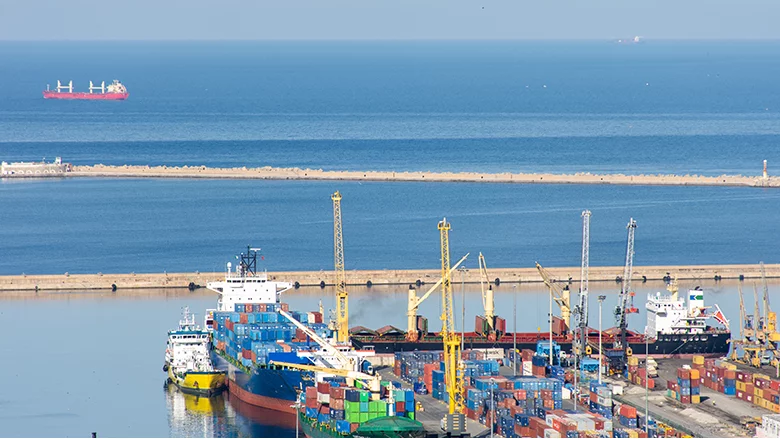
Algiers
North Africa's largest country by land area is entering 2026 with two contradictory storylines running at once. On one hand, Algeria's non-hydrocarbon economy is showing genuine, sustained momentum, prompting the World Bank in April 2026 to upgrade its growth forecast and single the country out as a “notable exception” within the Middle East, North Africa, Afghanistan and Pakistan (MENAAP) region. On the other, the state's finances remain dangerously exposed to a hydrocarbon sector that still generates roughly half of government revenue and over 90% of export value, even as it accounts for just over 10% of GDP. The result is a country investing heavily in industrial diversification and regional trade integration while running fiscal deficits that the International Monetary Fund (IMF) describes as the largest of any oil exporter in the Middle East and North Africa region.

A Fiscal Deficit Without Modern Precedent
The numbers underline the scale of the imbalance. According to the IMF's 2025 Article IV Consultation, completed in September 2025, Algeria's overall fiscal deficit reached an estimated 11.5% of GDP in 2025 and is projected to widen further to roughly 12.4% of GDP in 2026 before gradually narrowing in subsequent years. That trajectory is unusual even by the standards of hydrocarbon exporters, most of which have used the 2022-2023 energy price spike to rebuild buffers. Algeria instead drew down its rainy-day fund — the Fonds de Régulation des Recettes (FRR) — to zero in 2024, removing a cushion that had historically absorbed oil-price shocks without forcing abrupt spending cuts.
Foreign exchange reserves offer a partial offset: at the end of 2024 they stood at a level equivalent to roughly 14 months of import cover, a relatively comfortable buffer by international benchmarks. But the IMF cautions that declining hydrocarbon prices and global trade uncertainty could weigh on 2026 prospects by reducing investment, export receipts and government revenue simultaneously — a combination that would accelerate reserve drawdown if Algiers does not adjust spending or accelerate non-oil revenue mobilization.
Non-Hydrocarbon Growth Is the Genuine Bright Spot
Set against that fiscal backdrop, the real economy story is more encouraging. The World Bank's Algeria Economic Update (Fall 2025) and its subsequent April 2026 forecast revision project overall GDP growth of 3.5% in 2026 and 3.3% in 2027, with non-hydrocarbon growth identified as the primary driver. Mining (outside oil and gas) and infrastructure investment were flagged as particular areas of strength, continuing a pattern visible since 2023 in which construction, manufacturing and services have expanded faster than the hydrocarbon sector itself, which has been constrained by OPEC+ production quotas and aging fields.
This shift is partly the product of deliberate policy. Algeria has introduced a new economic model built around several pieces of legislation passed since 2022, including a new Investment Law, a Banking and Monetary Law, and a Public Procurement Law, all aimed at facilitating diversification and gradually reducing reliance on hydrocarbon revenue. A central feature is the concept of “structuring investments” — projects deemed to have high potential for wealth and job creation — which receive streamlined regulatory treatment if they advance import substitution, export diversification, integration into regional and global value chains, or technology transfer. A parallel free-zones initiative, anchored in Law No. 15-22 of July 2022, is intended to replicate elements of the free-trade-zone model used elsewhere in the Maghreb and Gulf to attract export-oriented manufacturing.

Regional Trade Integration Through the AfCFTA
Algeria's push to diversify exports is increasingly tied to the African Continental Free Trade Area (AfCFTA). Trade law analysts at tralac note that AfCFTA membership gives Algerian exporters preferential access to 47 African markets, and that under the bloc's Guided Trade Initiative — the mechanism used to test live trading before full tariff schedules are finalized continent-wide — Algeria can already trade selected goods duty-free with Cameroon, Egypt, Ghana, Kenya, Rwanda, South Africa and Tunisia. For an economy whose non-hydrocarbon exporters have historically struggled to break into markets beyond Europe and the Gulf, AfCFTA access to fast-growing Sub-Saharan markets represents one of the few external levers available to support the diversification agenda without requiring new fiscal outlays.
The African Development Bank's African Economic Outlook 2026 situates Algeria's reforms within a broader continental pattern: oil- and gas-exporting economies across Africa are simultaneously trying to use AfCFTA, free zones and targeted investment codes to reduce commodity dependence, with mixed success so far given entrenched governance and competitiveness constraints. The IMF's own reform priorities for Algeria — published alongside the September 2025 Article IV consultation — explicitly list improving fiscal space, strengthening the monetary policy framework and financial supervision, and accelerating structural reforms to catalyze private investment as the three pillars needed to convert non-hydrocarbon growth into durable, inclusive job creation.
The Demographic Pressure Point: Youth Unemployment
Algeria's reform window is narrowed by demographic urgency. IMF data shows youth unemployment (ages 15-24) stood at 29.3% in 2024, far above the national average and among the highest youth joblessness rates in the MENA region. Analysts attribute persistently high youth unemployment to a combination of limited private-sector job creation, a public sector that has historically absorbed graduates but is now fiscally constrained, and skills mismatches between Algeria's education system and the requirements of higher-value manufacturing and services roles. The IMF and outside researchers have both flagged elevated brain drain as a downstream consequence: frustrated, often well-educated young Algerians are emigrating at rates that erode the human capital base diversification efforts depend on.
This creates a genuine policy bind. The free zones, structuring-investment incentives and AfCFTA access are all medium-to-long-horizon plays that take years to translate into mass employment. Meanwhile, the fiscal deficit limits the government's room to expand the public hiring and subsidy programs that have traditionally served as a social safety valve. The World Bank's diversification recommendations — improving the business environment, expanding access to finance and strengthening competition — are squarely aimed at the private sector picking up that employment slack, but implementation has been gradual.

What to Watch Through 2026
Three indicators will determine whether Algeria's two parallel storylines converge or diverge further this year. First, global hydrocarbon prices: any further softening would compress the export and fiscal revenue base simultaneously, intensifying pressure on reserves that are already absorbing the deficit left by the depleted FRR. Second, the pace of free-zone and structuring-investment project approvals, which will signal whether the 2022-2025 legislative reforms are translating into actual foreign and domestic investment commitments rather than remaining largely on paper. Third, AfCFTA trade volumes under the Guided Trade Initiative, an early proxy for whether Algerian non-hydrocarbon exporters can genuinely use continental market access to diversify away from European and Gulf buyers. Taken together, Algeria's 2026 trajectory illustrates a broader African pattern: hydrocarbon-rich states attempting to diversify while the commodity cycle itself determines how much fiscal room they have to do so.
Published By | Business News Editor