Written By | International News Desk
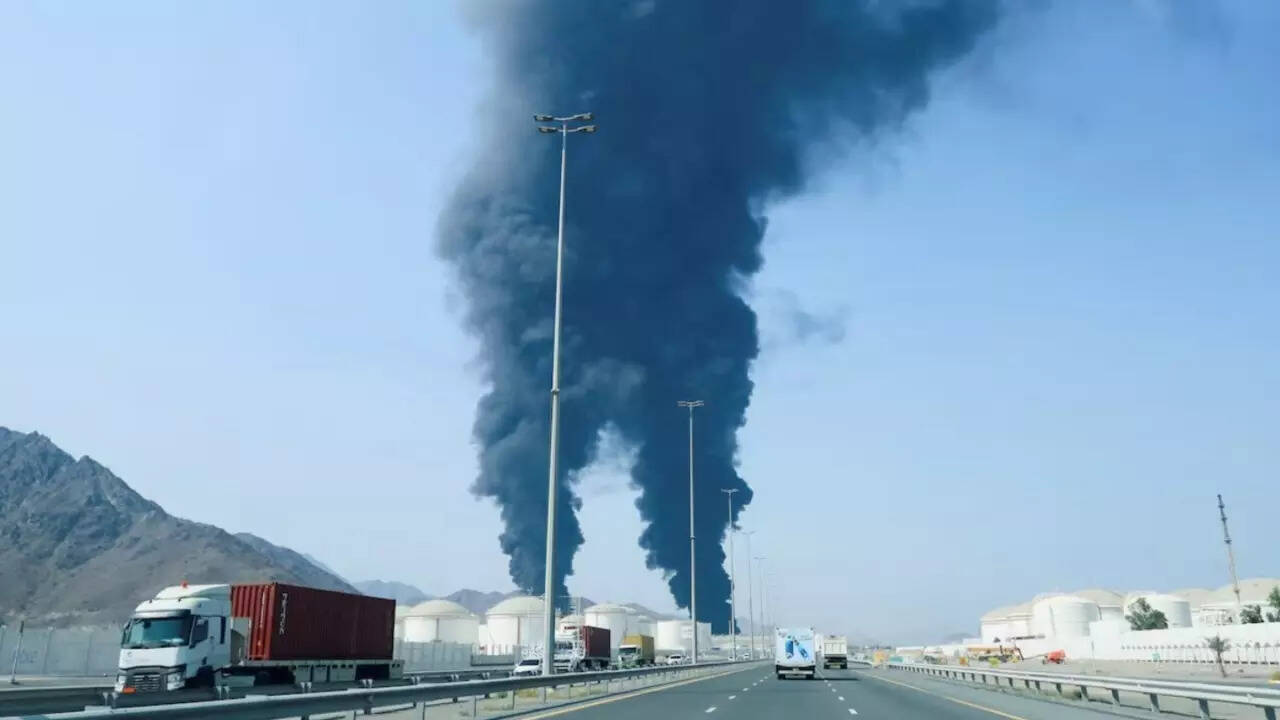
Strait Of Hormuz: US and Iran trade fire, threatening fragile truce - The Times of India
Background
The war between the United States, Israel, and Iran that has consumed the Middle East for most of 2026 began with a single, seismic strike. On February 28, American and Israeli forces carried out a coordinated air campaign against Iranian leadership targets in Tehran, killing Supreme Leader Ali Khamenei along with several family members. Within days, Khamenei's second son, Mojtaba, was installed as Iran's new supreme leader, signaling the regime's determination to project continuity despite the shock.
What followed was months of open warfare: missile and drone exchanges, American strikes on Iranian infrastructure, and periodic flare-ups involving Iranian proxies. By mid-June, exhaustion and international pressure produced a diplomatic breakthrough. On June 17, President Pezeshkian and President Trump signed a fourteen-point memorandum of understanding at the Palace of Versailles, promising an end to strikes, a sixty-day reopening of the Strait of Hormuz, a rollback of sanctions, and the outline of a $300 billion reconstruction fund.
The agreement was received differently in each capital. Iranian negotiator Ghalibaf boasted it represented "a record of U.S. failure." Israel, notably, was not a party and made clear it considered itself unbound. Underlying all of this was an unresolved ambiguity over the Strait of Hormuz: Washington maintained free passage would continue indefinitely, while Iran insisted it retained the right to impose transit fees. That disagreement would prove to be the fault line along which the ceasefire eventually cracked.
Key Developments
The truce held uneasily for about three weeks. It began to unravel in early July when Iran's Revolutionary Guard Corps was accused of striking commercial vessels in the Strait of Hormuz. On July 6 and 7, multiple missiles struck tankers, including a Qatari-flagged LNG carrier, the Al Rekayyat. Qatar condemned the attacks and held Iran "fully legally responsible."
The United States responded swiftly. Washington revoked Iran's license to sell crude oil on international markets. In the early hours of July 8, American forces launched a new wave of airstrikes, hitting an estimated ninety Iranian military targets along the country's coastline. President Trump declared the interim ceasefire "over" while leaving the door open to further negotiations.
Iran did not wait long to answer. On July 9, Tehran launched one-way attack drones at targets in three Gulf Arab states allied with Washington: a Patriot missile battery in Kuwait, an early-warning radar system in Qatar, and fuel storage tanks in Bahrain. The U.S. carried out another round of strikes inside Iran, hitting more than eighty targets, including air defense installations, radar sites, and naval vessels. Trump said, "Every time they hit us, we're gonna hit them twenty."
By drawing Bahrain, Kuwait, and Qatar directly into the crossfire, Iran's retaliation transformed what had been primarily a bilateral confrontation into a broader regional crisis implicating Gulf states that host significant American military infrastructure.
Reactions
Gulf Arab governments, which had cautiously welcomed the June ceasefire, now find themselves precisely in the crossfire. Qatar's sharp condemnation of the tanker attack reflected broader frustration that their territory and infrastructure have become targets despite having no direct role in the dispute. These states host substantial American military presence — including Qatar's Al Udeid Air Base — making them both strategically vital to Washington and acutely exposed to Iranian retaliation.
In Washington, the strikes have reinforced a hawkish posture, even as critics warn the administration lacks a clear endpoint or de-escalation strategy. Members of Congress from both parties have pressed for briefings on the legal authority underpinning the strikes.
In Tehran, the government navigates a delicate balance between demonstrating strength domestically and avoiding a war of attrition it appears increasingly unable to sustain. Iran's insistence on its right to manage traffic through the Strait of Hormuz reflects a non-negotiable assertion of sovereignty.
Oil markets have faced renewed volatility as shippers reassess risk. Maritime insurers have again begun adjusting risk premiums, echoing disruptions seen earlier in the year.
What's Next
The central question is whether the Versailles framework can be salvaged or is simply defunct. Trump's own language — declaring the ceasefire "over" while allowing for talks — suggests Washington wants to preserve a diplomatic off-ramp. How Tehran interprets this will likely shape Iran's next moves.
A critical flashpoint will be the interpretation of the Strait of Hormuz clause, given that Washington and Tehran have never reconciled their opposing readings. Absent a clearer mechanism, further tanker incidents seem likely to recur.
The involvement of Bahrain, Kuwait, and Qatar raises the stakes considerably. Should any suffer significant casualties or infrastructure damage, pressure on Washington to expand military commitments, and on Gulf governments to demand stronger protection, could rapidly widen the war's scope.
Regional diplomats and Pakistan's mediating government are likely to face renewed pressure to re-engage both sides before further escalation forecloses any negotiated settlement.
For now, the war that many hoped had entered a fragile peace has resumed in a form that is more geographically dispersed and diplomatically complex than before, with Gulf Arab states now bearing direct costs of a conflict they did not start and cannot easily insulate themselves from.



