World Politics
Background
For nearly six months, the world's most dangerous open conflict has run on a jagged rhythm of strikes, pauses and collapsed diplomacy between the United States, Israel and Iran. The war began on February 28, 2026, when American and Israeli forces launched a coordinated campaign — code-named Operation Epic Fury by Washington — that carried out nearly 900 strikes in roughly twelve hours against Iranian missile sites, air defenses, military infrastructure and senior leadership. That opening barrage killed Supreme Leader Ali Khamenei along with dozens of officials, plunging Iran into a succession crisis. Iran's Assembly of Experts moved quickly to install Khamenei's son, Mojtaba Khamenei, as the country's third Supreme Leader on March 8, though he has since made few public appearances, with some reports suggesting he was injured in the opening strikes.
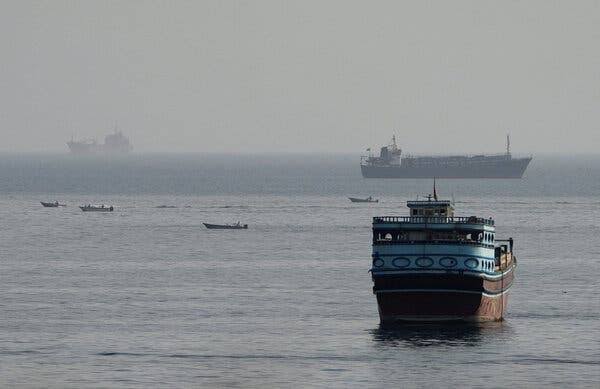
Iran retaliated in the weeks that followed with missile and drone strikes on U.S. embassies, military installations and oil infrastructure across the Middle East. A ceasefire took hold on April 8 after forty days of combat, and for a time it appeared the two sides might move toward a genuine diplomatic settlement mediated by Oman and Qatar. That hope proved short-lived. Over the following months the ceasefire collapsed and re-formed repeatedly: attacks on shipping in the Strait of Hormuz, retaliatory American strikes numbering in the dozens and then the hundreds, and missile attacks that killed U.S. service members at a Jordanian air base in mid-July all pushed the conflict back to open warfare. Iran's declared closure of the Strait of Hormuz — the channel through which roughly a fifth of the world's oil transits — has repeatedly rattled energy markets, while the fighting has drawn in Kuwait, Bahrain, Qatar, Jordan and, in the past two weeks, Egypt, whose Damietta port was targeted in a drone strike on natural-gas vessels.
It is against this backdrop of repeated near-misses and reversals that the events of the past several days unfolded, following what by some counts is at least the third occasion since March that a deal has been described as imminent only to unravel within hours or days.
Key Developments
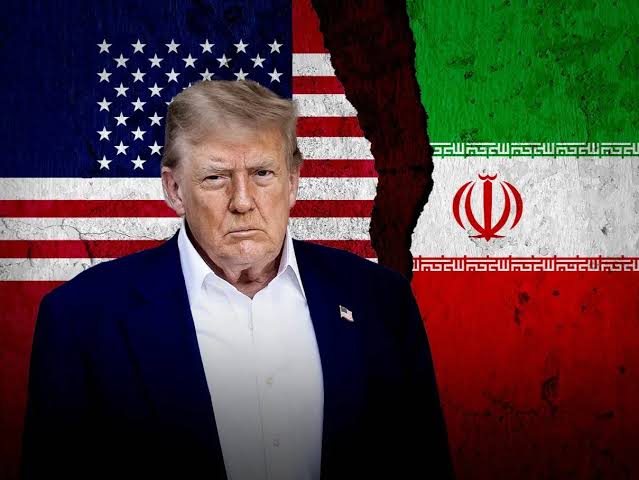
By late July, U.S. and Israeli officials had drawn up plans for what Iranian and American sources described as the harshest bombing campaign of the war to date, targeting Iran's power plants, refineries and broader energy infrastructure rather than solely military sites — a marked escalation. Trump himself described the plan as the “biggest attack since World War II,” and officials indicated it could have begun as early as the weekend of August 1-2.
That attack did not happen. Trump announced late on August 1 that he had personally canceled the strikes after Saudi Arabia, the United Arab Emirates and Qatar — joined, he said, by Iran itself — urged him to hold off and pursue negotiations instead. Trump has said the request followed a phone call with Saudi Crown Prince Mohammed bin Salman. Speaking to reporters aboard Air Force One, Trump said the outlines of an agreement were largely in place: an immediate, complete reopening of the Strait of Hormuz, paired with a separate process aimed at ending Iran's nuclear program, which he referred to loosely as “denuclearization.” He said formal negotiations would resume on Monday, August 3, in the afternoon, and Secretary of State Marco Rubio said Iran now appeared more willing to negotiate over both its nuclear program and the strait.
Iran's response has been to flatly deny that any such deal exists. Foreign Ministry spokesperson Esmail Baghaei said on August 2 that Tehran was not currently negotiating directly with Washington at all, and that the only active talks were with Oman, focused narrowly on establishing a safe, temporary shipping route through the strait. A source close to Iran's nuclear negotiating team told the semi-official, IRGC-affiliated Fars News Agency that there was no agreement to reopen Hormuz, and that the waterway would remain closed for as long as the United States continued what Tehran calls “hostile actions.” Under Iran's terms, commercial vessels would only be permitted through a designated corridor with authorization from the navy of the Islamic Revolutionary Guard Corps. Iranian military officials went further, calling Trump's account of the episode “simply a new lie” and “merely another lie,” and stating that Iranian forces remain at the “highest level of readiness,” prepared for “all possibilities.” One military statement warned starkly that “if confrontation becomes inevitable, the battlefield will be decisive. At that point, everyone will understand who holds the power and who will have the final say.”
The picture is not uniformly hardline on the Iranian side, however. Foreign Minister Abbas Araqchi struck a notably different tone from the Fars News source, saying separately that talks involving Oman over the Strait of Hormuz were nearing their final stage, even as he rejected Trump's characterization of a broader U.S.-Iran agreement. The contradiction between Araqchi's relatively upbeat assessment and the IRGC-linked denial underscores both the internal complexity of Iranian decision-making after the loss of its Supreme Leader and the difficulty, from the outside, of establishing what — if anything — has actually been agreed.
Financial markets initially read Trump's cancellation of the strikes as a genuine de-escalation. West Texas Intermediate crude futures fell nearly 6%, to $79.57 a barrel, while Brent crude dropped 4.88%, to $83.64 a barrel, as traders priced in reduced odds of a near-term supply shock. Whether that relief holds through the coming days will likely depend on what, if anything, emerges from the talks Trump says are scheduled to resume Monday afternoon.
![]()
Reactions
The reaction across the region and in Washington has been one of cautious, and in many quarters skeptical, relief. Gulf states — whose territory and waters have repeatedly absorbed strikes and intercepted munitions over the past five months — welcomed the pause, having been the ones to lobby Trump directly to call off the weekend's planned campaign. Israeli officials and regional analysts, however, have been notably more guarded, pointing to a now-familiar pattern in which the war has paused only to reignite within days or weeks — a sequence that has repeated at least since a similar claimed breakthrough collapsed in March. Some Israeli commentary framed Trump's announcement as a climbdown rather than a diplomatic win, while Iranian state and semi-official media mocked the U.S. account of events.
In Washington, the announcement has added to an already fraught domestic debate over the president's Iran policy, following the Senate's unprecedented vote in mid-July to block the annual defense authorization bill over concerns about the unauthorized nature of the war and a contested Israel-U.S. military cooperation provision. Members of Congress from both parties have pressed for clarity on what, precisely, has been negotiated, given the recurring gap between the administration's public statements and Iran's public denials.
What's Next
The most immediate question is whether the negotiations Trump has promised for Monday afternoon will happen in any recognizable form. Iran's government has been explicit that it is not currently in direct talks with the United States, leaving open the possibility that “negotiations” may in practice mean parallel, indirect discussions — through Oman, and potentially Qatar — rather than the sweeping bilateral agreement Trump has described. The scope of any eventual deal remains undefined in public: reopening the Strait of Hormuz on terms acceptable to both sides is one matter, while a process addressing Iran's nuclear program, given the killing of its Supreme Leader and much of its senior military leadership in February, is a substantially larger and more difficult undertaking that neither side has detailed.
For the Gulf states that pushed for this pause, the coming days will test whether their intervention has bought a durable opening or merely a short delay before the cycle of strikes resumes. Kuwait, Bahrain, Jordan and Egypt — all of which have been drawn into the fighting through strikes on their territory or waters in recent weeks — remain on alert. Oil markets, having priced in de-escalation, are likely to swing again on any indication that the promised talks have failed to materialize or that Iran's IRGC-aligned hardliners have prevailed over Araqchi's more conciliatory diplomatic track. Given the war's five-month history of announced breakthroughs unraveling within days, the most reliable signal will not be another statement from Trump or Tehran, but whether the Strait of Hormuz actually reopens to normal commercial traffic — and whether the guns stay quiet.
Published By | News Editor