Written By | Jovita Hasto
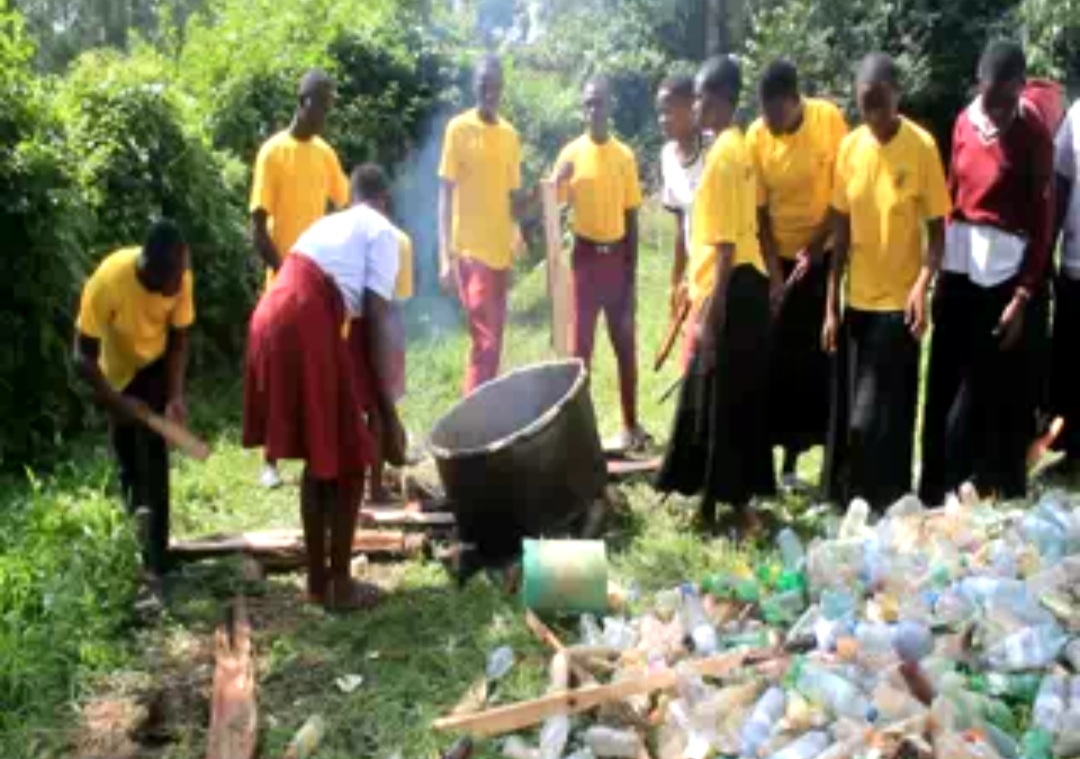
Senior Three students at the school were found gathering plastic waste from the compound, which they heat to produce concrete products
BIGULI
Learners at Biguli Secondary School in Kibale County are venturing into a skills drive where they make bricks and pavers from plastics. Senior Three students at the school were found gathering plastic waste from the compound, which they heat to produce concrete products.
The students say plastic dumping had become excessive, yet they saw an opportunity to conserve the environment while turning the waste into a business venture for the community.
“We saw that plastic pollution was becoming too much in our school as students continued to dump waste, and we conserved it by making pavers and bricks from it,” one student said.
Susan Ayamba, a student, also explained that they have discovered they can craft flowers out of plastics; however, they currently focus more on making bricks and pavers.
“We also make flowers out of them, but their demand is high. We do not have samples at the moment,” she said.
Precious Atukunda explained the process from when the plastic is gathered to when the final product is made. She said that 30 bottles are used to make a brick, while 20 bottles are used to make a paver.
“We always mix plastic bottles and polythene bags. For a paver, we use 20 bottles, and 30 bottles make a brick because it is bigger than a paver,” she said.
Dry bottles are collected and heated in a saucepan for about 30 minutes. The amount of heat applied determines how long it takes before sand is added.
“When the heat is high, the process can take as little as 15 minutes. Once the solution solidifies, we add sand and mix it. We then add oil to the moulds and pour in the hot solution,” she explained.
The students rely on the limited equipment provided by the school and wish they had modern equipment, which would make production easier and faster, depending on the amount of heat used. 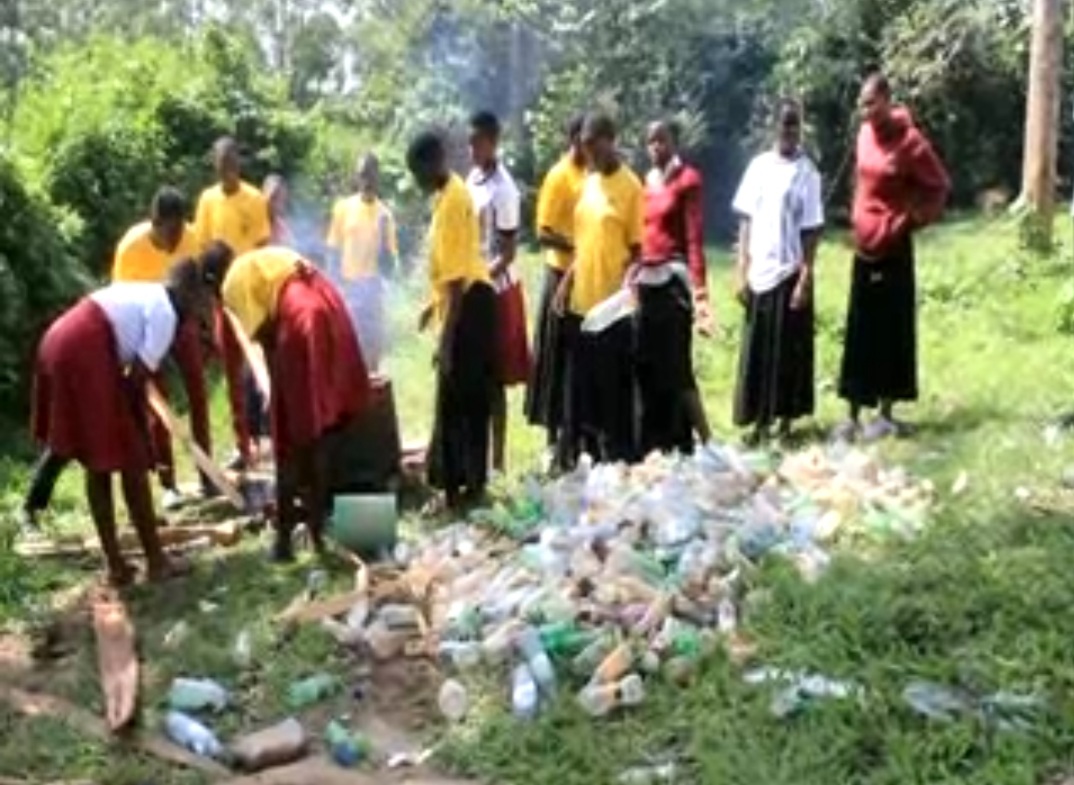
Shallot Kyamagero stated that they use a small saucepan and the little money they contribute from their pocket money.
She said this limits their potential to produce more products.
“We would require a kiln to help us, but we are relying on this small saucepan and the money we save from our pocket money. It is what we saved to be our start-up capital,” she said.
Despite limited capital, the money earned from selling the products to the community is reinvested.
A brick is sold at Shs3,000 and a paver at Shs2,000, with discounts offered to customers who buy in bulk.
“We sell them to parents and construction sites. One brick goes for three thousand shillings and a paver for two thousand shillings, but when people buy in bulk, we reduce the price,” she said.
The head teacher of Biguli Secondary School, Mr Elias Katumire, said the school plans to include such skills in its budget to secure more funding and enable students in lower classes to participate.
He added that the initiative has improved students’ mindsets towards creating employment, while also reducing plastic pollution in the school and the community.
“Students here have different skills, including agriculture. We thank the new curriculum because it has brought a positive impact on the competence of these learners,” he said.
Torch Media Africa



