Written By |

Aganaga with his supporters. He said that despite scoring impressive grades, he was unable to join any university or tertiary institution.
By Milton Niinga
Musician-turned-politician Kalifah Aganaga, born Sadat Mukiibi, has opened up about why he never attained government sponsorship after completing Senior Six in 2009, before venturing into music.
The Forum for Democratic Change (FDC) flagbearer for Kawempe North has faced numerous obstacles in life, but one particular challenge remains vivid in his memory—his struggle to access university education.
"I lacked money to fill the JAB forms to the university," Aganaga revealed, his voice tinged with sadness. The Joint Admissions Board (JAB) forms, a prerequisite for government-sponsored university admission, had been an insurmountable hurdle for him at the time.
Speaking to the press at Kawempe I in Kawempe Division, Kampala, Aganaga said that despite scoring impressive grades, he was unable to join any university or tertiary institution.
Registered under the Uganda National Examinations Board (UNEB), he sat for the Uganda Advanced Certificate of Education (UACE) in 2009 at Kawanda Secondary School, under index number U1109/581. He performed exceptionally well, exceeding his own expectations.
"My mother, Hadijah Nalwoga, a salon hairdresser, did everything she could to raise my school fees. But sometimes, we went hungry, with nothing to eat," he recalled.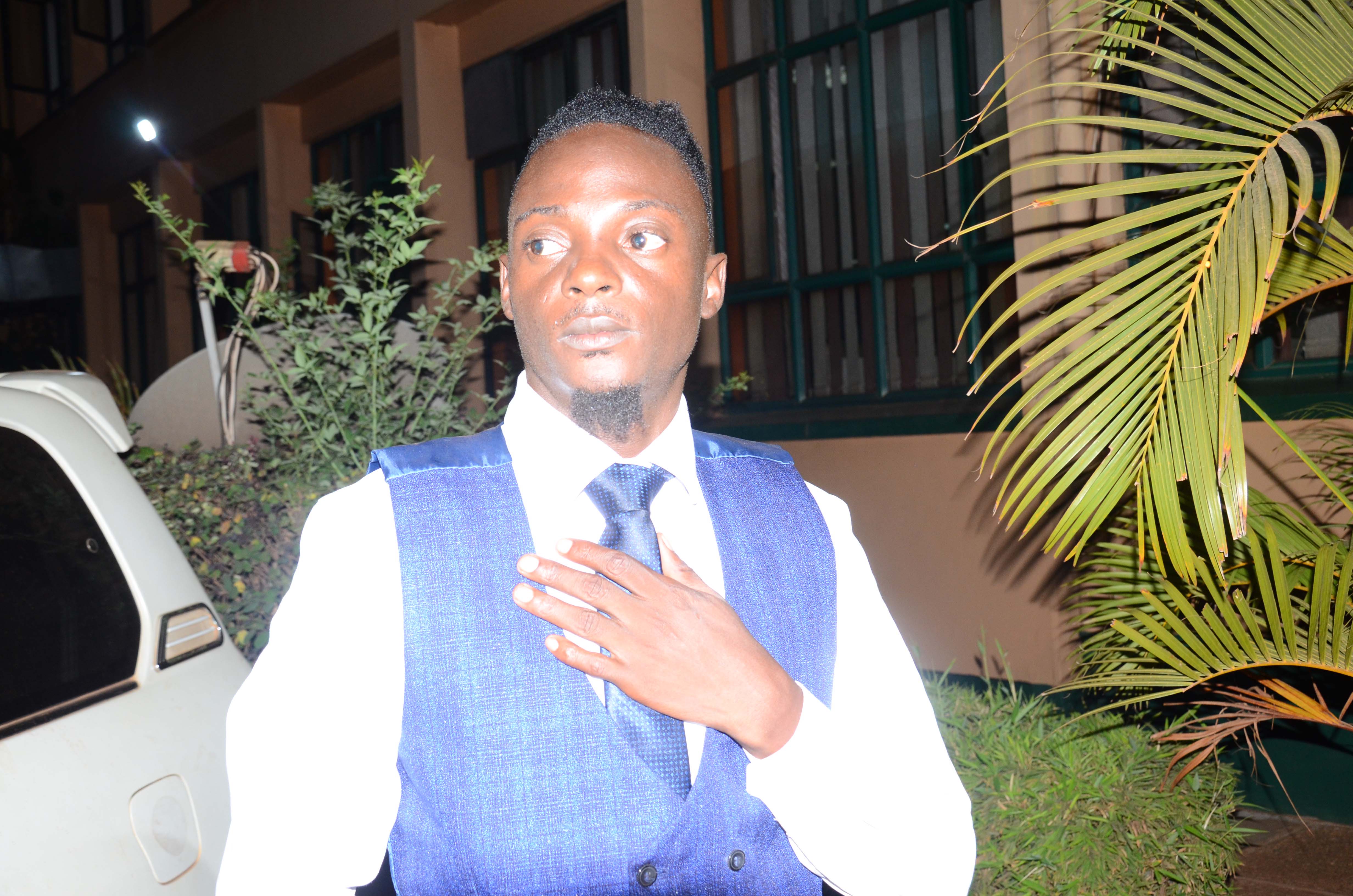
Musician-turned-politician Kalifah Aganaga
Aganaga, the youngest of three children, lost his father, Muhammad Mukiibi, when he was only three years old. He and his siblings, Shariah Nakiyiwa and Bashir Ibrahim, were raised by their struggling mother.
According to James Turyagyenda, the acting executive director of UNEB, Mukiibi obtained a subsidiary pass with a credit (6) in General Paper. His subject combination at the advanced level was History, Economics, Entrepreneurship, and Geography (HEE/G).
"He got a principal pass A (six points) in History, a principal pass A in Economics, a principal pass B in Entrepreneurship, and a principal pass B in Geography, making a total of 23 points out of 25, which was required for national merit sponsorship," Turyagyenda said.
The UACE certificate, equivalent to the A-Level of the University of Cambridge, is graded on a seven-point scale, with A being the highest and E the lowest principal pass, he confirmed.
Missed Government sponsorship due to financial constraints
Growing up in a humble household in Kawempe, Aganaga’s mother always emphasized the importance of education. Despite her meager income, she sacrificed everything to ensure her children attended school.
However, as Aganaga approached the end of his secondary education, the harsh reality of their financial struggles became more apparent.
The JAB forms, which required a non-refundable fee of UGX 52,000, might as well have been a million dollars for the struggling family. Despite his mother’s best efforts, she simply couldn’t afford the fee. His dreams of attending university started slipping away, leaving him helpless and frustrated. "Not Filling JAB Forms Cost Me a Government Sponsorship," he said.
Determined not to give up, Aganaga sought alternative options. He applied for bursaries and scholarships, but the competition was fierce, and he faced rejection at every turn.
"It seemed as though the universe was conspiring against me, crushing my aspirations and suffocating my spirit," he lamented.
To survive, he turned to his uncle, Frank Kalema, who was in the motor spare parts business.
"I had to run to my uncle, who helped me earn a living in a garage," he said.
During this time, he learned motorcycle mechanics and began repairing motorcycles to make ends meet.
Aganaga’s music career takes off
As weeks turned into months, Aganaga’s hope for university education dwindled. He felt like he was staring into an abyss, with no safety net to catch him. The thought of not joining university was devastating.
Aganaga, born on March 13, 1990, decided to use the little money his uncle gave him for school fees to record his first song under his record label, "Mina Konda."
"I had gathered money to apply for private admission at Makerere University, but I lacked money for personal needs. So, I used the first installment of my tuition fees to join a music studio and try my talent," he confessed.
His decision to prioritize music over education strained his relationship with his uncle, who cut ties with him after realizing he had dropped out. "I never heard from my uncle again after he found out I had left school," he recalled.
From music to political aspirations
Despite the odds, Aganaga’s music career flourished, allowing him to support his family and return to school.
"Music has helped me construct a home for my mother in Katooke and for myself in Lugoba, Kawempe. I got married, and from my music proceeds, I now have two children and a happy family," he revealed.
Today, Aganaga is pursuing his dream course, a Bachelor of Business Administration (BBA) at Victoria University. His success in music and education eventually inspired him to join politics.
Joining FDC and political aspirations
Aganaga first contested for a political seat in 2021, though he was unsuccessful. However, his interest in politics grew, leading him to join FDC, not just as a card-carrying member but as a flagbearer.
"For the last 15 years, FDC convinced me that it is a party founded on a clear-headed ideology. If its path is followed, it can usher in a new Uganda, replacing the NRM, which has been in power for 39 years," he said optimistically.
Although Aganaga eventually realized his university dreams, his experience left an indelible mark on him. He learned the value of perseverance, the importance of never giving up, and how to use his talents to create opportunities. Even as he pursues a political career, Aganaga’s passion for music remains strong. He continues to perform and uses his platform to advocate for social justice and marginalized communities.
As FDC’s flagbearer for Kawempe North, Aganaga reflects on his long and challenging journey.
"The struggles I faced and the obstacles I overcame have shaped me into the person I am today," he said.
"Now, I am not just fighting for myself but for many others who have been marginalized, oppressed, and silenced."
Torch Media Africa



