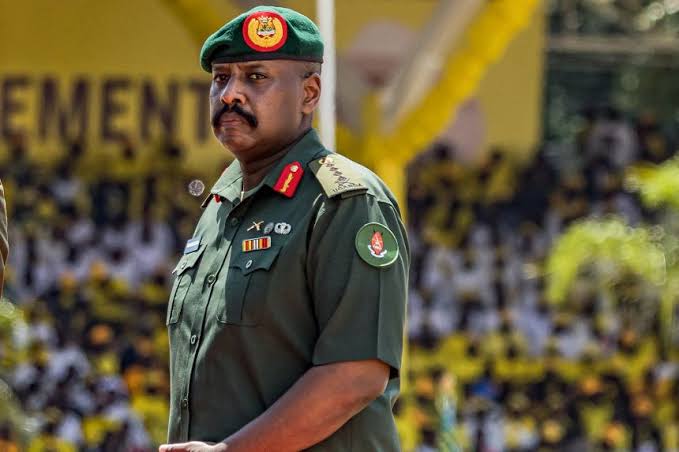
In the early hours of Sunday, June 28, General Muhoozi Kainerugaba, Uganda's Chief of Defence Forces and the eldest son of President Yoweri Museveni, posted a message on X announcing that two of the country's most prominent media houses, the Daily Monitor newspaper and NTV Uganda, were being shut down with immediate effect. Within hours, soldiers had been deployed to the Kampala offices of Nation Media Group Uganda, physically padlocking newsrooms and forcing broadcasts off air. The shutdown order was later extended to Dembe FM, Spark TV, KFM and The East African, all outlets under the same media group, which is partly owned by Tanzanian billionaire Rostam Aziz.
The move has become the dominant political story in Uganda this week, not only because of its scale, silencing six outlets simultaneously, but because of the way it was carried out: by a serving military commander, acting outside any court order, regulatory process, or published legal instrument. General Kainerugaba later asserted that his authority to close any media house had been personally granted to him by President Museveni in 2017. No gazette notice, statute, or formal delegation of power has been produced to support that claim, and no independent legal basis has been identified for a military officer to unilaterally shutter civilian press operations.
The shutdown did not occur in isolation. It followed closely on the heels of the arrest of Erias Lukwago, the Lord Mayor of Kampala and a practicing attorney who has represented long-time opposition leader Dr. Kizza Besigye. Lukwago was picked up from his home and dropped at a police station in Kira town, where he was charged with an offence linked to concealment of treason. According to reporting from Monitor and other outlets, Lukwago's arrest came after he sought to hold General Kainerugaba legally accountable for his alleged role in violations of Besigye's rights during Besigye's ongoing detention. In the same window, security operatives detained NUP-affiliated photographer Andrew Natumanya, while journalist Timothy Kalyegira and former ethics minister Miria Matembe were also arrested and charged between June 26 and June 28.
To understand why this cluster of events is resonating so strongly, it helps to look back a few months. Uganda held a general election on January 15, 2026, in which the 80-year-old President Museveni sought what would be his seventh elected term, extending a rule that by the time of the vote had already stretched close to four decades. International observers, including a US Senate assessment, described the election as a hollow exercise, while Human Rights Watch documented what it called serious human rights abuses surrounding the vote. Central to the pre-election tension was the case of Dr. Besigye, a four-time presidential candidate and Museveni's most persistent rival, who was forcibly returned from Kenya in November 2025 and has since faced a military and civilian treason trial alongside his aide Hajji Obeid Lutale and a Ugandan army captain. Prosecutors allege the men conspired between 2023 and 2024, in Switzerland, Greece, Kenya and Kampala, to overthrow the government by force of arms, a charge that carries a maximum penalty of death. Besigye has been repeatedly denied bail, and his trial has become a rallying point for opposition figures including Robert Kyagulanyi, the musician-turned-politician known as Bobi Wine, and for international rights organizations that see it as emblematic of a broader squeeze on dissent.
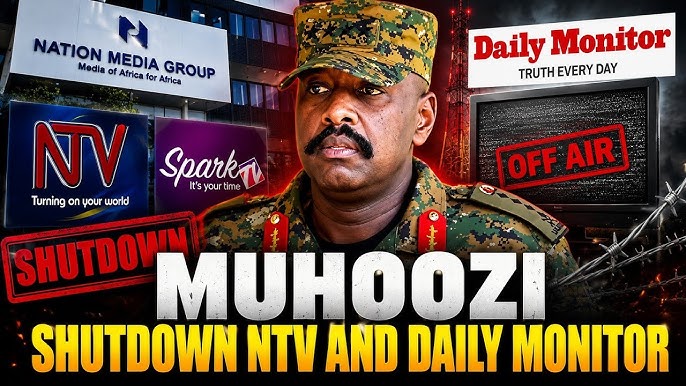
The media shutdown, then, lands as the latest and most visible escalation in a pattern that has alarmed both domestic civil society and outside observers. Amnesty International issued a statement calling on Ugandan authorities to immediately end the harassment of activists and to allow the media to operate freely. Al Jazeera and other international outlets picked up the story within hours of the soldiers' deployment, framing it as a test of how far the Ugandan state, and specifically the military chain of command under General Kainerugaba, is willing to go in controlling the information environment. The National Association of Broadcasters in Uganda described the closures as a serious blow to the country's media ecosystem, warning that the precedent of a military officer shutting down news outlets by social media post, rather than through any judicial or regulatory channel, undermines the rule of law regardless of the specific complaint being made about any outlet's coverage.
The key players in this unfolding story extend beyond Kainerugaba and Lukwago. President Museveni himself has not publicly intervened to reverse or explain the shutdown, leaving open the question of whether it reflects his direct wishes or an independent assertion of power by his son, who is widely seen as a potential successor and has cultivated an unusually large public profile through social media. Nation Media Group's ownership structure, with its links to Tanzanian investor Rostam Aziz, adds a regional business dimension to what is otherwise a domestic political story. Opposition figures, including NUP leadership around Bobi Wine and supporters of Besigye, have used the shutdown to argue that it confirms their long-standing warnings about shrinking civic space in Uganda.
There have been signs of possible de-escalation. Monitor reported that as of early July, General Kainerugaba and Andrew Mwenda, a prominent Ugandan journalist and commentator with his own history of run-ins with the state, were said to be signaling talks aimed at reopening the affected outlets. Whether those talks produce a genuine restoration of operations, or merely a negotiated, conditional return that leaves editorial independence compromised, is the central question observers are now watching.
Why this matters goes beyond the fate of a handful of newsrooms. Uganda's post-election period was already being watched closely by regional and international observers as a bellwether for how the Museveni government, now approaching four decades in power, intends to manage political succession, opposition activity, and civil liberties. The shutdown of six media outlets by military order, the treason charges against a sitting Lord Mayor and human rights lawyer, and the continuing prosecution of the leading opposition figure all point in the same direction: a tightening of the space in which journalists, lawyers, and opposition politicians can operate without fear of arrest or closure. For international partners, including the United States and European governments that have previously raised concerns about the January election, the media shutdown is likely to feature prominently in upcoming diplomatic engagement and in assessments of Uganda's human rights trajectory.
What happens next will likely hinge on three threads. First, whether the reported talks between General Kainerugaba and Andrew Mwenda lead to an actual reopening of Daily Monitor, NTV and the other outlets, and on what terms. Second, how the Lukwago case proceeds through the courts, and whether the treason-related charge against him is pursued to trial or quietly dropped, a decision that will signal how much latitude the state is willing to extend to lawyers representing opposition clients. Third, the trajectory of the Besigye trial itself, which remains the highest-profile legal proceeding in the country and continues to draw attention from rights groups, foreign governments, and Ugandan civil society alike. Taken together, these threads will shape not only Uganda's domestic political climate through the remainder of 2026 but also its standing with international partners at a moment when the country is simultaneously seeking to present itself as an emerging oil economy and reliable regional partner.
Published By | News Editor