Written By | Staff Writer
Morocco's own institutions cannot agree on how fast the economy is moving
Economic & Social Transformation
A Kingdom Betting on Cars, Concrete, and a Coverage Net
Morocco enters the second half of 2026 as one of North Africa's more closely watched economies, not because any single indicator is spectacular but because several long-term bets are converging at once. The country has quietly displaced its century-old identity as a phosphate exporter with a new one as Africa's largest car manufacturer for the European market. It is pouring roughly $20 billion into stadiums, rail and roads ahead of co-hosting the 2030 FIFA World Cup. It has just emerged from a punishing seven-year drought that reshaped its rural labor market. And it is expanding a social protection system that the International Monetary Fund credits with nearly doubling health insurance coverage in four years. None of these threads is complete, and the tension between an investment boom in the cities and a labor market still bruised by drought in the countryside is the central story of Morocco's 2026.
A Growth Outlook Split Between Optimists
Morocco's own institutions cannot agree on how fast the economy is moving. Following its March 2026 Article IV consultation and a mid-term review of Morocco's Flexible Credit Line arrangement, the IMF projected real GDP growth of 4.4% for 2026, rising to 4.5% in 2027 and settling near 4% over the medium term, on the assumption that agricultural output normalizes and infrastructure investment continues to draw in private capital. Bank Al-Maghrib, the central bank, has been notably more bullish, projecting 5.6% growth for 2026 on the back of higher public investment and continued structural reforms. Both institutions agree the near-term picture is clouded by the conflict in the Middle East, which Morocco feels mainly through commodity-market disruption and softer global demand rather than direct exposure.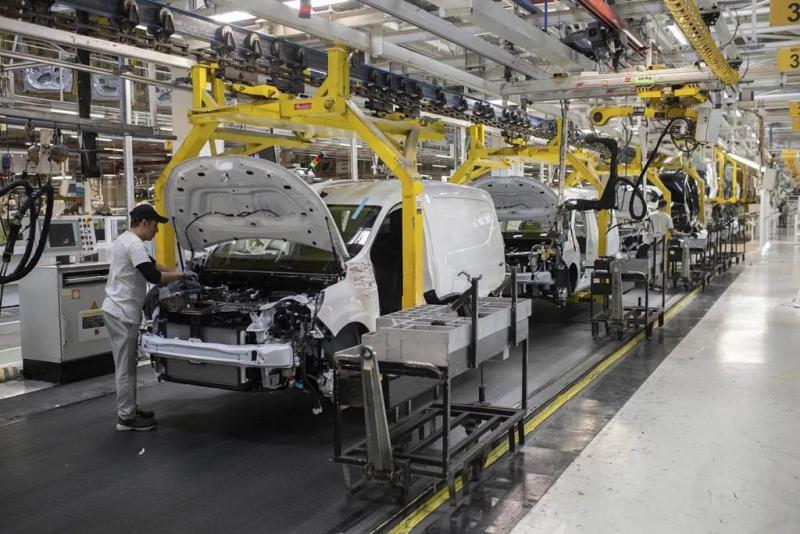
From Phosphate Kingdom to Automotive Powerhouse
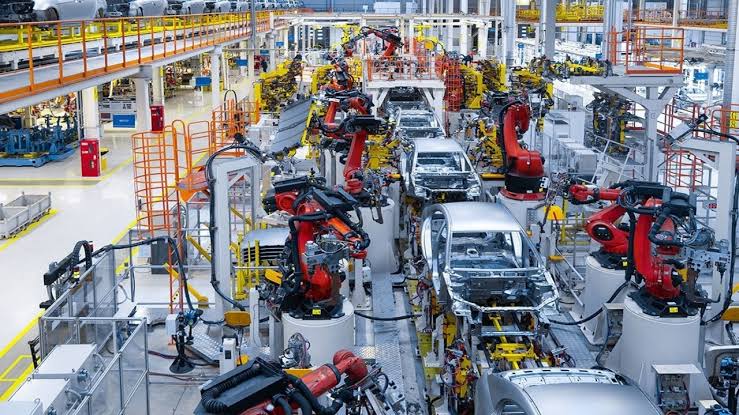
The clearest structural shift in the Moroccan economy over the past three years has been the rise of automotive manufacturing into the country's top export category, a position long held by phosphates. Morocco's vehicle and parts exports reached 154.5 billion dirhams in 2025 — a slight 2% dip from the prior year but still comfortably above the 150-billion-dirham threshold — before rebounding sharply in early 2026, with the first four months of the year alone generating 58.3 billion dirhams in automotive export revenue. Morocco was already the European Union's largest automotive exporter by value in 2023, shipping €15.1 billion worth of vehicles and overtaking both China and Japan in that market, with roughly 80% of domestically produced vehicles destined for Europe.
The two anchor manufacturers are doubling down. Renault and the Moroccan government signed an updated 2025-2030 investment agreement to launch hybrid and electric vehicle production by 2030 and to open an engineering and R&D center, a package expected to create 7,500 direct and indirect jobs. Stellantis followed in July 2025 with a €1.2 billion commitment to more than double capacity at its Kenitra plant, from 200,000 to 535,000 vehicles a year by 2030, while pushing toward 75% local sourcing and adding electric and hybrid lines. Morocco's central bank has projected automotive and related exports could push the country's overall export base past 200 billion dirhams by 2026, a target the sector now looks positioned to reach on the strength of European reshoring demand.
Phosphates Still Pay the Bills
Even as automotive output has grown, phosphates remain the fiscal backbone of the state, run almost entirely through the state-owned OCP Group, which controls the world's largest reserves of the fertilizer input. OCP's revenue climbed 21% year-on-year in the first half of 2025 to 52.17 billion dirhams (about €4.9 billion), with second-quarter revenue alone reaching 30.57 billion dirhams, driven by fertilizer exports to a hungry global market. OCP has attached a $14 billion long-term investment program to that momentum, aimed at expanding mining and fertilizer-processing capacity. Prices have if anything strengthened further into 2026: the average price of diammonium phosphate fertilizer rose above $700 a tonne in April 2026 after the closure of the Strait of Hormuz disrupted exports of phosphate rock and sulfuric acid, a key refining input, from Middle Eastern producers, leaving Moroccan supply relatively more valuable. Morocco's phosphate and derivatives export revenue reached 9.5 billion dirhams in March 2026 alone, up sharply from 6.4 billion dirhams in February.
Building for 2030
Layered on top of the export story is an infrastructure program built around Morocco's role as co-host, with Spain and Portugal, of the 2030 FIFA World Cup. The government and public enterprises are together committing more than 190 billion dirhams — roughly $20 billion — to railways, highways, airports and stadiums through 2030. Of that, about 25 billion dirhams comes directly from the public budget between 2024 and 2030, dedicated mainly to stadiums and training centers, while public companies are expected to contribute a further 17 billion dirhams toward transport and other critical infrastructure. The flagship project, the Grand Stade Hassan II outside Casablanca, is drawing roughly 5 billion dirhams (about $500 million) in government investment and is slated for completion by late 2028, with organizers hoping it will host the tournament final. Morocco has also moved to raise a €2 billion bond specifically to help finance the buildout, spreading the fiscal load beyond the annual budget cycle.
Extending the Safety Net
The social side of the ledger has also expanded. Morocco's 2026 budget allocated 10.9% of GDP to its Direct Social Assistance Program together with health, education and housing support — 0.8 percentage points more than in 2025, according to the IMF's Article IV findings. The centerpiece of that push has been the unification of health insurance schemes under a Compulsory Health Insurance framework, which the IMF credits with lifting general healthcare coverage from 42% of the population in 2021 to 88% in 2025, one of the fastest expansions of insurance coverage documented in the region over that period.
The Drought That Won't Fully Let Go
That progress sits uneasily alongside a rural economy still absorbing the shock of Morocco's worst drought in decades. The government formally declared the seven-year drought over in early 2026 after a wet winter of heavy rain and snow, but water scarcity has left lasting scars: more than a third of Morocco's cultivated land, roughly 2.5 million hectares, remains out of production, down from about 4 million hectares before the drought took hold. The employment fallout has been concentrated and severe — rural areas lost an estimated 107,000 jobs, mostly in agriculture, as the drought bit down. National unemployment eased only modestly, from 13.3% in 2024 to about 13.0% by the fourth quarter of 2025, with a brief dip to 12.8% in mid-2025. The averages mask sharper distress at the margins: women's unemployment climbed to 19.9%, and youth unemployment among 15- to 24-year-olds has been running near 35.8%, a rate that threatens to undercut the demographic dividend Morocco is counting on to staff its expanding auto plants and World Cup-era service economy.
Poverty Falls, But Cracks Remain
By the World Bank's headline measure, Morocco's poverty story looks like a genuine success: the extreme poverty rate, measured against the international poverty line, had fallen to 3.9% by 2022, among the lowest in the region, and the Bank's projections point to a further decline to roughly 1.4% at the international line and about 5.1% at the lower-middle-income threshold by 2028. Those projections assume the current pace of growth, investment and social-transfer expansion holds — an assumption that the drought-driven rural job losses, elevated youth unemployment and the volatility of a still-recovering water system make far from guaranteed.
Conclusion
Morocco's 2026 is a study in parallel economies moving at different speeds. Along the Kenitra-Tangier industrial corridor and in Casablanca's stadium construction sites, the country is executing an investment strategy — automotive manufacturing, phosphate expansion, World Cup infrastructure — that would be the envy of most middle-income economies. In the drought-scarred countryside, the same period has meant fewer farm jobs, a shrinking cultivated footprint and unemployment rates for women and young people that have barely moved. The Direct Social Assistance Program and near-universal health insurance rollout are explicit attempts to bridge that gap. Whether they can do so fast enough to convert Morocco's headline growth numbers into broadly shared gains before the World Cup arrives in 2030 is the country's central economic question for the rest of the decade.



