Written By | International News Reporter
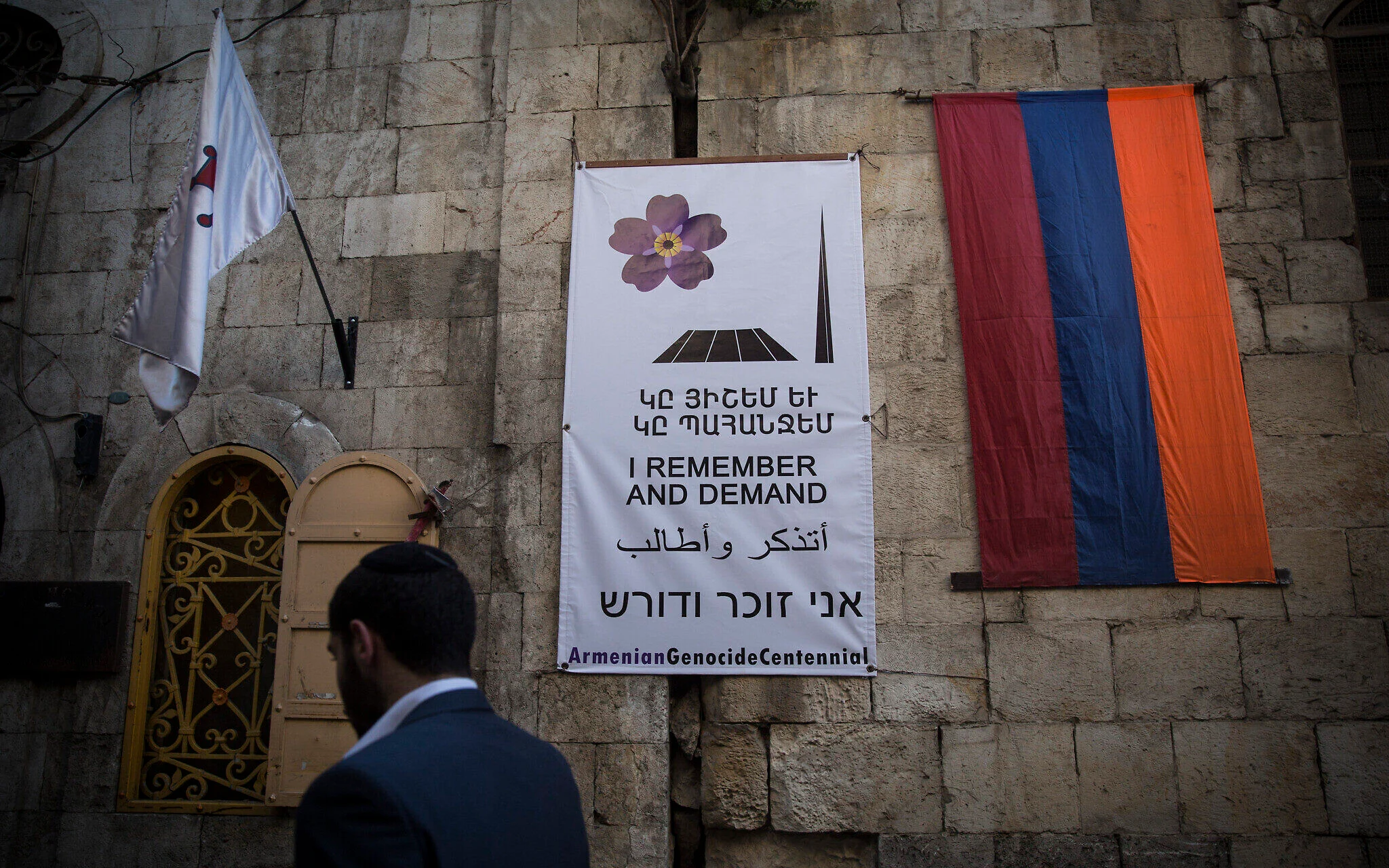
Israel was, until this week, a conspicuous holdout among Western-aligned democracies.
Background
For more than a century, the mass killing, deportation, and starvation of an estimated 1 to 1.5 million Armenians by the Ottoman Empire during and after World War I has been formally recognized as genocide by dozens of countries, parliaments, and scholarly bodies. Turkey, the Ottoman Empire's successor state, has long rejected that characterization — acknowledging large-scale deaths but disputing both the death toll and the presence of systematic intent required to meet the legal definition of genocide. The dispute remains one of the most sensitive fault lines in Turkish foreign policy.
Israel was, until this week, a conspicuous holdout among Western-aligned democracies. Despite decades of advocacy, successive Israeli governments declined to use the word "genocide" — a reticence widely understood to stem from Israel's desire to preserve strategic and military relationships with Turkey and, more recently, Azerbaijan, a key oil supplier and security partner.
That calculus has been upended by the collapse of Israeli-Turkish relations. Ties cooled considerably under President Recep Tayyip Erdoğan, broke down further after the October 7, 2023, Hamas attack and the ensuing war in Gaza — which Turkey condemned while backing Hamas politically. Turkey suspended all trade with Israel in August 2025 and closed its airspace and ports. By early 2026, analysts described the relationship as having moved beyond diplomatic alienation into outright strategic rivalry, fueled by Israel's expanding regional footprint — including strikes on Iran and Syria, a September 2025 strike on a Hamas delegation in Qatar, and Israel's recognition of Somaliland's independence, which challenged Turkey's close ties to Mogadishu.
Key Developments
Against that backdrop, the Israeli Cabinet voted unanimously on Sunday, June 28, to formally recognize the Armenian genocide, acting on a resolution put forward by Foreign Minister Gideon Sa'ar. Sa'ar described the recognition as a "moral and historical duty," telling reporters it is "never too late to do the right thing."
The decision marks a significant reversal of decades of careful Israeli ambiguity, though it is not yet final: the measure must still be ratified by the Knesset, which has not yet scheduled a vote. Analysts say the Cabinet's unanimity makes parliamentary approval likely.
The decision was conspicuously framed by Israeli officials less as a gesture toward Armenia and more as a rebuke of Turkey. Coverage in the Israeli press noted that the recognition lands at a moment when Ankara has accused Israel of committing genocide in Gaza — a charge Israel rejects — making the timing widely read as a pointed response to that accusation rather than a purely historical gesture.
Israeli commentators were divided. Some welcomed it on moral grounds, arguing that Israel, as a state founded in the aftermath of the Holocaust, had a particular obligation to recognize others' historical traumas regardless of diplomatic cost. Others suggested the timing — coming the same week as continued Turkish criticism — made it difficult to separate the recognition from the broader information war between Jerusalem and Ankara.
Reactions
Turkey denounced the move as a "political" decision rather than a genuine historical reckoning, accusing Israel of weaponizing the issue to score points in its broader dispute with Ankara.
Azerbaijan, a close Turkish ally and important Israeli security and energy partner, also condemned the decision. Baku's Foreign Ministry said the historical facts were being "distorted" and that the recognition would deepen regional divisions — a notable rebuke given Baku's status as one of Israel's most important regional partners.
Armenia's official response was strikingly muted. Prime Minister Nikol Pashinyan said Armenia saw no need to respond, adding that Yerevan did not intend to turn the genocide issue into a political tool. Commentators noted the contrast with the warmer reaction from the Armenian diaspora and Church leaders in Jerusalem.
Analysts suggested Armenia's government is wary of being seen to celebrate a move so transparently bound up in Israel's feud with Turkey — and is navigating a fragile peace process with Azerbaijan over Nagorno-Karabakh, with no desire to complicate that process by appearing to align against Baku's ally.
Political analyst Ruben Mehrabyan noted that the Cabinet's unanimity made Knesset approval likely but that Yerevan's muted response reflected broader foreign-policy caution at a delicate moment in the South Caucasus.
What's Next
The immediate question is whether and when the Knesset will ratify the Cabinet decision. Given the unanimous vote, most analysts expect eventual approval, though timing remains unannounced and could be influenced by relations with Turkey and Azerbaijan in the interim.
More broadly, the episode is likely to be read as further confirmation that Israeli-Turkish relations have moved from strained coexistence to open rivalry, with both sides increasingly willing to use historical, legal, and diplomatic tools against each other rather than seeking repair.
Whether Azerbaijan's objections will affect its energy and security ties with Israel remains to be seen, though Baku's public criticism suggests Jerusalem's decision carries some diplomatic cost even among its remaining regional partners.
For Armenia, the muted official response signals a deliberate strategy: accepting the symbolic value of recognition while declining to be drawn into a dispute that is, at its core, about Israel and Turkey rather than about Armenia itself.
Sources: The Times of Israel, NPR, The Jerusalem Post, Ynetnews, Middle East Monitor, Washington Institute



