LONDON
Somewhere in a King's College London lab, mice with brains riddled with the molecular wreckage of Alzheimer's disease got a small white pill hidden in their food. Weeks later, when researchers cut into their brain tissue and went looking for the telltale scars of the disease, something was missing. The DNA breaks were healing. The inflammation was quieting down. And the drug doing it, a compound called KCL-286, was never even designed with Alzheimer's in mind. It was built for spinal injuries.
That twist is the reason a study published this month in FEBS Open Bio has neuroscientists buzzing: a drug candidate that already survived a Phase 1 human safety trial for a completely different condition has now shown, in a mouse model, that it can repair one of the earliest and most destructive events in Alzheimer's pathology — double-strand DNA breaks in neurons — while simultaneously tamping down brain inflammation. Because it's already been proven safe to swallow, injected, and tolerated by real human volunteers, the compound could skip years of the preclinical safety gauntlet that kills off the vast majority of would-be Alzheimer's drugs before they ever reach a patient.
"KCL-286 is a first-in-class, orally bioavailable small molecule that has already successfully cleared Phase 1 human safety and tolerability trials," said Professor Jonathan Corcoran, professor of neuroscience at the Institute of Psychiatry, Psychology & Neuroscience at King's College London, who worked on the research. "This will dramatically cut down the traditional multi-year timeline required for new drug development."
For a disease that has swallowed billions of research dollars and delivered a graveyard of failed drugs, a head start like that is not a small thing.

KCL-286
The Broken DNA Nobody Was Looking At
For decades, Alzheimer's drug hunters trained their sights on two villains: amyloid plaques and tau tangles, the sticky protein clumps that show up on autopsy slides and PET scans of Alzheimer's patients. Billions were spent on drugs designed to dissolve them. Some of those drugs — like lecanemab and donanemab — finally reached the market in recent years, but their benefits have been modest, their side effects serious, and their price tags eye-watering.
KCL-286 approaches the disease from an entirely different angle: the DNA itself.
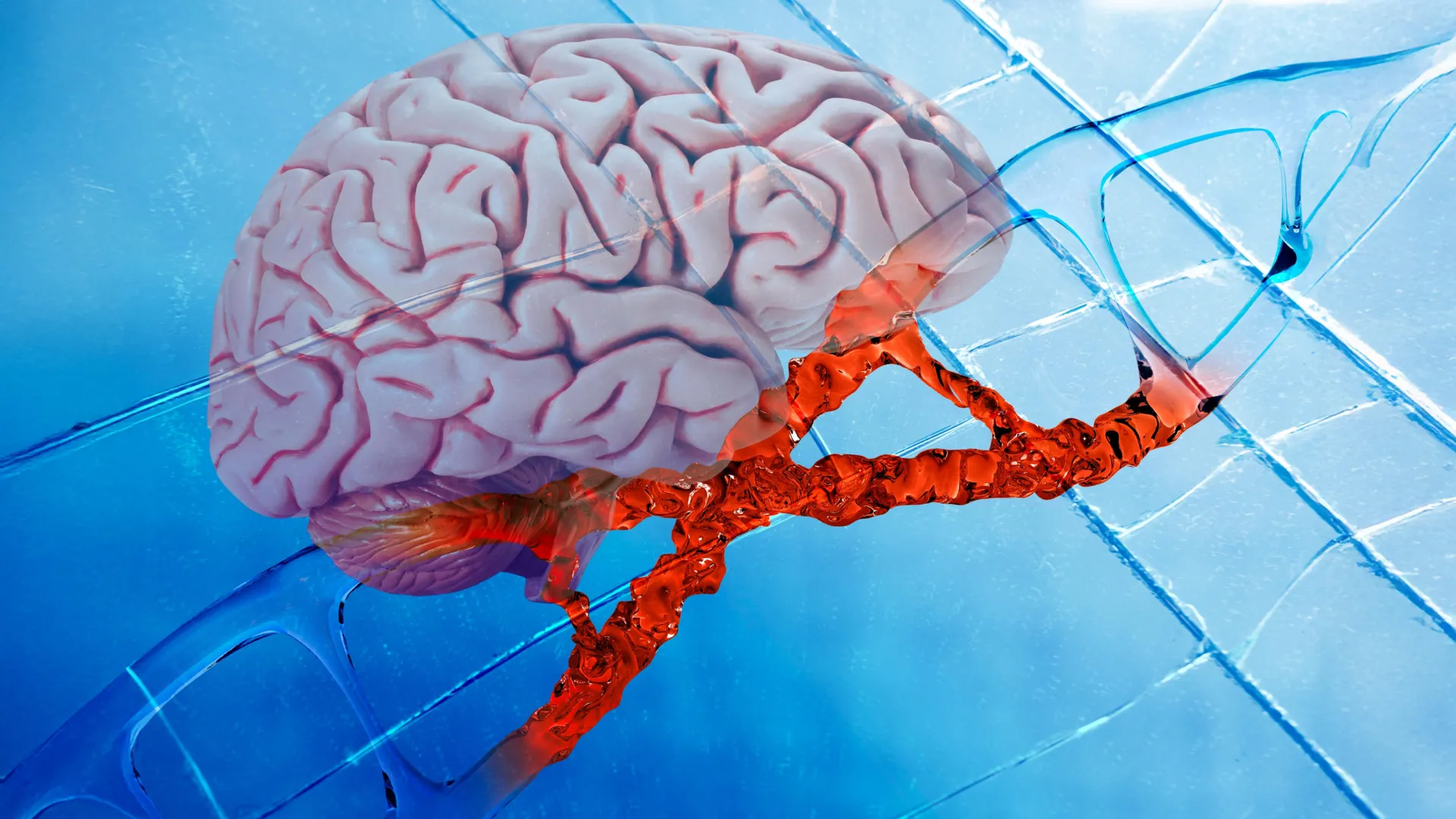
Neurons, like all cells, take damage to their genetic material every day, and healthy cells have machinery that stitches those breaks back together. But in Alzheimer's brains, that repair machinery appears to fail, and double-strand breaks — the most dangerous kind of DNA damage, where both strands of the double helix snap — pile up in neurons. Scientists have observed this accumulation in the brains of Alzheimer's patients for years without a good way to stop it. Left unrepaired, these breaks can push cells into dysfunction, senescence, or death, and trigger the kind of chronic inflammation that further damages brain tissue.
KCL-286 works by activating a specific protein receptor in what's called the retinoic acid pathway — the chemical machinery the body normally uses to process vitamin A. Switching on that receptor, known as RAR-beta, appears to upregulate a gene called BRCA1, a name most familiar from breast cancer risk testing, but which also happens to be one of the cell's primary DNA-repair engineers. In the mouse studies, animals treated with KCL-286 had significantly fewer double-strand breaks in their neurons than untreated mice, alongside reduced markers of brain inflammation.
"Our findings demonstrate that KCL-286 not only targets DNA damage but also reduces inflammation, two processes that occur very early in Alzheimer's disease progression," said Dr. Maria Goncalves, who project-managed the drug's development. "This highlights its potential as a disease-modifying therapy rather than simply addressing symptoms."
That phrase — disease-modifying — is the holy grail in Alzheimer's research. Most current treatments, including the cholinesterase inhibitors that have been standard care for two decades, manage symptoms without touching the underlying biology. A drug that intervenes further upstream, before the visible plaques and tangles even take hold, could in theory change the entire trajectory of the disease rather than just slowing its outward symptoms.
From Broken Spines to Broken Minds
The origin story of KCL-286 is almost as strange as its mechanism. The compound was developed years ago by King's College London researchers studying acute spinal cord injury, where the same kind of catastrophic DNA damage and inflammatory cascade occurs after trauma. It cleared a Phase 1 safety trial in healthy human volunteers for that indication, with researchers reporting no drug-related adverse events.
It was only afterward that the same King's team noticed something curious: the molecular pathways they were targeting in damaged spinal neurons looked remarkably similar to pathways implicated in Alzheimer's-affected brain cells. Both conditions involve neurons under acute genomic stress, both trigger runaway inflammation, and both, it turned out, might respond to nudging the same retinoic acid receptor.
That overlap is what sent the drug across the hall from spinal injury research into Alzheimer's research, and it's also the reason the timeline looks so different from a typical Alzheimer's drug. Ordinarily, an experimental Alzheimer's compound has to work its way through toxicology studies, dose-ranging studies, and a Phase 1 safety trial in Alzheimer's-relevant populations before it can even begin testing for effectiveness — a process that alone can eat up three to five years and tens of millions of dollars, with no guarantee the drug is even safe for humans at the end of it. KCL-286 has already cleared that safety hurdle, for a different disease, but the human tolerability data still counts. Researchers say that means the compound could, in principle, move into Alzheimer's-specific efficacy trials faster than almost anything else in the pipeline.
That's a genuinely big deal, but it comes with real caveats.
What We Don't Know Yet
This is a mouse study. The animals used were bred to develop Alzheimer's-like pathology far faster and more predictably than the disease actually unfolds in humans over decades, and drugs that work beautifully in these mouse models have an infamous track record of failing in humans — Alzheimer's research is arguably the field most littered with promising mouse data that never translated to bedside benefit. There is no human data yet showing KCL-286 slows cognitive decline, protects memory, or does anything at all for a person actually living with Alzheimer's disease. The Phase 1 trial that cleared it for safety wasn't even testing it in people with the condition — it was testing it in healthy volunteers for a spinal injury program.
Researchers have not yet announced a start date for an Alzheimer's-specific human trial, though the tone from the King's College London team suggests they are moving with unusual urgency given the safety data already in hand.
There's also the question of dosing and duration. Mice in the study were treated for a defined period under laboratory conditions; nobody yet knows what a years-long human dosing regimen would look like, what side effects might emerge over sustained use, or whether the DNA-repair effect holds up outside a controlled research setting.
Why This Matters Beyond the Lab
More than 6 million Americans and an estimated 55 million people worldwide are living with Alzheimer's disease or another form of dementia, and that number is projected to nearly triple by 2050 as populations age. The economic and human toll is staggering: unpaid family caregivers alone provide billions of hours of care annually, and the disease remains among the top ten causes of death in the U.S. with no way to prevent, cure, or even meaningfully slow it for most patients.
Against that backdrop, a drug candidate that already has a clean human safety record and attacks the disease through a genuinely novel mechanism — DNA repair rather than amyloid clearance — is the kind of story that gives researchers cautious optimism, even if it's years away from reaching a pharmacy shelf.
The recent preclinical work demonstrates the drug's promise, researchers involved noted, while stressing that specific timelines for future Alzheimer's-specific clinical trials have not yet been finalized.
Expert Perspective
Professor Corcoran's emphasis on the compressed timeline reflects a broader frustration in the dementia research community, where the failure rate for experimental drugs has historically run above 95% — among the worst of any therapeutic area in medicine. Every trial that can skip a step without cutting corners on safety is treated as a genuine event. Dr. Goncalves's framing of the drug as potentially "disease-modifying rather than simply addressing symptoms" places KCL-286 in the same conversation as the amyloid-clearing antibodies that made headlines in recent years, but via a completely different biological route — one that intervenes before plaques and tangles even have the chance to form, rather than clearing them out after the fact.
What This Means for You
If you or a loved one is affected by Alzheimer's, KCL-286 is not an available treatment, and there is no timeline yet for when — or whether — it will become one. Nothing about this research changes current standard of care, and no one should seek out this compound outside of a properly run clinical trial, which does not yet exist for this indication.
What it does mean is that Alzheimer's drug development is diversifying beyond the amyloid-and-tau playbook that has dominated, and largely disappointed, the field for 20 years. DNA repair and neuroinflammation are emerging as legitimate new fronts in the fight, and a compound entering that fight with a human safety record already banked has a meaningfully shorter runway than most experimental Alzheimer's drugs get. Patient advocacy groups and families watching the Alzheimer's pipeline should treat this as an encouraging early signal worth tracking — not a treatment to expect soon.
Conclusion
Drug repurposing — finding a second use for a compound built for something else entirely — has quietly delivered some of medicine's biggest wins, from thalidomide's reinvention as a cancer treatment to Viagra's origin as a failed heart drug. KCL-286's journey from spinal cord wards to Alzheimer's labs may turn out to be another chapter in that story, or it may join the long list of mouse-model successes that never made the leap to humans. Either way, for a disease that has resisted nearly every attempt to slow it, a drug that walks into the ring with its safety papers already stamped is a fight worth watching.
Published By | Features Editor




