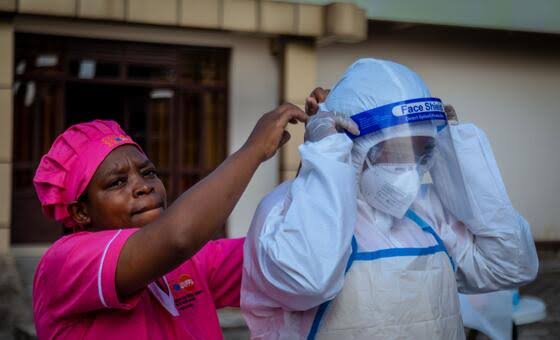
More than 3,200 people are infected, over 1,400 are dead, and one case has already reached the streets of Paris. Health officials say the Bundibugyo strain tearing through Congo and Uganda is spreading faster than any Ebola epidemic ever tracked — and doctors are fighting it with almost nothing in the toolbox.
BUNIA, Democratic Republic of the Congo
In a cramped isolation ward on the edge of Bunia, the capital of Congo's Ituri province, nurses in head-to-toe yellow biohazard suits move between cots of patients too weak to lift a cup of water. Outside, ambulances idle in the heat, waiting for space that isn't there. This is ground zero of what the World Health Organization now calls, without hedging, the fastest-growing Ebola outbreak ever recorded.
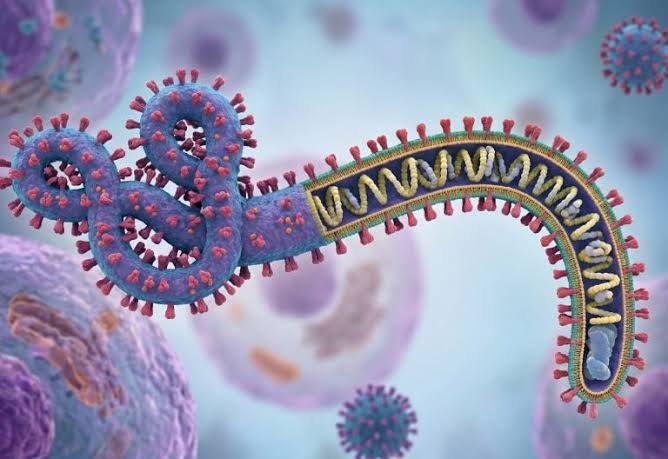
The virus behind it has a name most of the world had never heard three months ago: Bundibugyo virus, a rare and vicious cousin of the Ebola strain that built its infamy in West Africa a decade ago. Since the outbreak was first declared in mid-May, it has ripped through Ituri and North Kivu provinces in the Democratic Republic of Congo, jumped the border into Uganda, and even crossed an ocean, arriving via commercial airliner in the heart of Paris.
As of the latest situation report, the Congolese Ministry of Health has confirmed 3,262 cases and 1,437 deaths in DRC alone, with two additional deaths across the border in Uganda and one imported case in France. Ituri province has borne the brunt of it: 2,901 cases and 1,207 deaths spread across 28 of its 36 health zones. North Kivu has logged another 314 cases and 204 deaths. Of everyone infected, only 583 have recovered. Another 723 people remain hospitalized in isolation right now, this week, as you read this.
To put that in perspective: the last time Ebola devastated this region, during the catastrophic 2018-2020 North Kivu epidemic, it took more than ten months for the case count to climb past 2,000. This time, the virus blew past that mark in a fraction of the time. "In the past month, it has expanded faster than any previous outbreak," WHO Director-General Dr. Tedros Adhanom Ghebreyesus warned in a briefing on the crisis. It is now the third-largest Ebola outbreak on record, behind only the West African epidemic of 2014-2016 and the North Kivu outbreak that preceded it — and by growth rate alone, it is outpacing both.

THE STRAIN SCIENCE BARELY KNOWS
Part of what makes this outbreak so frightening is how little the world actually knows about the virus driving it. Bundibugyo virus has caused exactly two documented outbreaks in human history before this one: a 2007 epidemic in Uganda that killed roughly a quarter of those it infected, and a smaller 2012 flare-up in DRC with a fatality rate closer to 50%. Both were contained relatively quickly. Neither generated anywhere near the volume of clinical data that scientists have on the more notorious Zaire strain of Ebola, the one behind Ervebo, the vaccine that helped end outbreaks in West Africa and earlier Congolese epidemics.
That data gap has become a five-alarm problem. Early symptoms of Bundibugyo virus disease mimic a bad flu — intense headache, high fever, body aches, crushing fatigue — before progressing to the kind of violent, non-stop vomiting and diarrhea that leaves patients dangerously dehydrated within days. Clinical reviews of the disease found severe headache and non-bloody diarrhea each present in roughly 81% of cases, with debilitating weakness, known clinically as asthenia, in 77%. It is not, technically, the "bleeding from the eyes" hemorrhagic fever of horror-movie imagination — but it kills through organ failure and shock just the same, and by the time a patient in a remote Ituri village recognizes the danger, the nearest isolation unit may be a day's walk away through territory controlled by armed groups.
NO VACCINE, NO SAFETY NET
Here is the detail that has outbreak responders most on edge: the two Ebola vaccines the world actually has — Ervebo and the two-dose Mvabea/Zabdeno regimen — were both built to fight the Zaire strain. The WHO has reviewed the evidence for using them against Bundibugyo virus and concluded it simply isn't strong enough to recommend deployment. In practice, that means the single most powerful tool used to strangle the last major Congolese Ebola outbreak — ring vaccination, in which health workers vaccinate every known contact of a confirmed case to build a wall around the chain of transmission — is off the table entirely this time.
Without it, containment falls back on the blunt instruments of 19th-century public health: find the sick, isolate them, trace everyone they touched, and hope. In a region scarred by decades of armed conflict and repeated waves of displacement, even that is brutally hard. Trish Newport, an emergency program manager for Doctors Without Borders (MSF), which has scaled up a major response in Ituri, did not mince words. "The number of cases and deaths we are seeing in such a short timeframe, combined with the spread across several health zones and now across the border, is extremely concerning," Newport said. "In Ituri, many people already struggle to access healthcare and live with ongoing insecurity, making rapid action critical to prevent the outbreak from escalating further."
WHO's own leadership has reached for equally blunt language. In one recent briefing, officials described the epidemic simply as "a fire" — one that is still spreading faster than crews can build a break around it.
THE FLIGHT THAT BROUGHT EBOLA TO PARIS
For months, this was a crisis confined to Central Africa. That changed on June 24, when French health authorities confirmed the country's first-ever case of Ebola on home soil. The patient was a doctor who had been working a humanitarian mission in DRC and boarded a commercial Air France flight out of Kinshasa. He was almost symptom-free when he boarded — just a headache — but his condition worsened mid-flight. Ground crews met the plane, isolated him immediately, and rushed him into specialized care in Paris.
It was the first case of this outbreak's strain confirmed outside the African continent, and for a few tense days it looked like the first test of whether Bundibugyo virus could gain a foothold in a major European capital. It couldn't, or at least didn't: the physician recovered and was discharged from the hospital in early July, and no secondary transmission was ever detected in France. But the episode was a stark reminder that in an age of same-day intercontinental air travel, an outbreak in a health zone few Westerners could locate on a map is never more than one flight away from Charles de Gaulle, Heathrow, or JFK.
THE RACE FOR A CURE
With vaccination off the table, the scientific response has pivoted hard toward treatment. On July 12, two experimental drugs entered clinical trials in DRC: remdesivir, the antiviral that became a household name during COVID-19, and MBP134, a lab-engineered antibody cocktail designed specifically to neutralize Ebola-family viruses including Bundibugyo. Separately, the University of Oxford has received clearance to begin Phase 1 human trials of a new vaccine candidate built specifically to target this strain — though any shot that emerges from that pipeline is, realistically, months to years away from mass deployment, far too late to help the people filling isolation wards in Bunia today.
In the meantime, the World Health Organization has issued emergency guidance on how frontline clinicians should manage the outbreak without a vaccine to lean on: aggressive supportive care, oral and IV rehydration, early treatment of secondary infections, and rigorous infection prevention and control protocols to protect health workers, who remain some of the outbreak's most vulnerable casualties.
WHAT THIS MEANS FOR YOU
If you're reading this from the United States, the honest answer is: your personal risk right now is low. The CDC has renewed its Ebola-related travel health notice through mid-August, urging anyone traveling to affected regions of DRC and Uganda to take precautions, but the agency has been explicit that no case of this outbreak's strain has been confirmed on U.S. soil, and it continues to assess the domestic risk as low. Airports have not implemented the kind of enhanced screening protocols seen during past West African Ebola scares — at least not yet.
That said, public health officials watching this outbreak are increasingly uneasy about complacency. Funding for global outbreak response has been squeezed in recent years even as this epidemic accelerates, and the France case proved definitively that "over there" and "over here" are separated by nothing more than the length of a transatlantic flight. If you have travel booked to the affected regions of DRC or Uganda, check the CDC's current notices before you go, and if you develop fever, severe headache, or gastrointestinal symptoms within 21 days of returning from the region, seek medical attention immediately and tell your provider about your travel history before you walk into a crowded waiting room.
THE BOTTOM LINE
Nearly 3,300 cases. More than 1,400 dead. No vaccine that works. An armed conflict zone slowing every containment effort. And a virus that, by WHO's own admission, is spreading faster than any Ebola outbreak humanity has ever documented. The Bundibugyo epidemic tearing through Central Africa right now is not yet a global emergency in the way COVID-19 became one — but it is a public health emergency of international concern, the WHO's highest alarm level, and the gap between "contained regional outbreak" and "the next global health crisis" has rarely looked this thin. For the doctors and nurses working in those yellow suits in Bunia, the fire is still burning. The rest of the world is only now starting to feel the heat.
Published By | Features Editor