Written By |
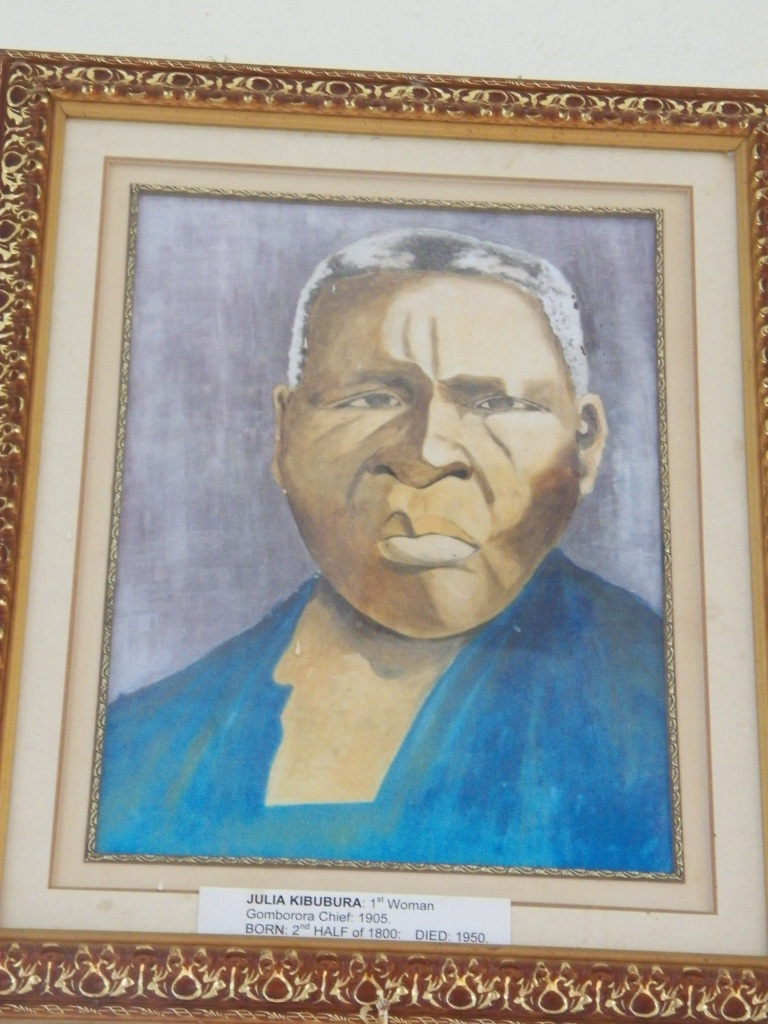
Julia Kibubura assumed a role of Gombolola (county) chief—a first for woman in the country's political landscape
Julia Kibubura's legacy is deeply etched in the annals of Ibanda's history, resonating across Africa. At Torch Media Africa, we believe it's essential for our readers to delve into her life, honoring her remarkable contributions. Known for her resilience, she was often addressed as "Sebo" (Sir) by the people under her jurisdiction. Arguably, Julia Kibubura heralded civilization and instituted an era of progress, particularly by championing mass education following the arrival of missionaries and her own baptism.
Who was Julia Kibubura?
Julia Kibubura, one of Uganda's earliest Christian converts, shattered glass ceilings by assuming the role of Gombolola (county) chief—a first for women in the country's political landscape. Around 1904, she ascended to the position of sub-county chief.
The name "Kibubura," derived from the Runyakitara word "okububura," loosely translates to "the roaring of a lion." Her valorous act of cradling the body of Galt, the slain colonial Sub-Commissioner for the Western Province in 1905, is enshrined in Banyankore folklore.
Galt met his demise at the hands of Rutaraka, a native of Ibanda District, allegedly hired to avenge the molestation of the Banyankore. During his reign, Galt's subjects endured arduous journeys, with his resolute refusal to halt for rest earning him the moniker 'mpaka Banda,' meaning 'no resting until we reach Ibanda.'
Julia Kibubura, born in Bunyoro in 1884, passed away in December 27, 1950, having migrated to Ibanda with her siblings during the reign of Omukama Kabalega.
Notably, her sister Kishokye gained renown for her spiritual prowess (emandwa), which played a pivotal role in numerous battles waged by the Nkole Kingdom against neighboring regions like Rwanda and Busongora. As descendants of the Toro ruling clan, the Babito, Kibubura and her siblings maintained ties with their ancestral homeland. Upon their arrival in Kamukuzi, the headquarters of the Nkole Kingdom, they pledged allegiance to the king and were entrusted with overseeing Ibanda land. Their spiritual prowess, particularly the 'emandwa' named Nyakashambi, positioned them as vital intermediaries between the divine and mortal realms, safeguarding the kingdom from various perils.
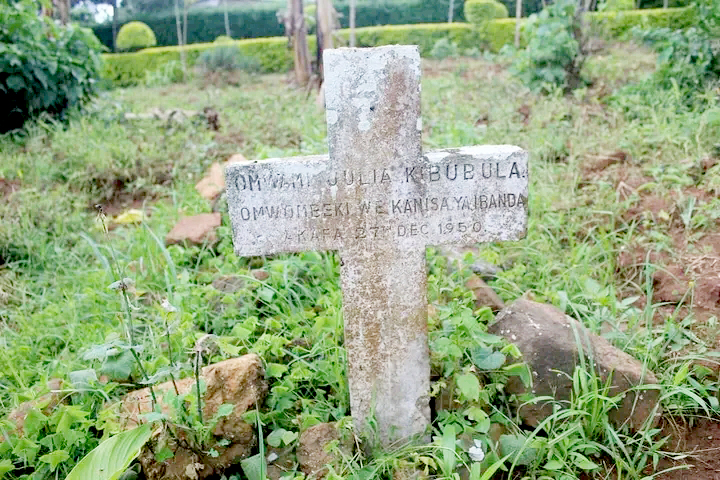
Julia Kibubura's Grave in Ibanda
Kibubura's Administrative Role
With the advent of colonialism, Kibubura assumed the mantle of Sub-county Chief of Kyaruranga, a position conferred upon her by the colonial authorities at Kamukuzi. Over time, Kyaruranga Sub-county merged with Nyabuhikye Sub-county, relocating its headquarters to Saza, later established at Kitwe.
Conversion to Christianity
In 1903, Julia Kibubura underwent baptism, marking a pivotal moment in her spiritual journey. This event, which saw 26 leaders, including Kibubura, undertake a pilgrimage to Mbarara for baptism, signified her transition from a diviner of the King of Ankole to a devout Christian.
Back in Ibanda, the first recorded baptism was that of Mr. Musororwa Philip, administered by Reverend Nuwa Nakiwafu on March 3, 1918. Post-baptism, Kibubura played a pivotal role in erecting the initial church structure—a mud-and-wattle edifice—later replaced by the current St. Paul COU Ibanda in the 1970s, with its foundation stone laid by the Late Archbishop Luwum in 1976.
Championing Education
Kibubura's commitment to education was unwavering. The establishment of Ibanda Kibubura Integrated Primary School in 1912 marked the dawn of a new era in education, later complemented by the founding of Ibanda Kibubura Girls Secondary School, named in her honor. These institutions stand as bastions of educational excellence, shaping the minds of generations in Ibanda and beyond.
As told to Lawrence Mucunguzi & Dickens Tiharihondijo



