Written By |
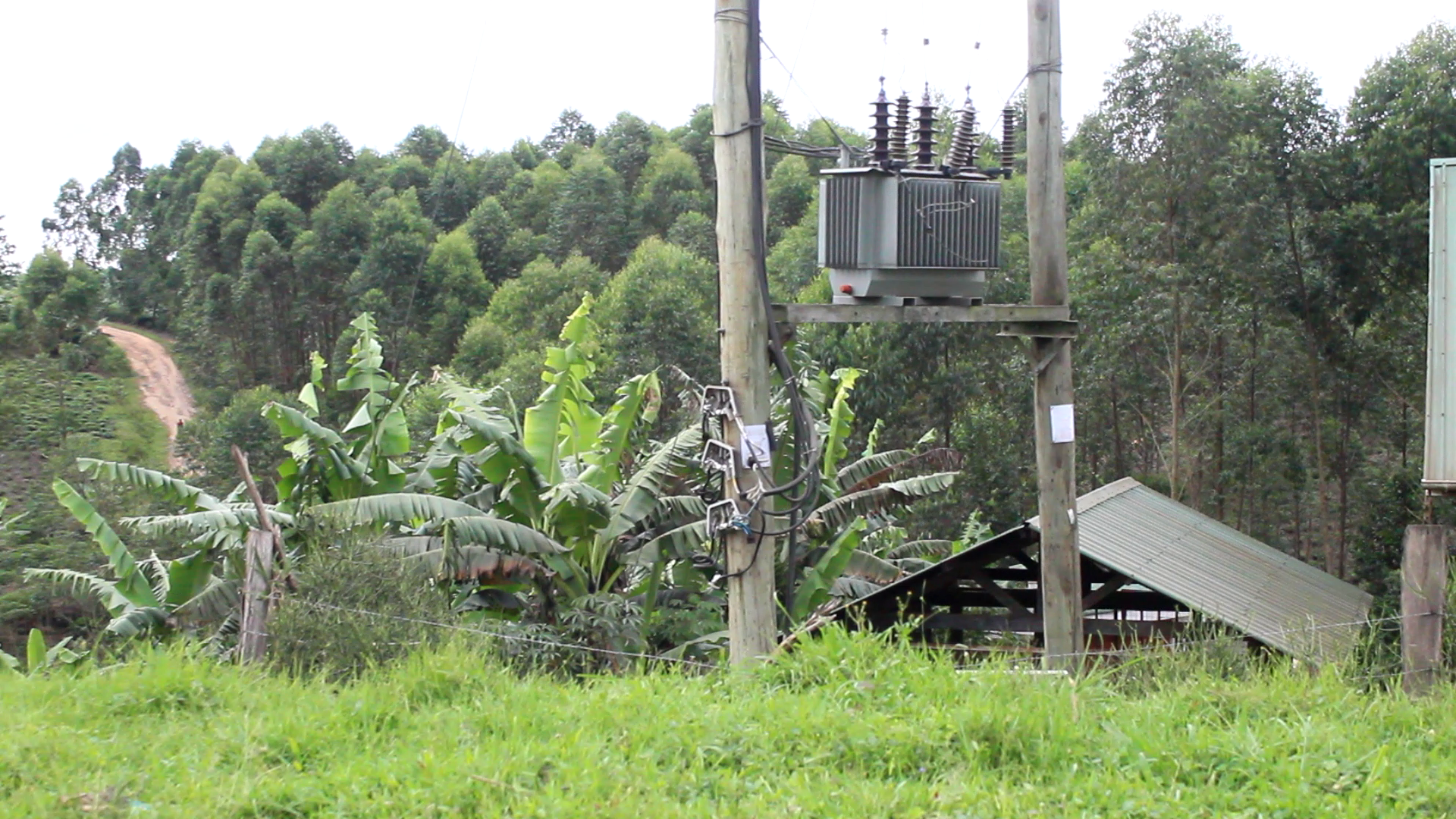
Bitooma Town Council has one transformer that supply power at the health center and one government coffe factory however power supply is limited. Photo: Jovita Hasto
By Jovita Hasto
Bushenyi
In 2003, the Government of Uganda established the Rural Electrification Agency (REA) under the Ministry of Energy and Mineral Development (MEMD) to manage rural electrification projects and provide reliable, affordable electricity to rural Ugandan households, public infrastructure (schools, health centres, and administration offices), and small- and medium-scale enterprises. However, some areas in the country have yet to benefit from this initiative, including counties in Southwestern Uganda, notably Igara West County in Bushenyi District.
Residents in Igara West, many of whom are engaged in coffee and grain milling, fuel pumping, school management, and healthcare services, have endured over 15 years without electricity. As a result, they have been forced to adopt costly and inefficient alternatives such as diesel-powered generators and solar energy, while expressing frustration over the failure of leaders to deliver on promises. The power outage has hindered development, affected businesses, and raised security concerns. Locals blame politicians who only appear during campaign seasons, pledging to resolve the issue but failing to follow through.
Residents now call upon the government to intervene through REA and ensure power supply to Bitooma Town Council, Rwanjoro, Kashambya, Kyobuyorwa, Mushakira, Kakanju, and other affected areas in Bushenyi District.
Entrepreneurs struggle to stay afloat
Mr. Nicholas Arinda, a grain mill operator in Bitooma Central Cell, says they've lived without electricity for years, heavily relying on diesel to run their business.
"My machine uses diesel. If there was electricity, I would spend much less. Right now, I spend Shs 150,000 on diesel, which would be enough to sustain operations for about a month on electricity," he said.
Mr. Arinda also shared the challenges of accessing welding services in distant areas whenever his machine breaks down.
"When the machine gets damaged, I have to travel to Ishaka or Butale to find welding services. That’s expensive. I need power because of the kind of business I do. We've lost hope in leaders who do their own things—no wonder we are underdeveloped," he added.
Expectant mothers at risk
Ms. Phionah Kyoshabire, a pregnant woman from Bitooma Parish, was found at Kashambya Health Centre III during an antenatal visit. She noted that the lack of electricity at the facility affects maternity services.
"Sometimes, labor starts when there’s no power. If you deliver prematurely, you are referred to Ishaka or Kyamuhunga where there’s power and better services. Some mothers fail to reach those hospitals. If we had electricity, we wouldn’t have to worry about complications or extra costs," she said.
She added that even health workers often struggle during nighttime deliveries.
"Sometimes nurses use solar energy or torches. I remember one nurse who got very frustrated when power went off while a mother was in labor."
Businesses burdened by high operating costs
Hajji Yahaya Turyasingura, a coffee factory owner in Kashambya Ward, emphasized that it is the government's role to bring electricity and other services closer to the people.
"Leaders have made empty promises. We have to use diesel alternatives, which are costly. If I put diesel worth Shs 100,000 and fail to recover it, that’s a loss. We have one transformer serving a government coffee factory and a health centre, but it keeps going on and off. It can’t handle the load."
Ms. Annitah Turyasingura, manager at a coffee milling factory in Kashambya, said the lack of electricity has stunted development and increased youth unemployment.
"The youth have skills like welding, but they’re loitering in the villages. Without electricity, they can’t practice their trade. Even schools suffer—boarding sections are hard to run without power. It affects performance."
Leaders blamed for longstanding neglect
Mr. Adam Twinamatsiko, chairperson of traders in Bitooma Town Council, criticized current and past leaders, including Minister Raphael Magezi and former legislator Mbwatekamwa Louis Arnold Gafa, for failing to resolve the electricity issue.
"We’ve been without electricity for over 10 years. Poles were planted, and promises were made, but nothing came of it. Most of us deal in coffee processing, and we rely on generators and fuel. That’s too costly. If we had power, it would boost security and business."
Healthcare suffers
Mr. Brian Abaho, a staff member at Kashambya Health Centre III, said the unreliable power supply has paralyzed service delivery, particularly in the maternity ward.
"We have a big maternity block, but low water and electricity supply hinder us. The solar system was destroyed by heavy rains, and now we refer most mothers to better-equipped facilities."
Hopes for local innovation
Mr. Cohen Kyampene, founder of Kyampene Foundation in Igara West, emphasized the need for electricity to stimulate local innovation and job creation.
"Development is about what people invest in their communities. In Bitooma, people are ready to transform their societies. We’re even trying alternative means to supplement rural electrification. But theft and system failures continue to hold us back."
Torch Media Africa



