Written By |
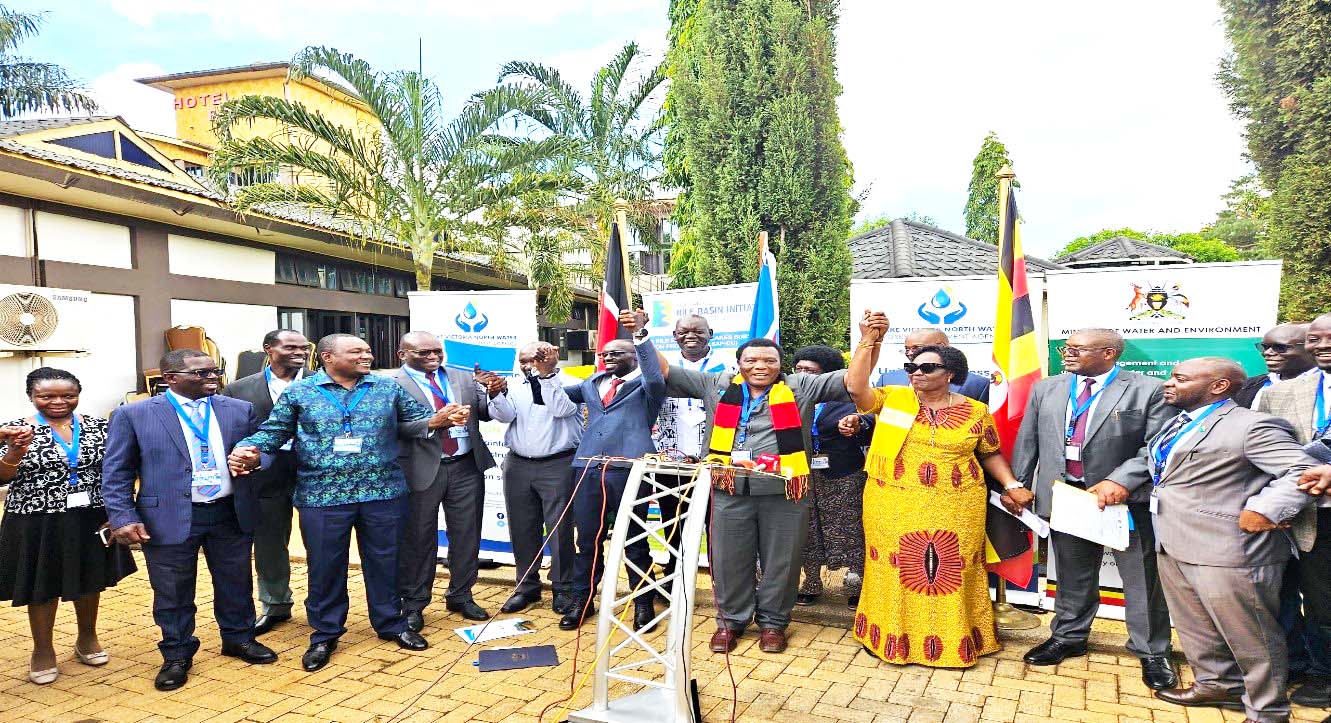
The delegation after signing the bilateral agreement for Angololo project with the Kenyan government yesterday in Busia County Kenya. (Photo by Milton Niinga)
By Milton Niinga
Busia - The Uganda–Kenya joint water initiative, known as the Angololo Multipurpose Water Resources Development Project, is expected to benefit over 300,000 people in both countries.
Uganda and Kenya, in collaboration with the Nile Basin Initiative (NBI) through its Nile Equatorial Lakes Subsidiary Action Programme (NELSAP), have officially launched the implementation phase of the project.
The initiative aims to improve food, water, and energy security, while enhancing regional trade and cooperation. It stands as a transboundary investment under NELSAP between Kenya and Uganda.
The grand signing ceremony for this bilateral agreement, intended to transform livelihoods through sustainable water resource management, took place on Wednesday at Busia Breeze Hotel, Busia County, Kenya.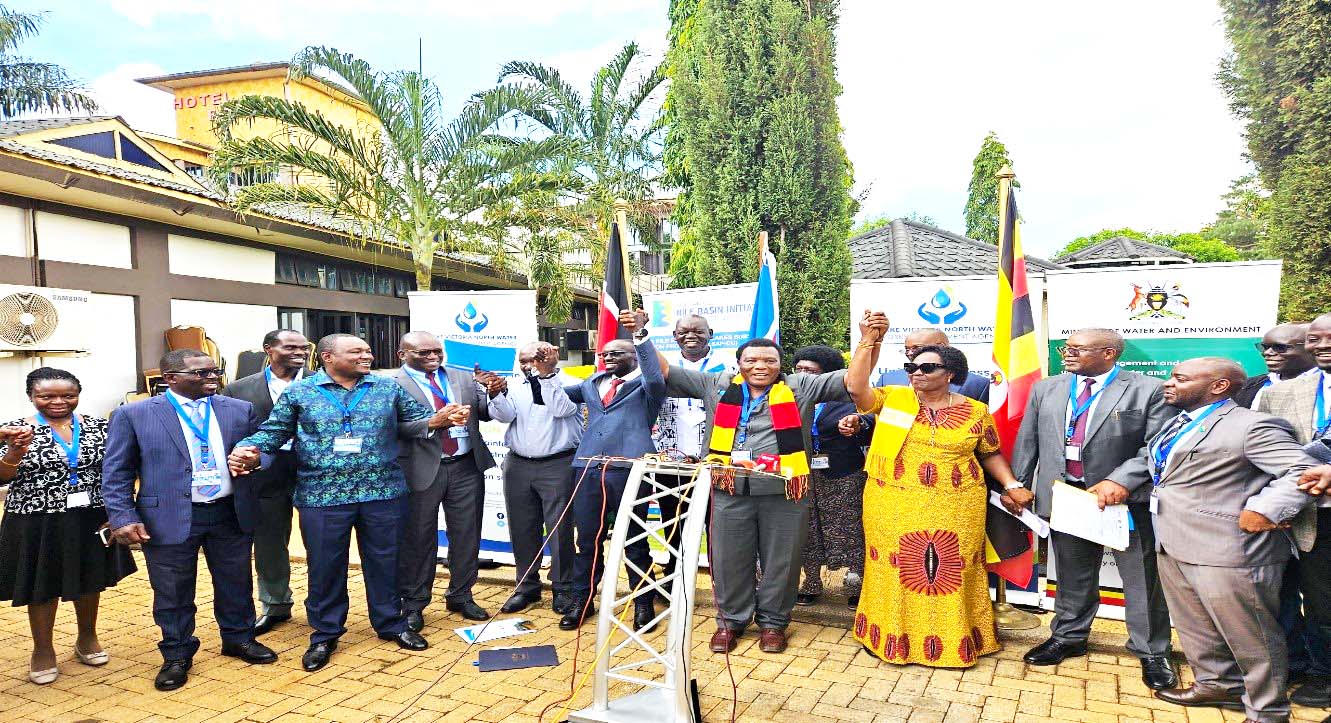
According to Beatrice Anywar Atim, Uganda’s State Minister for Environment, the Shs 502 billion project (approximately USD 137 million) is designed to uplift lives across the shared Sio–Malaba–Malakisi (SMM) River Sub-Basin.
“This project is here to strengthen the cordial relationship between Uganda and Kenya. Our people will benefit from irrigation, fisheries, and employment opportunities—all pointing to one thing: home-grown solutions. This is one of those projects that unite us as a ‘United Africa’,” she said.
Anywar added that President Yoweri Kaguta Museveni is in full support of the project, which links trade between the two East African nations, calling it a powerful symbol of transboundary cooperation and economic integration.
“The project will further boost cross-border trade in agricultural products and energy, improve climate resilience through watershed management and green growth initiatives, and promote peacebuilding and joint resource management between Kenya and Uganda,” she emphasized.
Anywar also noted that the Angololo project aligns with the United Nations Sustainable Development Goals (SDGs), especially those related to ending poverty, zero hunger, good health and well-being, clean water and sanitation, clean energy, and decent work and economic growth.
The minister urged all implementing partners to ensure the project remains a flagship model for sustainable, cooperative development in East Africa. She emphasized its multi-sectoral benefits in food security, public health, job creation, and climate resilience, with a special focus on vulnerable groups including women, youth, and people with disabilities.
“Women will benefit from reduced water burdens, new business opportunities in farming and trade, and inclusive development programs under the Parish Development Model (PDM), which the government is urging communities to adopt,” Anywar said.
Dr. Callist Tindimugaya, Commissioner for Water Resources Planning and Regulation at Uganda’s Ministry of Water and Environment, who represented the Permanent Secretary Dr. Alfred Okot Okidi, praised the two governments for creating a strong investment platform to benefit local communities.
“The Angololo project came to fruition because of the trust, confidence, and enabling environment provided by political leaders. This support made it easier for technical experts to move forward with implementation,” he said.
The project, funded by the African Development Bank (AfDB) and the NEPAD-IPPF Special Fund, was first identified in 2010. It is aligned with both Kenya’s Vision 2030 and Uganda’s Vision 2040.
“It will bring direct benefits to more than 300,000 people in Busia and Bungoma Counties (Kenya) and Tororo, Namisindwa, and Manafwa Districts (Uganda). This success is highly attributed to peaceful coexistence in the region,” Tindimugaya noted.
During the signing, ministers from both countries highlighted the project's mutual benefits. The funds will be used for infrastructure development, core investments, land acquisition, and resettlement of affected people.
Dr. Isaac Alukwe, NELSAP’s Regional Coordinator, stated: “This project is not just about infrastructure—it’s about people. It will empower communities, unlock economic potential, and build resilience in the face of climate and development challenges.”
Farmers to start irrigation
Dr. Alukwe revealed that farmers will soon benefit from enhanced access to irrigated land, improved agricultural yields, and reduced reliance on unpredictable rainfall.
“Households will gain access to clean, reliable water—reducing time spent fetching water and improving overall health. Youth will have new job opportunities in agriculture, construction, aquaculture, and related services,” he said.
Kenya’s Cabinet Secretary for Water, Sanitation, and Irrigation, Eng. Erick Muriithi, noted that the project will address food insecurity through aquaculture and manage flooding via improved watershed systems.
Dr. Florence Adongo, Executive Director of the Nile Basin Initiative, said the agreement marks a shift from years of negotiation to tangible action.
“Shared waters serve as a catalyst for peace and prosperity for all,” she remarked.
John Musila, MP for Bubulo East (Namisindwa District), described the Angololo project as a “lifeline” for beneficiary communities in both countries.
“I don’t talk in narratives—I talk realities. This project defines our existence and our transformation into a powerful region,” Musila declared.
The Kenyan delegation, led by Eng. Muriithi, included top officials from both governments, development partners, and representatives from the World Bank, all of whom witnessed the milestone ceremony.
Torch Media Africa



