The statement that “95% of men receive their first flowers at their funeral” is often repeated in public discourse. Whether statistically precise or not, it carries a symbolic weight that cannot be ignored. It speaks to a deeper cultural truth — that many men live and die without experiencing open appreciation, emotional affirmation, or visible tenderness. The phrase is not merely about flowers. It is about recognition. It is about the silent expectation that men must endure, provide, protect, and persevere — often without complaint and often without comfort.

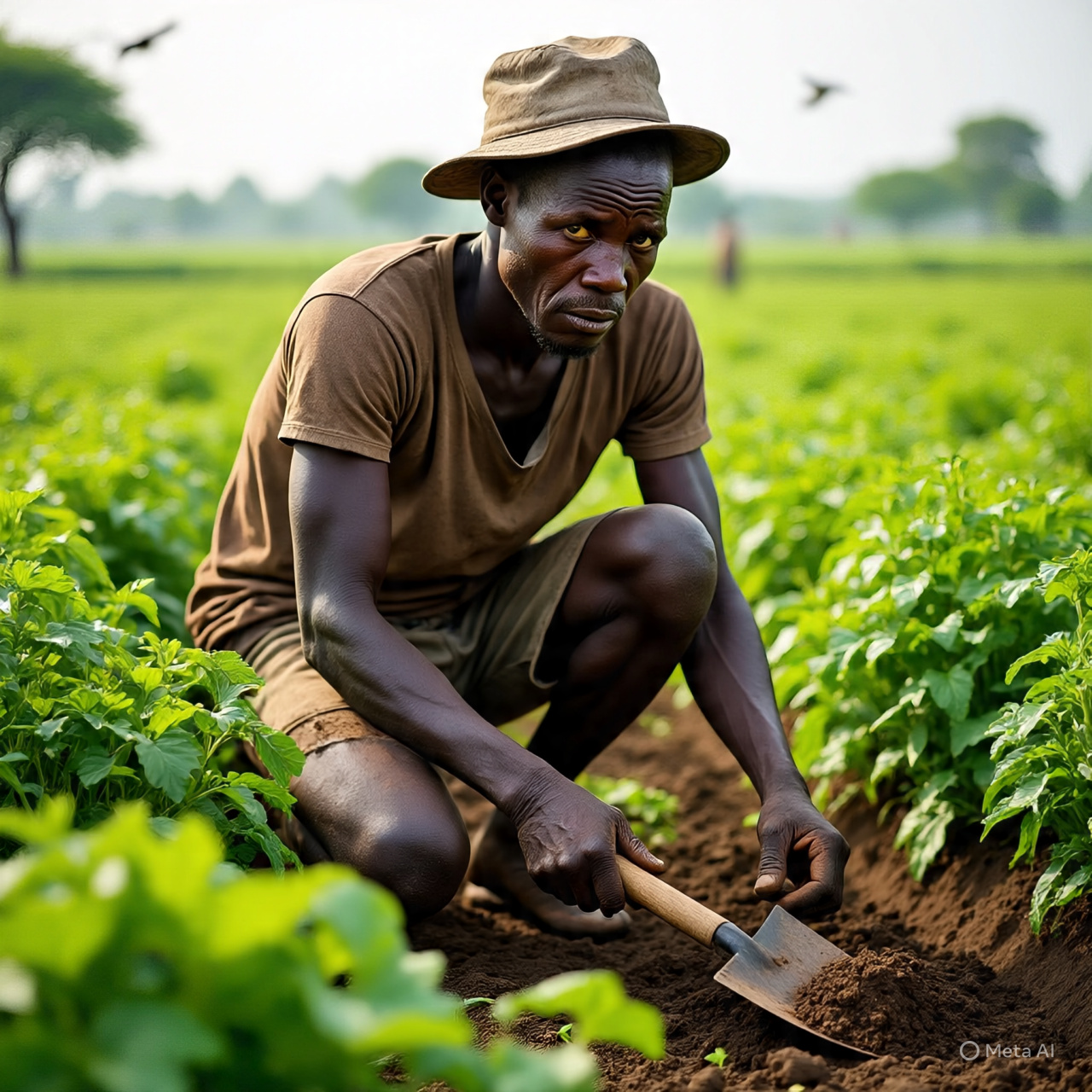
African man with flowers, Picture imagined by Meta AI
The Cultural Script of Masculinity
Across many societies, including ours, boys are socialised early into emotional restraint. “Be strong.” “Men don’t cry.” “Endure.” These phrases are presented as virtues. Strength becomes synonymous with silence. Vulnerability becomes weakness. Interestingly, even religious narratives have sometimes been interpreted in ways that reinforce this expectation. In Genesis 3:19, Scripture declares: “By the sweat of your brow you will eat your food until you return to the ground.” This pronouncement to Adam has often been understood not merely as a spiritual consequence, but as the archetype of masculine labour — that a man’s life would be marked by toil, responsibility, and endurance.
Likewise, the Book of Proverbs consistently praises diligence and hard work. Proverbs 14:23 states: “All hard work brings a profit, but mere talk leads only to poverty.” In many sermons and teachings, such verses have shaped the ideal of the man as the tireless worker — the one whose value is measured by productivity.
There is truth and honour in diligence. Yet when labour becomes the sole identity of manhood, appreciation becomes conditional upon output. The man is valued not for who he is, but for what he produces. As a result, the boy child grows into a man who often finds it difficult to express emotional distress. The consequence is not theoretical; it is measurable.
What the Data Reveals
Global health data consistently shows troubling patterns:
According to the World Health Organization (WHO), men account for a significantly higher percentage of suicide deaths worldwide — approximately 75% in many regions.
Studies across multiple countries reveal that men are less likely than women to seek professional mental health support.
Research in public health also indicates that men have shorter life expectancies on average, partly due to risk-taking behaviours, occupational hazards, and reluctance to seek medical care.
In many societies, men dominate dangerous professions — construction, mining, military service, and high-risk transportation — reinforcing the expectation of sacrifice.
In Uganda and across Africa, conversations about mental health are still developing. Yet anecdotal and institutional observations reflect similar patterns: men often suppress emotional pain until it manifests in destructive ways — substance abuse, violence, isolation, or silent suffering.
The Narrative of Protection and Sacrifice
There exists a protective narrative around the girl child — rightly so, given historical and structural vulnerabilities. However, in correcting one injustice, society must avoid creating another imbalance.
In Genesis 2:18, God declares: “It is not good for the man to be alone. I will make a helper suitable for him.” The creation of Eve was not a declaration of hierarchy, but of partnership. The Hebrew concept of “helper” (ezer) is elsewhere used in Scripture to describe divine assistance itself — strength supplied where needed, not inferiority assigned.
If the biblical design was companionship and mutual support, then cultural interpretations that reduce men to perpetual providers without emotional care distort that balance. A helper implies shared burden. It suggests that care flows both ways.
If the boy child is taught that his value lies solely in provision, endurance, and sacrifice, then we are raising generations of men who measure their worth by utility rather than humanity. A society that teaches one gender to expect care and another to suppress need creates emotional asymmetry. The result is relational strain, misunderstood anger, and internalised despair.
Appreciation Delayed Is Appreciation Denied
If the “first flowers at the funeral” metaphor resonates, it is because appreciation often arrives too late. Eulogies are rich with praise — “He was strong.” “He sacrificed.” “He provided.” Yet during life, affirmation is rationed.
Even Scripture balances toil with dignity. The same Bible that speaks of sweat and labour also speaks of companionship, wisdom, and joy. The hardworking man celebrated in Proverbs is not merely a machine of productivity; he is a steward of responsibility within a community of relationships.
We must ask ourselves: Why do we struggle to tell men they are valued while they are alive? Why is gratitude easier to express in death than in daily living?
Reimagining Strength
Strength must be redefined. True strength is not the absence of emotion. It is the courage to acknowledge it. It is the maturity to seek help when necessary. It is the confidence to express care — and to receive it. The boy child does not need pampering. He needs balance. He needs emotional literacy. He needs a society that permits him to be human.
Care is not a finite resource that must be allocated to one gender at the expense of another. Compassion expands when practised.
Conclusion: Before the Flowers
If the statement about funeral flowers unsettles us, it should. It is a moral mirror.
Genesis reminds us that labour is part of the human condition, but it was never meant to erase companionship. Proverbs reminds us that diligence is honourable, but honour must not replace humanity.
Let us appreciate the men around us while they can still see the gesture. Let us teach boys that seeking help is not weakness. Let us build homes where fathers are not only providers but participants in emotional life. Let us cultivate relationships where gratitude is spoken in ordinary moments.
A society that values both its daughters and its sons equally does not weaken itself — it strengthens its moral foundation.
Flowers should not be a final apology. They should be a living language of appreciation.
About the Author
Evan Sande Ndahura is a Ugandan political and legal commentator, columnist, poet, and social justice advocate whose writings focus on governance, constitutionalism, democracy, and the political economy of power in Africa. He is widely published on issues of judicial accountability, electoral justice, human rights, and institutional reform, with a particular emphasis on Uganda’s political and legal systems. Ndahura writes from a Pan-African critical perspective, interrogating the failures of state institutions and the lived realities of ordinary citizens under entrenched systems of power. He believes that the liberation of Africa will occur through a mighty pen, not the gun.
Published By | News Editor