LOGROÑO, SPAIN
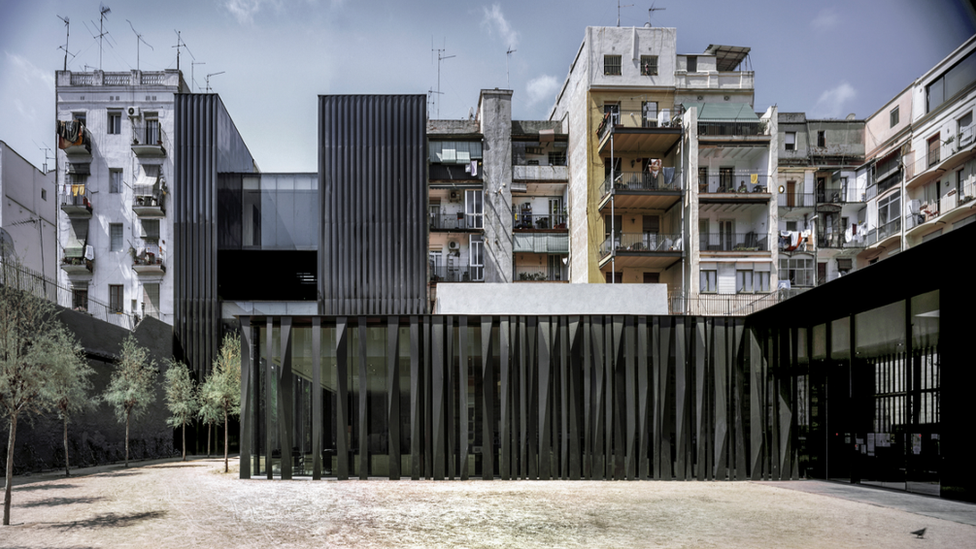
Logroño is not a city most people could place on a map. Tucked into Spain's Rioja wine region with a population of roughly 150,000, it has spent the past decade quietly becoming one of Europe's more interesting laboratories for what architecture can do when it leaves the gallery behind. This week, through June 23, the city is hosting the latest edition of Concéntrico, the International Festival of Architecture and Design, which has transformed its squares, bridges, riverbanks, and vacant lots into a six-day showcase of 24 installations from around the world.
The festival's headline attraction carries an unusually heavy credential: Smiljan Radić, the Chilean architect who earlier this year was named the 2026 Pritzker Prize laureate — architecture's highest honor — has brought a piece of his home country's coastline to northern Spain in the form of Circo Pobre, or "Poor Circus," a roughly 20-meter-diameter structure built from lightweight industrial plastic fabrics, designed to be assembled, disassembled, and transported with the same itinerant logic as the traveling circuses that inspired it.
What the Pritzker Jury Saw in Him
Radić's selection for the Pritzker was itself a statement about where the prize's attention has been drifting — away from monumental signature towers and toward architects whose work foregrounds material experimentation and cultural specificity over scale. The jury praised the "radical originality" of his output, describing it as sitting at the intersection of uncertainty, material experimentation, and cultural memory — language that reads almost as a direct description of Circo Pobre itself.
Inside Radić's structure, the festival has built a genuinely communal space: six screens placed directly on the ground play Joris Ivens' 1963 short film Le petit chapiteau asynchronously, while folding circus chairs scattered throughout invite visitors to linger rather than simply pass through. It is a piece designed less to be photographed from a distance than to be occupied, sat in, and watched from inside.
A Decade of Turning a City Into a Laboratory
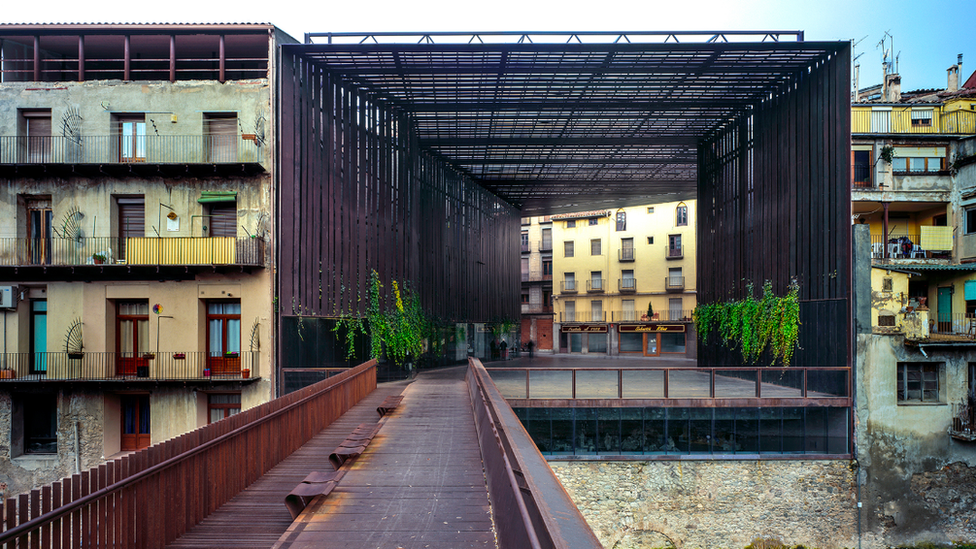
Concéntrico was founded in 2015 by architect Javier Peña Ibañez on a premise that has aged well: architecture becomes more meaningful when it stops being an abstract discipline and instead becomes something physical, collective, and embedded in daily civic life. Each edition invites architects, designers, and researchers to propose interventions directly within Logroño's urban fabric — activating squares, riverbanks, and overlooked urban voids rather than building inside a museum.
That approach has turned the festival into something closer to an annual civic ritual than a typical design fair. Over a decade, Concéntrico has built a reputation as one of the more rigorous antidotes to a familiar complaint about design festivals: that they tend to produce content for Instagram rather than genuine public engagement.
Beyond the Headliner
Radić's circus is the marquee draw, but this year's program runs considerably deeper. Three installations selected through the festival's international open call — Frontones Danzantes (2050+), Shade, Breeze, Cooling (noof), and El plano latente (Dancing on Architecture) — represent the emerging-talent platform that has become one of Concéntrico's quieter but more durable contributions. Additional participants include the Palestinian-Italian studio AAU Anastas, Chicago's Future Firm, and Mexican practices DF DC and PPAA, giving the festival a genuinely international footprint despite its modest host city.
The festival organizes its installations around three thematic threads this year — Identity and Fiction, Urban Ecologies, and Ephemeral Agents — loose enough to accommodate work as different as a Pritzker laureate's nomadic circus and a Mexican firm's intervention in a vacant lot, but specific enough to give the sprawling program a coherent throughline.
What This Means for Visitors
For travelers willing to make the trip to Spain's wine country this week, Concéntrico offers something genuinely rare: free, unticketed access to work by a sitting Pritzker laureate, installed not behind museum glass but in the middle of a functioning city street. The installations remain up through June 23, after which most will be dismantled — true to the ephemeral spirit that gives the festival its name.
For the broader design world, Concéntrico's decade-long experiment offers a quieter lesson: that a mid-sized city with limited resources can become an internationally relevant cultural destination not by building something permanent and expensive, but by repeatedly inviting the world's most interesting architects to make something temporary, inexpensive, and genuinely public instead.
Sources: Concéntrico Festival; Pritzker Architecture Prize; Arquitectura Viva; El País
Published By | Features Editor