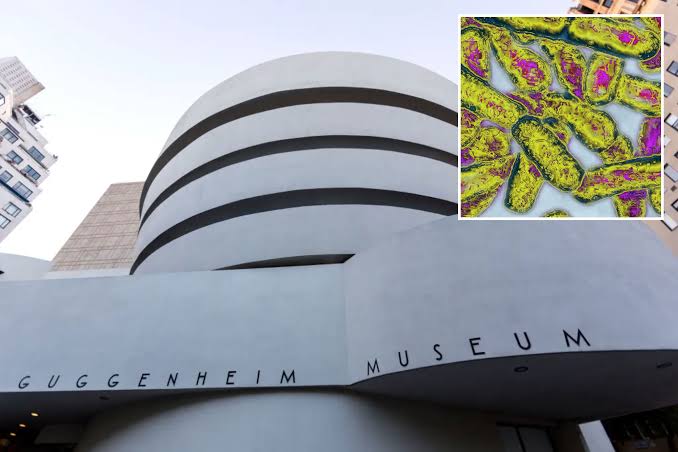
A mystery germ has infected 60 people on Manhattan's toniest blocks, dragged the Guggenheim Museum into a public health scandal, and just leapt across Central Park to a $1-million-a-bedroom building. New Yorkers want to know: who's cleaning this up, and why does it keep getting worse?
NEW YORK
It started with two sick people and a hunch. Twelve days later, it's a City Hall standoff, a world-famous museum's name dragged through health department press releases, and a case count that keeps climbing every time officials open their mouths.
The Legionnaires' disease outbreak tearing through Manhattan's Upper East Side has now sickened at least 60 people, according to the latest New York City Health Department figures released this week. Forty-nine of them have been hospitalized. Fifteen remain in hospital beds as of Monday night. Thirty-four have been discharged. Mercifully, nobody has died — yet. But health officials are bracing for the number to climb higher still before it's over, and the bacteria responsible has just done something it wasn't supposed to do: it crossed Central Park.
THE TWO CASES THAT STARTED IT ALL
The city's disease detectives first caught the scent on July 2, when two people in close proximity in the neighborhoods of Carnegie Hill and Yorkville — ZIP codes 10028 and 10128 — were both diagnosed with Legionnaires' disease, a severe and sometimes fatal form of pneumonia. Under normal outbreak protocol, health officials wait for a third linked case before declaring a "community cluster." This time, they didn't wait. Mayor Zohran Mamdani ordered the Department of Health to start testing cooling towers across the area immediately, ahead of the July Fourth holiday weekend.
By July 5, a third ZIP code — 10075 — had been folded into the investigation after another confirmed case turned up tied to someone who lived, worked, or had recently visited the area. The outbreak zone now stretched from the edge of Central Park to the East River, one of the most expensive strips of real estate on the planet.
"When there's a public health threat, New Yorkers deserve urgency and transparency from their government," Mamdani said as the emergency measures were rolled out. "That's why we're using every tool available to protect people."
More than 100 Health Department staffers were mobilized to hunt for the source. Health Commissioner Dr. Alister F. Martin put it bluntly: the city was going after the bacteria "not just to cut off the source of exposure, but to keep New Yorkers informed on what's happening."
THE GUGGENHEIM PROBLEM
Legionnaires' disease doesn't spread person to person. It spreads when people breathe in water droplets — mist — laced with Legionella bacteria, which thrive in warm water systems. The prime suspects in any urban outbreak are cooling towers: the big rooftop units that release fine vapor into the air as part of a building's air conditioning system. The Upper East Side happens to have an unusually dense concentration of them — more than three times the number the city tested during a 2025 outbreak investigation in Central Harlem, which killed seven people.
By July 6, the city had already sampled 139 of the roughly 160 registered cooling towers in the three affected ZIP codes. By the following week, that number had grown to 183 towers tested across the zone. And on July 10, the Health Department dropped a bombshell: 31 buildings had cooling towers that tested positive for Legionella. One of them was the Solomon R. Guggenheim Museum, the swirling Frank Lloyd Wright landmark at 1071 Fifth Avenue that draws over a million visitors a year.
"The Guggenheim continues to follow all New York City cooling tower requirements and regulations using third party expert companies, as we always do," museum spokesperson Allegra Thoresen said in a statement, stressing that the investigation into the actual source of the outbreak was still ongoing — a positive tower test doesn't necessarily mean that's where any specific patient got sick.
Eighteen other properties joined the Guggenheim on the list, mostly high-end residential buildings, some with ground-floor retail, stretching across addresses on Third, Fifth and Second Avenues and cross streets in the 80s and 90s. Nineteen of the 31 flagged buildings had already completed cleaning and disinfection by the time the list went public; the rest were given a hard deadline of July 11 to finish the job. By this week, the city said, all 31 had completed remediation.
Health Commissioner Martin, addressing the cluster at a press briefing, sounded almost triumphant about the strategy. "What we are doing is going to the source and taking that off the map," he said. "When that happens, my expectation is that is going to cause the resolution of this cluster."
But there's a catch, and it's not a small one.
THE BUREAUCRATIC BATTLE FLARING AT CITY HALL
The initial screening tests the city used — PCR tests — detect both live and dead bacteria. That means a "positive" tower might already be harmless, or it might still be actively seeding the outbreak. To actually pin down which of the 31 towers is the real culprit, the Health Department now has to run slower culture analyses to find live bacteria, then use whole-genome sequencing to match those bacterial strains against samples taken from sick patients. That process, officials admit, could take weeks.
In the meantime, City Council Speaker Julie Menin has been publicly needling the administration over its handling of the crisis. In a pointed letter to Commissioner Martin, Menin argued the city should have ordered every single building with a cooling tower in the affected zone to proactively clean it, rather than waiting for individual test results to trickle in. At a town hall this week, she pressed the point again in person: "I really urge you to disclose where the epicenter is so that the public can know that... I know you released the 31 buildings on Friday, but moving forward, it's in the public interest that as soon as you have a positive test, immediately release the address of the building."
Health Department spokesperson Chantal Gomez pushed back, insisting the city had been "aggressively identifying cooling towers that test positive for the presence of Legionella bacteria and ordering building owners to clean and disinfect." Records reviewed by local reporters found that more than half of the neighborhood's cooling towers had been cited during recent inspections for problems — including failing to perform the routine monitoring and cleaning the law requires, and failing to submit Legionella test results to the city as mandated.
Then, this week, the outbreak did something nobody had banked on.
CROSSING THE PARK
On Monday, city officials confirmed that Legionella bacteria had turned up for the first time on the other side of Central Park — inside the hot water system, not a cooling tower, of The Ardsley, a storied prewar co-op at 320 Central Park West where one-bedroom apartments rent for close to $1 million. The building has since disinfected its system.
Mayor Mamdani moved quickly to tamp down panic at an unrelated press conference. "There is no cooling tower of this building on the Upper West Side," he told reporters. "And the reason for that focus is typically those towers are the cause of this outbreak." In other words: different plumbing, different mechanism, probably not connected to the main cluster — but the discovery is a reminder that Legionella doesn't respect ZIP code boundaries or a neighborhood's cachet.
All of the confirmed Legionnaires' patients so far have lived, worked, or spent time specifically on the Upper East Side. But officials concede more cases are likely to surface in the coming days, since symptoms of the disease can take up to two weeks to appear after exposure — meaning people infected as recently as this past weekend might not even feel sick yet.
WHAT LEGIONNAIRES' DISEASE ACTUALLY DOES TO YOU
Legionnaires' disease is essentially a brutal form of pneumonia. According to the CDC, symptoms typically show up two to 14 days after exposure and include fever, chills, muscle aches, and a cough that can quickly worsen into shortness of breath, chest pain, confusion, and gastrointestinal symptoms like nausea, vomiting, or diarrhea. Left untreated, it can be fatal — mortality estimates for outbreak-associated cases generally run somewhere between 5 and 10 percent, higher in older or immunocompromised patients. The Central Harlem outbreak last summer, with its 7 deaths, is a grim reminder that this isn't a disease New York can afford to shrug off.
The good news: it responds well to antibiotics, particularly when caught early, and — critically — it does not spread from person to person. You cannot catch it from a sick coworker, a subway pole, or a friend's cough. You catch it by breathing in contaminated mist, full stop.
People at the highest risk include adults 50 and older, current or former smokers, and anyone with chronic lung disease or a weakened immune system. The Health Department has been blunt in urging anyone who lives, works, or has simply passed through the Upper East Side since late June to see a doctor immediately if flu-like symptoms appear — better to get checked and be wrong than to wait.
EXPERT PERSPECTIVE
Public health researchers who track Legionella outbreaks note that dense, aging urban infrastructure — like the tightly packed high-rises of the Upper East Side, many with cooling towers of varying ages and maintenance histories — creates exactly the conditions where these clusters flourish. Cooling towers that aren't regularly disinfected can become long-term reservoirs for the bacteria, quietly releasing contaminated mist for weeks before anyone notices a pattern in the emergency rooms. That's precisely why the city's compliance data is so alarming: a citywide law already requires regular Legionella testing and cleaning of cooling towers, and yet, according to records reviewed during this outbreak, more than half the towers in the affected zone had documented violations for skipping that very maintenance.
WHAT THIS MEANS FOR YOU
If you live, work, or have recently visited the Upper East Side — roughly the area bounded by Central Park, the East River, and the 70s through 90s in the low-100s — and you develop a fever, cough, chills, or shortness of breath, don't wait it out. Call a doctor and mention the outbreak explicitly, since prompt antibiotic treatment dramatically improves outcomes. The city insists it remains completely safe to run your air conditioner, use cooling centers, shower, and drink tap water — cooling tower mist is released outdoors and has no connection to indoor plumbing or window units. Living near a building whose tower tested positive does not, on its own, put you at greater risk than anyone else who spent time in the broader zone during the exposure window.
If you're a building owner or manager anywhere in the five boroughs, this outbreak is a costly lesson: Legionella testing and cleaning requirements exist precisely to prevent this scenario, and the violations uncovered on the Upper East Side suggest plenty of properties have been treating compliance as optional.
THE BOTTOM LINE
Twelve days after two mystery cases put New York's disease detectives on alert, the city is still chasing a bacterium it can partially see but can't yet fully pin down — a live culprit hiding somewhere among 183 tested cooling towers, one hot water system across the park, and a growing list of feverish New Yorkers. The Guggenheim has been cleaned. The Ardsley has been disinfected. Thirty-one buildings say they've done the remediation the city ordered. And still, officials are telling residents to expect the case count to keep rising before it finally, hopefully, starts to fall.
Published By | Features Editor