Written By | Business Experts
A small West African state with no oil, no gold boom and eight and a half million people has posted six percent growth for four straight years.
A growth record that does not match the resource story
Togo is the kind of economy that development economics is not supposed to reward. It has a modest phosphate industry, no hydrocarbons at scale, a domestic market of roughly 8.5 million people, and a 56-kilometre coastline. Yet according to the African Development Bank's 2026 country outlook, published on 17 June 2026, Togolese GDP grew by 6.3% in 2025 after 6.5% in 2024 — a pace that puts it comfortably above the West African average and in the same bracket as far larger resource exporters.
The AfDB attributes the 2025 result overwhelmingly to services, which contributed 4.0 percentage points of growth against 1.2 points from the primary sector and 1.1 points from industry. On the demand side, private investment and external demand did the work. Inflation collapsed to 0.4% from 2.9% in 2024, helped by softer food and transport prices and by the Central Bank of West African States cutting its policy rate from 3.5% to 3.25% in June 2025 — a rare disinflation story in a region that spent most of the decade fighting the opposite problem.
Not every institution reads the numbers the same way. The World Bank's country assessment records 5.3% growth for 2024 and projects roughly 5.1% for 2025, slowing on fiscal consolidation, then strengthening to an average of 5.5% across 2026–2027. The IMF's own outlook, framed around its Extended Credit Facility programme, points to around 5.0% for 2026 and warns of a temporary softening of activity alongside higher inflation, largely reflecting spillovers from global geopolitical tension. The government, for its part, told its Credit Council in March 2026 that it expects 6.5%. The AfDB splits the difference at an average of 6.1% for 2026–2027. A spread of one and a half percentage points between the official forecast and the most cautious multilateral estimate is itself a useful signal: nobody is quite sure how much of Togo's momentum is structural and how much is a favourable trade cycle.
The port is the economy
Whatever the exact growth number, its source is not in dispute. The Port of Lomé is the only deep-water container facility in West Africa capable of handling the largest vessels serving the region, and it has become the corridor through which Mali, Niger and Burkina Faso reach the sea. In 2024 it moved 2.06 million TEU, an 8% year-on-year increase that lifted it to 92nd in Lloyd's List's global port ranking — the only sub-Saharan African port inside the world's top 100, and the fifth-busiest container port on the continent behind Tanger Med, Port Said, Durban and Alexandria.
That position rests on transshipment: cargo that lands in Lomé and leaves again on smaller feeder vessels for other West African ports, or overland by truck to the Sahel. Lomé Container Terminal, in which the International Finance Corporation was an early investor, has committed a €120 million (about $127 million) programme running through 2027 to reinforce quays, add cranes and raise annual capacity to 2.5 million TEU. The fiscal consequences are direct. The IMF's review documentation credits improved revenue performance in part to higher transshipment activity at the port, and Togo's 2026 finance law is built on the assumption that this continues.
The vulnerability is equally direct. A transit economy earns fees on other countries' trade, and Togo's principal customers are three landlocked Sahelian states now outside ECOWAS and facing severe insecurity. Lomé has so far played this carefully, keeping the corridor open while remaining inside the regional bloc — but the revenue line is exposed to political decisions made in Bamako, Ouagadougou and Niamey rather than in Lomé.
Adétikopé: the attempt to add a factory to the corridor
The government's answer to that exposure is the Adétikopé Industrial Platform, or PIA, a public-private partnership with Arise Integrated Industrial Platforms built on the Lomé–Ouagadougou corridor about 27 kilometres north of the capital. Its logic is simple: if Togo can process the cotton, soy, shea and cashew that currently leave as raw commodities, it captures margin rather than freight.
Five years in, the platform reports cumulative investment of CFA 350 billion and 6,580 jobs created, with Togolese nationals holding 95% of those positions and young people and women together accounting for nearly 80% of the workforce. Twenty-five partner companies have committed, of which twelve were operational as of mid-2026. Togo Apparels Source, a textile manufacturer expected to employ around 1,500 people, began production on the site on 28 January 2026. Management's stated ambition is to double the number of industrial units and reach 20,000 jobs by 2030, and the government has begun planning a second industrial zone at Agbélouvé.
The IMF has taken the platform seriously enough to assess its macroeconomic contribution directly, and the World Bank identifies PIA-driven private investment as one of the main offsets to the drag from fiscal tightening. Still, 6,580 jobs in a country where informality runs at 85.5% of employment — the AfDB's figure — is a demonstration project rather than a structural transformation. The measure that matters over the next five years is whether the platform's tenants pull domestic suppliers into formal value chains, or simply operate as an enclave with good roads.
Cotton's rebound and the limits of the mining base
Agriculture supplied the year's most striking single number. Togo's 2025–2026 cotton campaign closed with roughly 80,000 tonnes of seed cotton against 60,403 tonnes the previous season, a gain of more than 20%. More important than the volume was the yield: 995 kilograms per hectare, up 25% from 797 kg/ha, and the highest figure recorded since the Nouvelle Société Cotonnière du Togo was created in 2009. The state has set a 105,000-tonne target for 2026–2027, and planted areas for that campaign came in 10.5% above forecast — evidence that farmers, not just planners, believe the recovery.
Mining tells a flatter story. Phosphate remains the anchor: the state-owned Société Nouvelle des Phosphates du Togo produced 1.52 million tonnes in 2023, marginally below 1.54 million in 2022, and contributed CFA 106.8 billion — 89.47% of all mining-sector revenue that year. Togo ranks around 19th in global phosphate output, which is to say it is a price-taker in a market it does not influence. Manganese, which the AfDB names alongside cashews and soybeans as a driver of the 2026–2027 outlook, is the sector's live option, with development work under way in the north; it is not yet a large earner.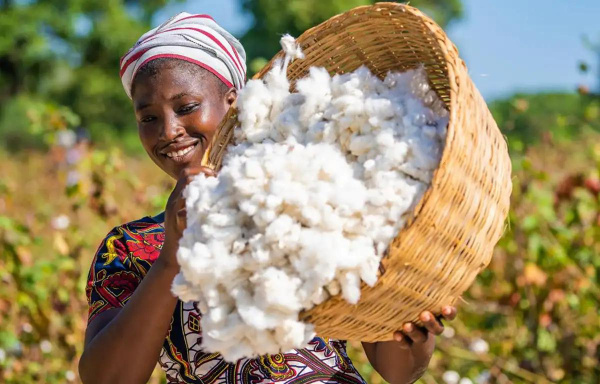
The fiscal turn and the IMF programme
The most consequential change of the past two years has been fiscal. The budget deficit fell to 2.8% of GDP in 2025 from 4.9% in 2024 on the AfDB's numbers — the World Bank, using a different perimeter that includes the recapitalisation of Union Togolaise de Banque, records a fall from 6.1% to about 3% — and public debt eased to 70.2% of GDP from 72.1%, largely through reductions in regional securities and commercial borrowing. The current account deficit narrowed to 2.5% of GDP, reserves held at 4.7 months of imports, and credit to the economy stood at 30% of GDP. The AfDB projects the deficit falling further to 2.6% of GDP in 2026 and 2.2% in 2027.
That trajectory is underwritten by the IMF. Following a Lomé mission from 11 to 19 May 2026, staff reached agreement with the authorities on the combined third and fourth reviews of Togo's Extended Credit Facility arrangement, and the Executive Board completed them on 29 June 2026, releasing SDR 80.74 million (about $110.8 million) and bringing cumulative disbursements to SDR 220.2 million, roughly $302.2 million. Structural conditionality covers public finances, the banking sector, agriculture and the phosphate and cotton industries — an unusually sector-specific programme reflecting how concentrated Togo's fiscal risks are in state-linked enterprises.
Financing costs remain the binding constraint. The AfDB puts Togo's average borrowing rate at 7.4% in 2025, with external debt at 42.2% of the total — moderate by regional standards but expensive for a country that must fund both an industrial build-out and a security emergency. The 2026 budget, approved by parliament at CFA 2,751.5 billion (about $4.5 billion), is 12.93% larger than the revised 2025 envelope of CFA 2,436 billion, and pairs that expansion with targeted relief: VAT exemptions on certain locally produced livestock and fishing products, simplified public procurement access for young and women entrepreneurs, and a tax credit for employers hiring people with disabilities.
The social ledger, and the Savanes
Growth has moved the social indicators, but slowly and unevenly. The AfDB records an extreme poverty rate of 39.3% in 2025 and notes that Togo has crossed into the medium human development category, with its Human Development Index rising from 0.539 in 2021 to 0.571 in 2025. The World Bank's poverty measure, on the international definition, is projected to decline to 20.3% by 2027. But the same institution puts rural poverty at 58.8% against 26.5% in urban areas, and Togo's Human Capital Index at 0.43 — meaning a child born in Togo today will reach only 43% of the productivity they could achieve with full health and education.
The sharpest risk is geographic. Jihadist violence spilling across the border from Burkina Faso has made the northern Savanes region the country's first serious internal security crisis in decades, and the AfDB explicitly cites worsening insecurity there as the reason 2025 growth came in below 2024. Savanes now hosts more than 55,000 refugees and nearly 16,000 internally displaced people, with more than 1.9 million people directly or indirectly affected. In August 2026 the AfDB approved a $1 million emergency grant to be implemented over twelve months by UNHCR in partnership with Togolese authorities, alongside the government's own CFA 18 billion Savanes emergency programme for 2026–2027 targeting more than 430,000 vulnerable people. Since 2022, Togo's Emergency Plan for Strengthening Resilience in the Savanes Region has been the framing instrument; it was extended nationally in 2023 and is backed by IDA's Prevention and Resilience Allocation, which now accounts for 75% of Togo's performance-based World Bank allocation.
What 2026–2031 has to prove
Togo is now finalising a new five-year government roadmap for 2026–2031 organised around three pillars — Protect, Unite, Transform — succeeding the 2020–2025 roadmap that itself updated the 2017–2022 National Development Plan. AfDB President Sidi Ould Tah pledged the Bank's support after meeting President of the Council Faure Gnassingbé in Lomé on 2 July 2026. The World Bank's Country Partnership Framework for FY2025–2029 commits roughly $1.5 billion around three objectives: private-sector job quality, human capital, and inclusive territorial development.
The ordering of those pillars is telling. "Protect" comes first because the northern security situation is now a macroeconomic variable, not merely a humanitarian one. "Transform" comes last because it is the hardest: converting a corridor into a manufacturing base requires the port, the industrial platform, the cotton and soy value chains and the electricity system to work together at once, and to do so while the state is simultaneously consolidating its budget. Togo has spent the past five years assembling the components. The next five will show whether they constitute a machine.