Written By | International News Agencies
The upper house voted on Sunday, with 148 of 174 senators in favor, according to a senator quoted by Agence France-Presse; reports say the lower house also backed the move.
ALGIERS/NIAMEY
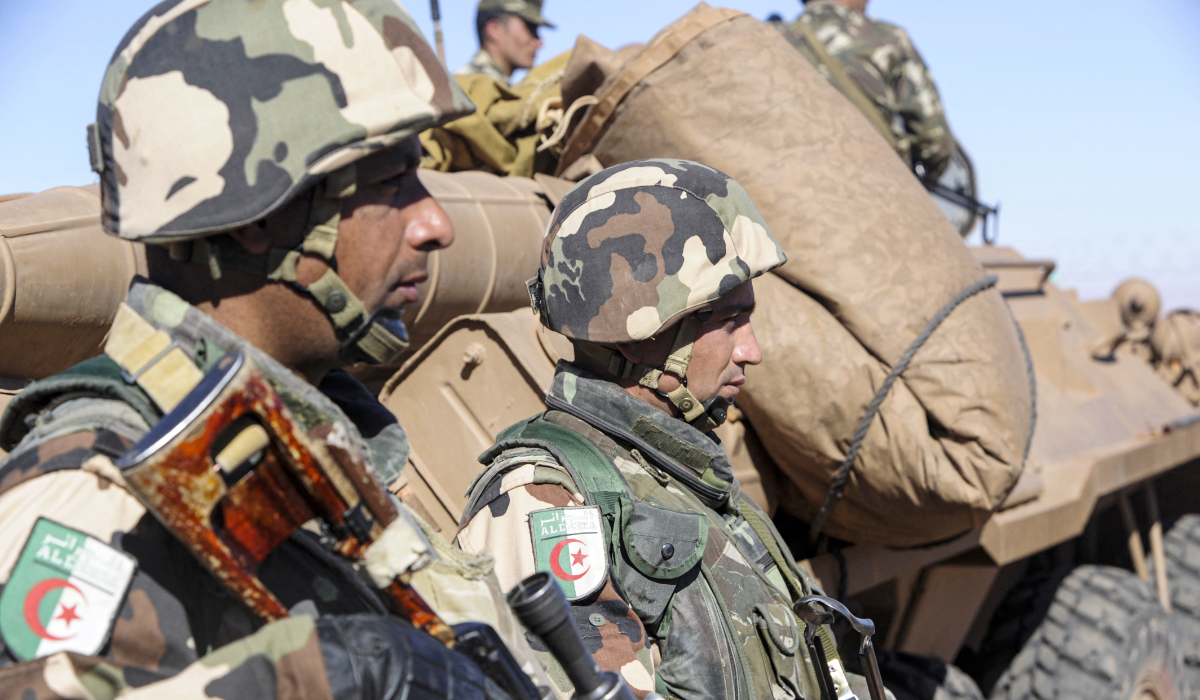
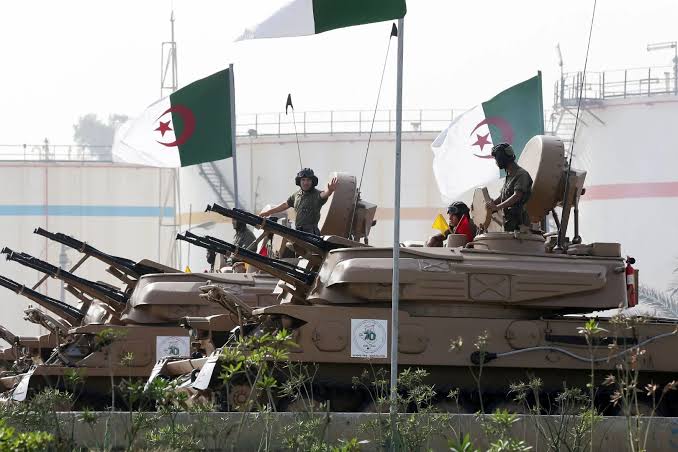
Algeria's parliament has approved sending troops to Niger, a decision that breaks with a half-century of Algerian reluctance to fight beyond its borders and binds Algiers more tightly to the military government in Niamey. The upper house voted on Sunday, with 148 of 174 senators in favor, according to a senator quoted by Agence France-Presse; reports say the lower house also backed the move. It would be Algeria's first overseas military deployment since it sent forces to Egypt in 1973, and the first use of a 2020 constitutional provision that allows such missions.
The vote matters now because it turns what began as an emergency show of support into a standing commitment, in one of the most volatile corners of the Sahel. It also arrives amid a broader realignment of Saharan politics, in which Russia, Turkey, Ukraine and Gulf states all compete for influence and in which Algeria has long been wary of foreign military footprints on its southern doorstep.
What parliament approved
On Sunday, Algeria's upper house, the Council of the Nation, approved the proposal. A senator who spoke to AFP on condition of anonymity said 148 of 174 senators voted in favor, according to Al Arabiya and The New Arab. The senator said the purpose of the deployment is to "protect energy facilities in Niger." The lower house, the National People's Assembly, was scheduled to vote the same day; Al Arabiya did not report that result, while the Ukrainian outlet Militarnyi, citing the official announcement, reported that the lower house approved it by an "overwhelming majority." Allafrica's summary of the story likewise says the lower house backed the move. Militarnyi also reported that the upper house met in closed session and gave no tally and that President Abdelmadjid Tebboune submitted the request on Oct. 22; the vote count above is the one attributed to the AFP senator.
Under a 2020 constitutional amendment, deploying troops abroad requires the approval of two-thirds of parliament, The New Arab reported. The senators' tally, if accurate, clears that bar comfortably: 148 of 174 is about 85 percent.
Algeria has not disclosed the size of the contingent, the date of deployment or the mission's duration. Militarnyi, citing Reuters, said the Madama area of northern Niger, near the Libyan border, is one possible site. Algerian officials have framed the mission as protective rather than offensive: allAfrica's summary says officials describe it as safeguarding energy infrastructure near the Libyan border, not waging war.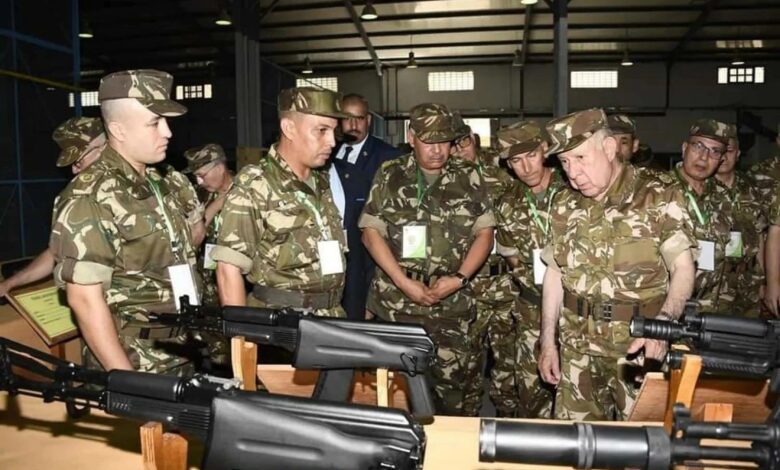
Why Niger, and why now
The deployment follows a months-long rapprochement. Relations between Algiers and Niamey soured in 2025 after Algeria shot down a drone that had flown from Mali. Niger, along with Mali and Burkina Faso, recalled its ambassador from Algiers, Al Arabiya reported. Algeria and Mali have since restored ties, according to The New Arab, and Algeria and Niger moved earlier this year to repair theirs.
The turning point appears to have come in late August. According to Wikipedia's account of the episode, a group calling itself the Armed Forces for the Restoration of the Fatherland attempted on Aug. 29 to oust Niger's leader, Gen. Abdourahamane Tiani, with fighting reported near the presidential palace, the airport and the state broadcaster. The attempt failed; Tiani's Presidential Guard, supported by Russian forces, reportedly regained control by the next day. On Aug. 30, Algeria's defense ministry announced it was sending two patrols of combat aircraft at the request of Nigerien authorities, to support Niger's army against what the state news agency Algérie Presse Service called "an attempt to destabilize the brother country." Wikipedia reports that the aircraft included four Su-30 fighter jets, a detail it attributes to reports at the time; the APS dispatch itself gave only the number of patrols.
Tebboune then pledged more. In a televised address on Oct. 3, he said, "We will protect Niger no matter what," and added that Algeria has oil, mining and other agreements with Niger that some parties want to destroy, according to Al Arabiya and The New Arab.
Last week's diplomacy preceded the vote. Niger's defense minister, Gen. Salifou Modi, visited Algeria and met Tebboune and army chief Said Chengriha, The New Arab reported. The two sides signed a military cooperation protocol, the details of which were not released. Allafrica's summary says the minister was seeking help against groups linked to al-Qaeda and the Islamic State.
The energy stakes
Energy sits at the center of Algiers's rationale. Al Arabiya reports that Algeria inaugurated a 40-megawatt power plant in June to supply electricity to Niamey and surrounding areas, and that it earlier gave Niger four military helicopters. Militarnyi adds that Algeria's state energy company, Sonatrach, is developing the Kafra oil project in northern Niger, and that its subsidiary ENAFOR was preparing in August to drill an exploration well about 85 kilometers from the Algerian border.
The larger prize is the Trans-Saharan Gas Pipeline, which would carry gas from Nigeria through Niger and Algeria toward Europe. Militarnyi reports that Sonatrach began construction of the Algerian section in June 2026. A pipeline running through insurgent-affected territory needs security, and a military presence in northern Niger would give Algiers a way to protect both its commercial investments and its borders.
Algeria and Niger share a roughly 960-kilometer desert border, and the two have agreed to deepen cooperation against jihadist violence, cross-border crime and trafficking, according to Al Arabiya. Armed groups continue to attack Niger, including near the Algerian frontier.
A doctrinal break
Algeria has not deployed troops abroad since 1973, and this would be the first use of the 2020 constitutional provision that permits overseas deployments, according to the reports above.
Analysts quoted by The New Arab describe the vote as a significant shift. Abdellah Akir, an international relations researcher, called it a historic break with Algeria's long-standing policy of not intervening in military conflicts beyond its borders. He said the move aims to protect Algeria's strategic depth in the Sahel and secure the pipeline, and that it signals to rivals, including Morocco and the United Arab Emirates, with which Algeria has no diplomatic ties. Geoff Porter of North Africa Risk Consulting said the decision reflects a shift in Algerian policy: in a "multipolar and transactional world," he argued, dialogue, international law and multilateral forums are no longer enough, so Algeria is turning to physical presence. He added that Algiers remains committed to its foreign policy principles but is expressing them in a new way.
Who else is in the room
Algeria is not the only outside power backing Tiani's government. Mali, Burkina Faso and Niger form the Alliance of Sahel States, and Russia's Africa Corps, which replaced Wagner's role in 2025, backs Mali's military authorities, according to DW as summarized by allAfrica. Wikipedia's account says Base 101 in Niamey hosts Africa Corps personnel and the alliance's command, and that Russian support was decisive in defeating the August mutiny. An Algerian contingent could therefore operate near a Russian presence in Niamey.
Separately, a September CNN investigation reported that about 15 Ukrainian drone specialists were assisting Tuareg fighters in northern Mali; DW said it had not verified the claim, and Ukraine has not confirmed any operation, allAfrica reported. If accurate, it would show how crowded the Sahelian theater has become. It is a reminder that Niger's neighbors are fighting proxy and insurgent wars that an Algerian deployment could be drawn into.
Political risks at home and abroad
The decision carries risks that Algerian officials have not publicly addressed. Domestically, it gives the military and presidency an expanded mandate beyond the country's borders. The senate vote, if the AFP count is accurate, suggests little resistance in parliament. Abroad, the commitment ties Algiers to a government that came to power in a July 2023 coup against the elected president, Mohamed Bazoum, who remains detained, as both Al Arabiya and The New Arab note. Algeria is now backing the continued rule of the officer who led that coup.
There is also the operational question. Without published figures on troop numbers or timing, it is impossible to judge whether the mission is a symbolic guard force or something larger. Mission creep is a standard concern when forces are deployed to protect infrastructure near an active insurgency, and Niger's own army has struggled against groups affiliated with al-Qaeda and the Islamic State.
What to watch
The first thing to watch is whether Algeria publishes details: the size of the force, where it will be based and for how long. The second is the Russian dimension, specifically whether Moscow and Algiers coordinate in Niamey or compete. The third is the reaction of Algeria's neighbors, in particular Libya's border region and Morocco, which analysts quoted above see as a target of Algeria's signaling. The fourth is whether Algiers' presence deters or invites attacks, both on Nigerien energy sites and on Algerian personnel themselves.
Finally, observers should track the pipeline timeline and Sonatrach's activities in northern Niger, since the energy interests that justified the deployment will also determine how long Algeria stays. For a country that has spent half a century avoiding foreign entanglements, the real test begins when the first soldiers cross the border.